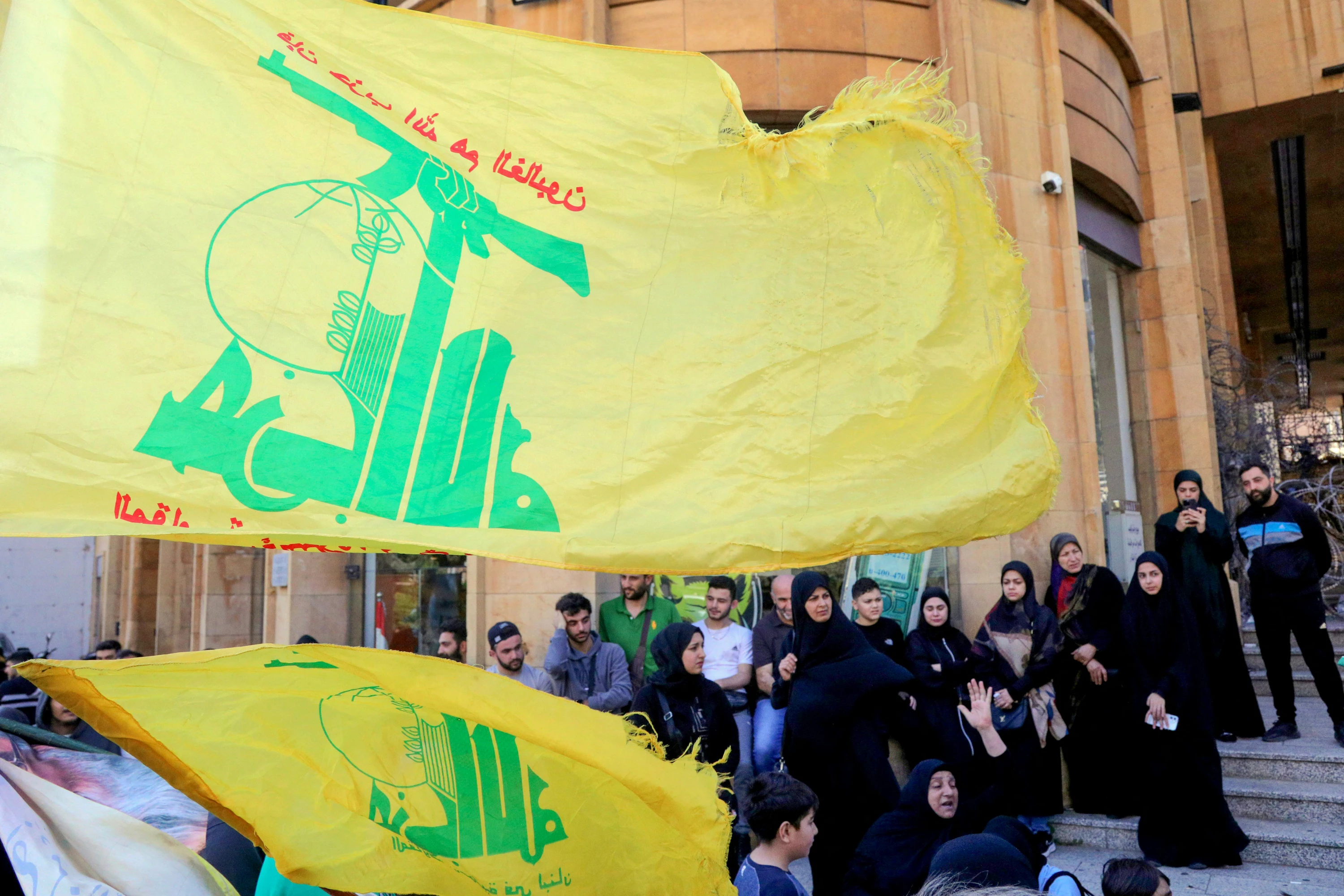
DUBAI, United Arab Emirates - Lebanon’s cabinet on Thursday ordered security forces to restrict all weapons in Beirut to state institutions, as the government faces mounting pressure to curb Hezbollah's activities amid extensive Israeli bombardment despite the nascent US-Iran ceasefire.
Prime Minister Nawaf Salam said the army and security agencies were instructed to immediately enforce state authority in the capital and ensure that arms are held exclusively by legitimate institutions.
The move followed a wave of Israeli aggression a day earlier, including heavy attacks on Beirut on April 8 that killed more than 200 people.
The war in Lebanon began in early March, days after the United States and Israel launched large-scale attacks on Iran on February 28.
Since then, fighting between Israel and Hezbollah has intensified, with more than 1,700 people killed in Lebanon in just over a month, according to official figures.
Information Minister Paul Morcos said Hezbollah’s two ministers in the cabinet objected to the latest decision, highlighting internal divisions as the government attempts to implement measures directly affecting the group’s armed role.
The cabinet directive builds on a March decision to ban Hezbollah’s military activities, which has not been enforced.
Despite longstanding calls for disarmament, Hezbollah remains the only faction to retain its weapons after Lebanon’s 1975-1990 civil war, maintaining both political influence and military capabilities.
Lebanon had also committed in 2025 to disarm the group, but progress has been limited.
Former president Michel Suleiman said on Thursday that placing all weapons under state control is essential for restoring sovereignty and preventing Lebanon from becoming a battleground for regional conflicts.
Israeli officials, however, have made clear that they do not expect Beirut to succeed. Security sources said earlier that military operations in Lebanon could continue for months or even years, citing the government’s inability to disarm Hezbollah.
They added that Israeli forces could maintain a presence deep inside Lebanese territory for an extended period, even in the event of a ceasefire.
Israeli plans reportedly include expanding ground operations to establish a deeper buffer zone in southern Lebanon, potentially extending toward the Litani River, with the aim of reducing cross-border fire into northern Israel.
Officials said Hezbollah has largely avoided close-range fighting while continuing to launch attacks from a distance.
A spanner in the works for the US-Iran ceasefire?
Israel's refusal to refrain from attacking its northern neighbor has sparked outrage following the commencement of a shaky US-Iran ceasefire earlier in the week, with Tehran saying that negotiations pegged for Friday may be scuppered should Israel continue its strikes.
Iranian President Masoud Pezeshkian said Thursday that the attacks constitute "a blatant violation of the initial ceasefire agreement," warning that their continuation "will render negotiations meaningless."
“Our fingers remain on the trigger. Iran will never abandon its Lebanese sisters and brothers,” Pezeshkian wrote on X.
Trump the day prior told PBS that Lebanon is not a party to the ceasefire agreement, terming the conflict a "separate skirmish."
Prime Minister Benjamin Netanyahu has framed the campaign as part of a broader confrontation with Iran, saying Israel is determined to “change the situation in Lebanon from its roots” and that Hezbollah’s disarmament is a key objective.
Western diplomats say the United States is primarily focused on Iran but has granted Israel relative operational freedom in Lebanon, provided civilian infrastructure is not directly targeted.
Some officials, however, believe US pressure could eventually constrain Israeli operations if the conflict widens further.
Hezbollah leader Naim Qassem described such demands as a US-Israeli attempt to stir internal divisions, urging the Lebanese government not to make concessions to Washington.
Diplomatically, Beirut is attempting to contain the escalation. Salam said the government will submit an urgent complaint to the United Nations Security Council over Israeli strikes, which he said violate international law and undermine efforts to halt the conflict.
Despite these efforts, Hezbollah is still believed to retain significant capabilities, including weapons supplied by Iran in recent months, according to Israeli officials.
 Facebook
 LinkedIn
 Telegram
 X
X