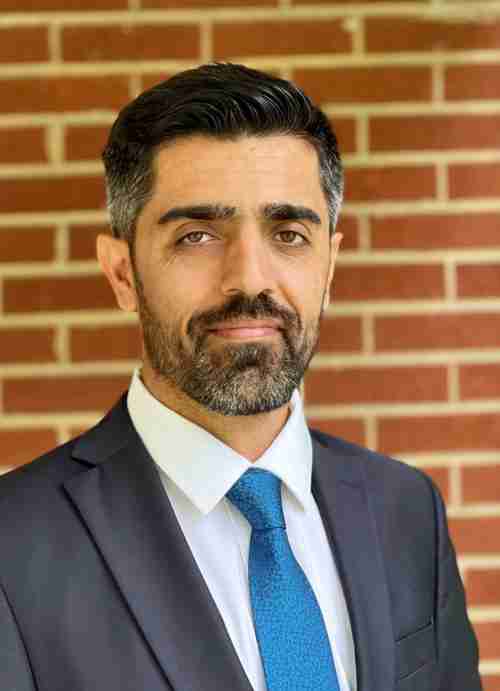
On the latest episode of The New Region's GeoSpace podcast, host Mohammed A. Salih sat down with veteran journalist and environmentalist Ayub Nuri, who witnessed the US-Israel war with Iran from his village outside Erbil, to discuss the disruption the conflict brought to daily life in Kurdistan, the Region's absence from international headlines, and its gradual shift toward clean energy and environmental renewal.
Nuri, who has covered conflicts from the 2003 Iraq War to the campaign against the Islamic State (ISIS) for outlets including the BBC, and is now based in a village outside Erbil, described the recent war as unlike any he had previously witnessed.
"It was more of a smart war," he said. "When you would hear a drone flying overhead or a rocket, you would often know that you are not the target."
Despite the precision of the attacks, daily life in Kurdistan was severely disrupted, according to Nuri. Electricity — only recently available around the clock following the Runaki project — was cut. Cooking gas prices tripled or quadrupled. Airports shut down.
"Daily life was really interrupted," he said. "A lot of uncertainties, and with every war, especially if you are not part of it, you only wonder what will happen next."
On Kurdistan's absence from international headlines, Nuri pointed to the Region’s non-sovereign status as a key factor.
"We do not have the kind of voice that other independent sovereign states have," he said, adding that because many of the attacks originated from within Iraq itself, the conflict "sounded like something internal or domestic" to outside observers.
Nuri also addressed the presence of US air defense systems protecting Erbil, describing it as a source of reassurance for a people with a long and painful history of aerial bombardment. He recounted watching an F-15 intercept a drone directly over his village.
"I was watching it like a movie on a silver screen," he said.
He cautioned, however, that the Kurdistan Region "does not have that capability to protect itself," underlining the need for its own defensive infrastructure going forward.
On the question of whether Kurdistan's ties to the United States invited Iranian attacks, Nuri was unequivocal.
"No country should be blamed for having diplomatic, economic, or any type of relationship or ties with any country," he said. "What's the guarantee that if you end your relations with the United States, you'll be safe?"
A greener Kurdistan
Beyond the war, Nuri and Salih also discussed the Kurdistan Region's gradual shift toward cleaner energy and environmental renewal.
Nuri welcomed the growing adoption of solar power at the household level, noting that families who have switched are "very happy about the fact that they don't have to worry about electricity disruption, about noise pollution, air pollution." He also praised the KRG's Green Belt Initiative, which aims to plant seven million trees around Erbil, but urged caution about the pace.
"It's easy to plant a tree, but very, very difficult to maintain it and ensure its survival," he said.
On air quality, Nuri noted a tangible improvement following the shutdown of thousands of diesel generators across the Region after the Runaki 24/7 electricity project came online.
He argued, however, that lasting environmental progress requires behavioral change above all else — and called on farmers to abandon water-intensive crops that place unsustainable pressure on the Region’s resources.
"The value of water is more than the value of a watermelon," he said.
"We fought in Kurdistan for years. We fought the Iraqis, we fought ISIS. For what? For the sake of this land. If we are not going to protect it and respect it — what did we do all that for?"
 Facebook
 LinkedIn
 Telegram
 X
X