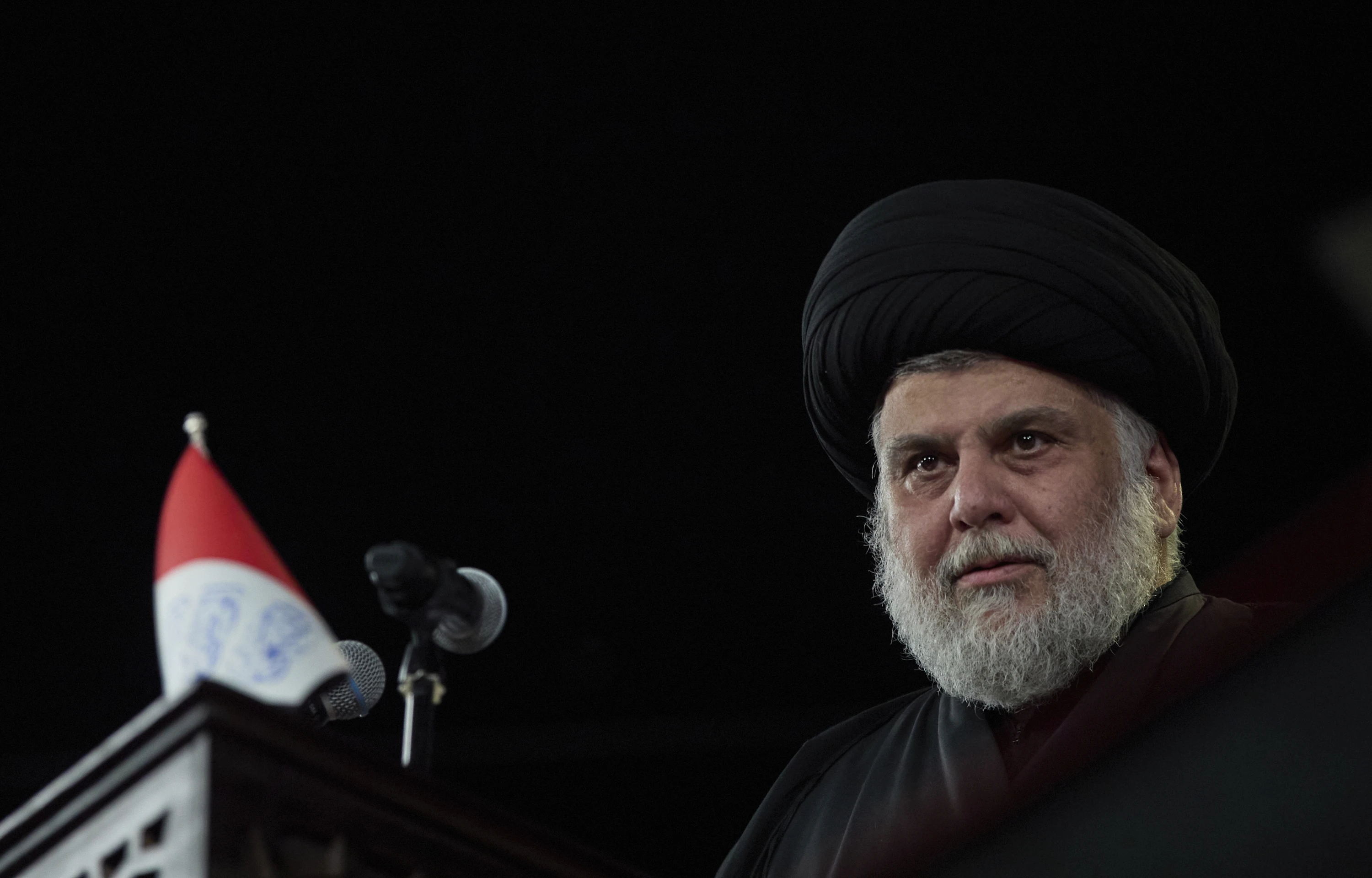
DUBAI, United Arab Emirates - The prominent Iraqi Shiite cleric Muqtada al-Sadr on Friday called on Prime Minister-designate Ali al-Zaidi to “completely exclude” any politician affiliated to an armed group from his cabinet selection, expressing willingness to hand over his own armed faction to the Iraqi state.
“As we have repeatedly stressed for years, the upcoming government must transform armed factions, regardless of their affiliations, into formations under the authority of the shrine administration or humanitarian organizations,” Sadr said in the statement.
“Whoever refuses should be considered outside the law,” he added.
Sadr himself has founded multiple armed factions operating outside of state control himself, including the Jaish al-Mahdi (Mahdi Army), which was founded in 2003 to confront the US occupation of Iraq and disbanded in 2008.
The group was partially revived under the name of Saraya al-Salam in 2014, which he continues to lead to this day.
“We are ready to dissolve the brigade formed years ago and hand over Saraya al-Salam to the commander-in-chief of the armed forces,” he said, urging all other factions to do the same “as quickly as possible.”
He called for “completely excluding” anyone with an armed wing from the government and forming a cabinet that “meets the demands of the people.”
Sadr further called for Iraq to maintain independence from foreign influence, saying the country should reject “all external interventions, neither eastern nor western.”
On corruption, Sadr demanded an immediate crackdown and said authorities should begin with what he described as the “crime of the century,” referring to the high-profile theft of tax funds uncovered in recent years.
He also stressed the importance of strengthening Iraq’s ties with Arab and Islamic countries “without interference from any side,” adding that Iraq should not be dragged into regional conflicts after “the people suffered from the fires of war.”
On Thursday, Zaidi released the program for his upcoming government, which pledged to restrict weapons to the hands of the state while also enhancing the combat capabilities of the Popular Mobilization Forces (PMF).
The program called for defining the PMF’s responsibilities within Iraq’s official military and security structure “in accordance with the law,” while also reaffirming cooperation with the United States through the Strategic Framework Agreement.
The document came amid ongoing debate over the role of Iran-aligned armed factions in Iraq, particularly after recent US and Israeli strikes targeting PMF sites during the war with Iran, and will be voted on by the legislature along with his cabinet appointments in Baghdad next week.
 Facebook
 LinkedIn
 Telegram
 X
X