
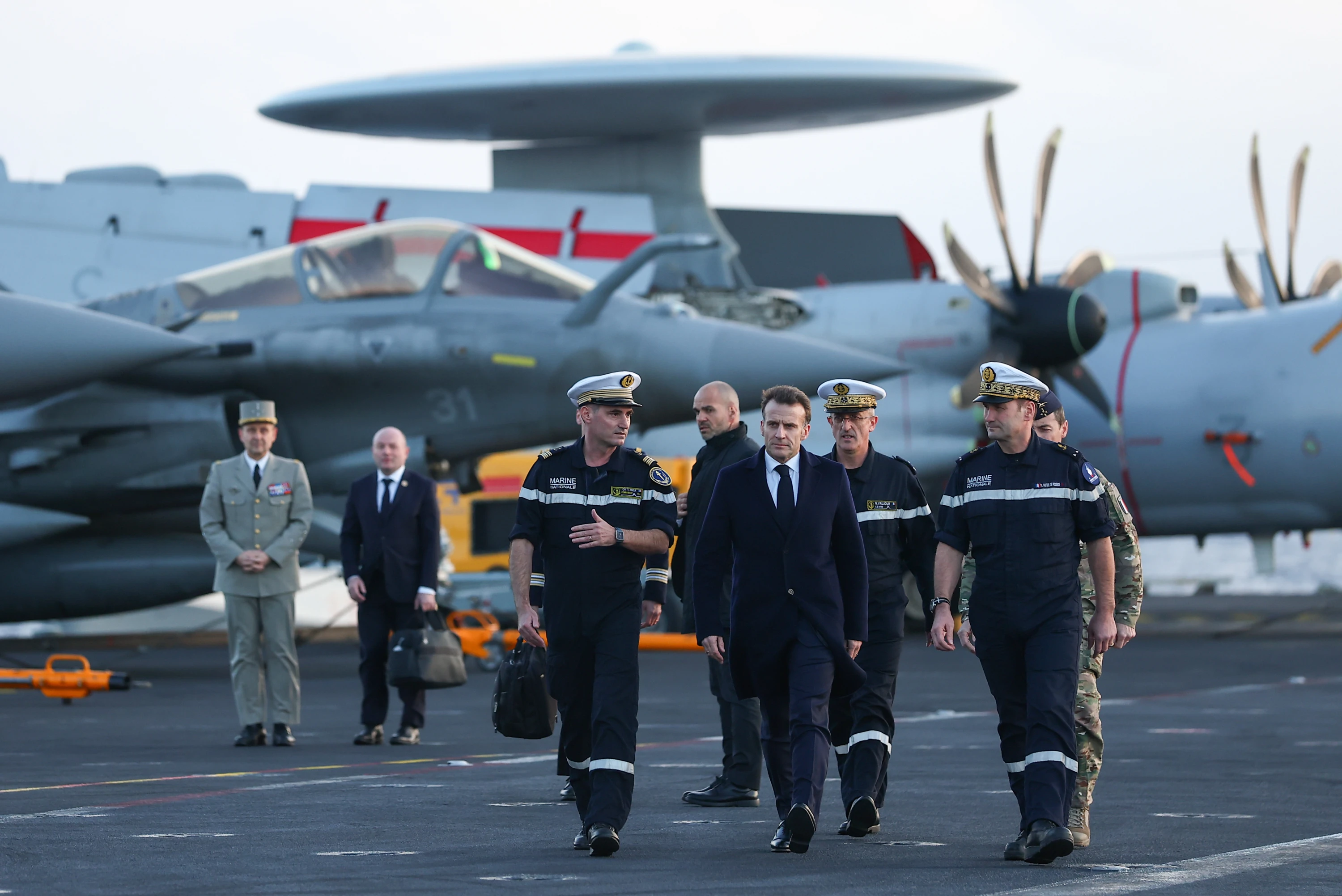
ERBIL, Kurdistan Region of Iraq - Iran’s Deputy Foreign Minister Kazem Gharibabadi warned France and the United Kingdom on Sunday against deploying naval forces near the Strait of Hormuz, labeling the move as “nothing but an escalation of the crisis” and vowing a decisive Iranian military response.
His remarks came after the UK and France announced last month they were advancing plans for a joint military effort to secure the Strait of Hormuz, expressing confidence the mission would help restore commercial traffic through the strategic passage.
“Any deployment and stationing of extra-regional destroyers around the Strait of Hormuz, under the pretext of ‘protecting shipping,’ is nothing but an escalation of the crisis, the militarization of a vital waterway, and an attempt to cover up the true root of insecurity in the region,” Gharibabadi wrote on X.
The minister identified the causes of insecurity in the region as “the illegal resort to force, ongoing threats against coastal states, maritime sieges, and disregard for the United Nations Charter,” adding that “maritime security cannot be ensured through displays of military power.”
He singled out the United States but extended blame to any nation he described as “part of the problem,” citing their participation, support, or “silence in the face of aggression” as key drivers of regional instability.
“The Strait of Hormuz is not the common property of extra-regional powers; it is a sensitive waterway adjacent to coastal states, and the exercise of sovereignty by the Islamic Republic of Iran over this strait and the determination of its legal arrangements is Iran's right as a coastal state,” he continued.
French President Emmanuel Macron on Sunday responded to the comments by saying that Paris "never envisaged" sending warships to the Strait itself.
"We have put together an ad hoc mission, co-led with the British, which has brought together 50 countries and international organisations to enable, in a coordinated way with Iran and by deconflicting the situation with all the countries of the region and the United States, the resumption of maritime traffic as soon as conditions allow," he said in Nairobi during an official visit to Kenya.
The British Ministry of Defense similarly said the deployment of HMS Dragon is intended to reassure commercial shipping and contribute to mine-clearing operations once hostilities subside. But Gharibabadi dismissed the justification, saying that “whether in times of war or peace, only the Islamic Republic of Iran can establish security in this strait.”
Gharibabadi concluded by warning that the presence of French or British warships — along with any other nation supporting “the illegal and internationally unlawful actions of the United States” — would be met with a “decisive and immediate response” from Iran’s armed forces, urging all parties involved not to further complicate the situation.
“The UK and France are working to ensure that the military plan involves as many partners as possible and brings the expertise of each nation together in support of our shared interests,” the two countries said in a press release on April 22 before a conference held in London with more than 30 countries.
“These talks come as Iran continues its effective illegal closure of the critical international shipping in the Strait of Hormuz, through which a fifth of the world’s oil passes. The closure has driven up global energy prices, disrupted supply chains, and pushed up costs for households and businesses in the UK and around the world,” the press release concluded.
 Facebook
 LinkedIn
 Telegram
 X
X