
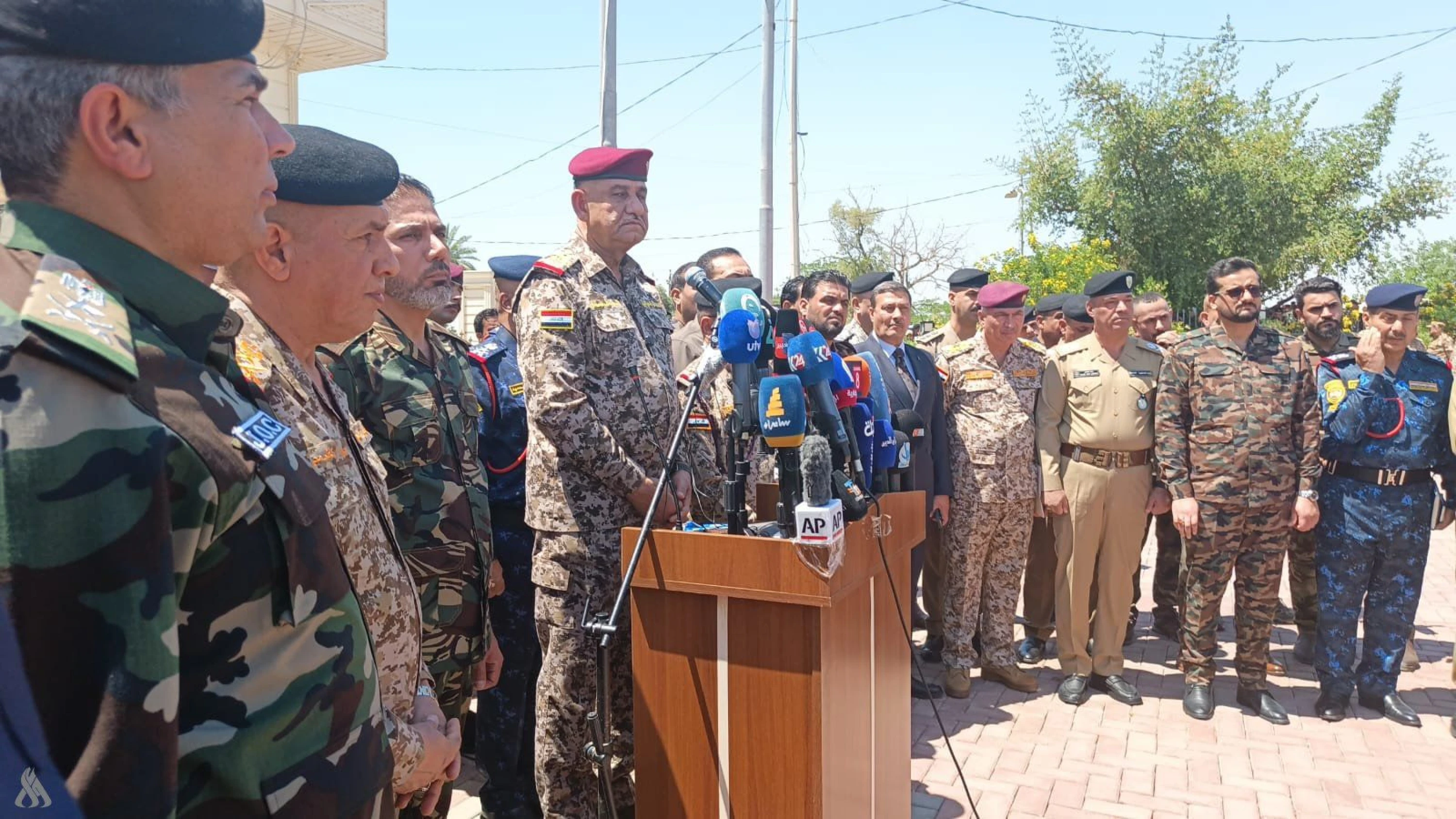
ERBIL, Kurdistan Region of Iraq - Iraq’s Joint Operations Command on Thursday announced the formation of a joint committee tasked with severing armed groups’ affiliations with the Popular Mobilization Forces (PMF) and restricting weapons to the state.
“A joint committee is in place to sever the [PMF’s] ties and consolidate weapons under state control,” deputy commander Qais al-Muhammadawi said during a press conference.
Muhammadawi added that the forces will be integrated into state institutions under the command of Prime Minister Ali al-Zaidi, with the current phase focusing on reintegration and incorporation into state institutions.
The move comes amid renewed calls to integrate armed groups into state institutions, initiated by Zaidi, who placed state control of weapons at the forefront of his government program earlier in May.
Zaidi’s call was heeded by several Iraqi militia groups who announced their disengagement with the PMF and giving up all weapons to the state, including Saraya al-Salam of powerful Shiite cleric Muqtada al-Sadr, which initiated the campaign, as well as Asaib Ahl al-Haq (AAH) and Kataib al-Imam Ali.
Earlier on Thursday, Saraya al-Salam, the armed group of powerful Shiite cleric Muqtada al-Sadr, handed over its duties to Iraqi security forces in the city of Samarra in Salahaddin.
However, several pro-Iran Iraqi armed factions, including Ashab al-Kahf, Harakat al-Nujaba and Saraya Awliya al-Dam, have rejected calls to hand over their weapons to the state, pushing back against the government-backed disarmament process.
Despite the PMF nominally being under the auspices of the Iraqi state, the US-Israeli war on Iran saw many pro-Iran PMF factions conducting unilateral strikes on US interests, as well as other targets such as hotels and infrastructure in the Kurdistan Region, in contravention of Baghdad's neutrality.
Saraya Awliya al-Dam was at the forefront of such attacks, claiming numerous attacks on the Kurdistan Region's energy sites during the conflict.
 Facebook
 LinkedIn
 Telegram
 X
X