ERBIL, Kurdistan Region of Iraq – Oil companies operating in the Kurdistan Region will resume producing and exporting oil from a number of the Kurdistan Region’s fields in the coming days and weeks, which were previously suspended due to frequent attacks on the facilities, the natural resources ministry told The New Region on Saturday.
The Kurdistan Region's energy infrastructure has been targeted by drone strikes from Iran and its allied militias for several years, causing a direct and substantial dip in the Region’s oil production and exportation capacity.
The Kurdistan Region’s oil production capacity dropped to around 75,000 barrels per day amid the recent regional crisis and the closure of the Strait of Hormuz, as the Region’s energy infrastructure came under increased attacks by Iran and its allies in Iraq.
Of the 75,000, around 50,000 barrels a day have been allocated for local consumption, while the other 25,000 barrels have been handed over to the Iraqi government for export.
Before the US-Iran war started in February, the Kurdistan Region produced around 250,000 barrels per day, of which 50,000 barrels were set aside for local consumption, with the rest handed over to Iraq’s oil marketing company (SOMO) for export. The Region produced around 400,000 barrels per day before 2023.
The Kurdistan Regional Government’s (KRG) Ministry of Natural Resources told The New Region on Saturday that production will resume at some of the Region’s fields in “the coming hours,” and at the start of July at another set of oil fields.
The ministry noted, however, that oil fields that have suffered more damage due to drone strikes might require more time to return to normal production levels.
Erbil and Baghdad on Sunday reached an agreement aimed at protecting oil companies and ending internal attacks targeting energy infrastructure after a high-level Iraqi security delegation traveled to Erbil and met senior Kurdish leaders at the instruction of Prime Minister Ali al-Zaidi.
Attacks on the Kurdistan Region’s fields reached unprecedented levels following the 12-Day War in June 2025 and the more recent US-Israeli war on Iran that began in late February, which also led to the closure of the Strait of Hormuz by Iran.
Since the outbreak of the recent conflict, the Kurdistan Region has come under hundreds of drone and missile attacks, many of which targeted oil and gas facilities.
The closure of the Strait of Hormuz dealt a major blow to Iraq’s oil exports, leading to an 80 percent decrease in exports, compared to pre-war times.
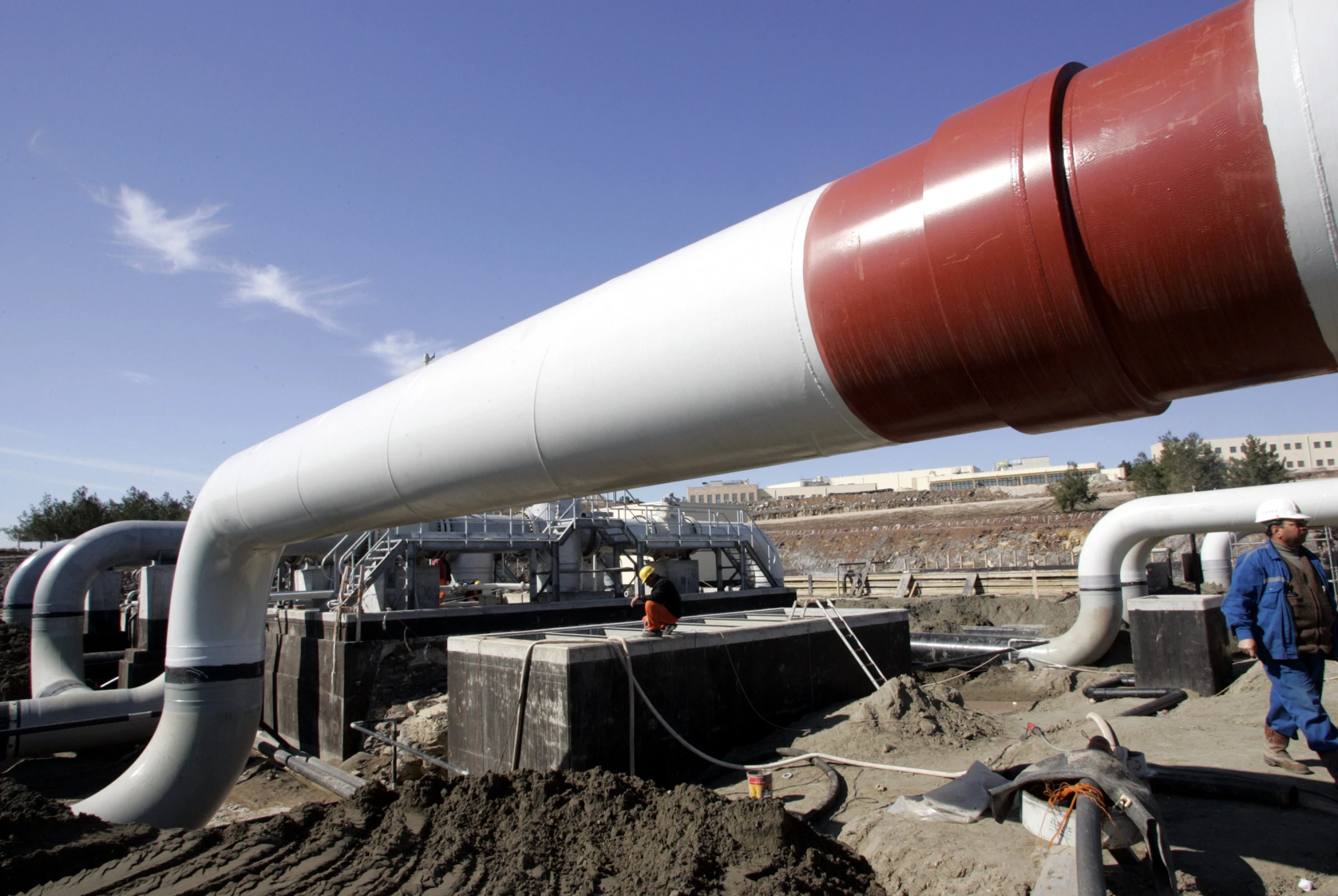
The slash in exports has prompted Baghdad to explore Turkey’s Ceyhan pipeline through the Kurdistan Region, and western routes through Syria, as southern routes were impeded by the disruption of traffic at the Strait of Hormuz.
Iraq’s oil ministry said in May that it aims to increase oil export capacity to Turkey’s Ceyhan port to around 650,000 barrels per day through the rehabilitation of the Kirkuk-Ceyhan pipeline and the increase of production from both Iraqi and Kurdistan Region fields.
The Iraqi government on Saturday praised the new security agreement with Erbil, describing it as a key step toward safeguarding Iraq's national wealth.
Sabah al-Numan, the Iraqi prime minister's military spokesperson, told state media that the agreement “represents a practical translation of turning the military security achievement into a protective umbrella and enabling environment for reconstruction efforts and major strategic projects.”
Numan added that the “high-level coordination” between federal security forces and the Peshmerga “reflected on the ground in the recent understandings in Erbil to protect oil companies and vital facilities, reflects a unified security decision to protect the national wealth of all Iraqis and prevent any targeting of it."
Bringing weapons under the exclusive authority of the Iraqi state has become one of the central objectives of Zaidi's government program, with several pro-Iran armed factions having already announced their willingness to surrender their weapons and integrate into Iraq's state security institutions.
 Facebook
 LinkedIn
 Telegram
 X
X