ERBIL, Kurdistan Region of Iraq – Following a high-level meeting on Tuesday, Tehran and Muscat announced the formation of a joint working group to decide future administrative structures for the strategic Strait of Hormuz, with both sides discussing the “costs associated” with commercial transit in the strait amid talk of a prospective tolling mechanism.
The statement was published shortly after the return of a high-ranking Iranian delegation consisting of parliament speaker Mohammad Bagher Ghalibaf and Foreign Minister Abbas Araghchi from Muscat, where they were received by Omani Sultan Haitham bin Tariq and Foreign Minister Badr al-Busaidi.
“The future management of the Strait of Hormuz” was the main topic of discussions during the Muscat meetings, Iranian state broadcaster IRIB reported.
Since US-Iran negotiations began in early April, the Strait of Hormuz has remained a central point of contention, with both Tehran and Washington imposing maritime restrictions in and around the strategic waterway.
Tehran and Muscat agreed to maintain dialogue through “a joint working group between the two foreign ministries in order to reach agreement on the future administration of navigation in the Strait of Hormuz and the services that will be provided in this regard and the costs associated with them in accordance with international standards,” read the joint statement.
Passage through the waterway was previously free-of-charge for commercial vessels, but Ghalibaf has signaled that a tolling mechanism will be implemented following a 60-day grace period agreed to by Iran under the provisions of their memorandum of understanding with the US.
Washington has vehemently rejected any prospective transit fees in the past, with US President Donald Trump in late May saying that Oman “will behave just like everybody else or we'll have to blow them up,” when questioned about joint Iranian-Omani control over the Strait.
Busaidi, in a Monday X post, said that both Tehran and Muscat were committed to “toll-free safe passage” without specifying if this applies to transit during the 60-day period or afterward.
“All arrangements related to the Strait of Hormuz must fully respect the sovereignty and sovereign rights of the two coastal states of the Strait,” the joint statement added.
Discussions with the littoral states in the region and other relevant parties were also agreed upon between the two sides.
The developments come after the US and Iran remotely signed an agreement on Thursday aimed at ending the conflict between the two countries and reopening the Strait of Hormuz.
However, tensions rose again on Saturday after Tehran announced the closure of the Strait of Hormuz, citing the US’ failure to implement the recently-signed agreement and the Israeli offensives in southern Lebanon.
Tehran and Muscat also reaffirmed their commitment to the “safe passage” through the waterway and to “a secure and open waterway for international navigation,” in line with “applicable international law.”
Earlier on Tuesday, Trump said that he has agreed to allow the Strait of Hormuz to remain open, calling another naval blockade on Iran “highly unlikely” and claiming that Tehran has agreed to the “highest level” of nuclear inspections.
His remarks follow a round of US-Iran talks in Switzerland aimed at implementing the memorandum of understanding and finding a permanent resolution to the war in the Middle East.
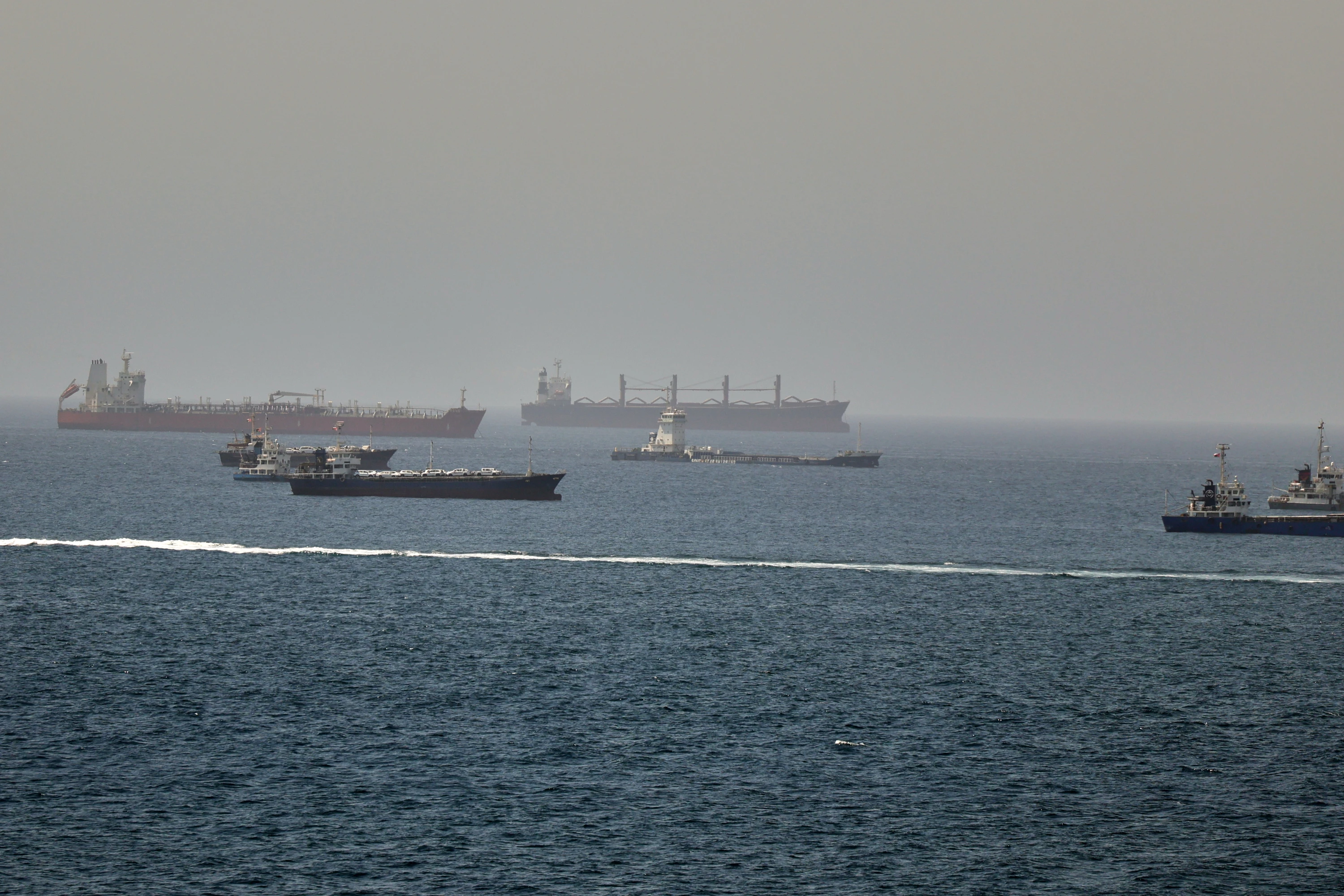
Tankers and cargo vessels are seen in the Gulf of Oman, along shipping routes linking the Strait of Hormuz and the Arabian Sea on June 16, 2026. Photo: AP
 Facebook
 LinkedIn
 Telegram
 X
X