ANKARA, Turkey – Ankara hopes its hosting of an upcoming NATO summit will cement its rise as a key European security partner, building on the rapid growth of its defence industry despite resistance from some allies.
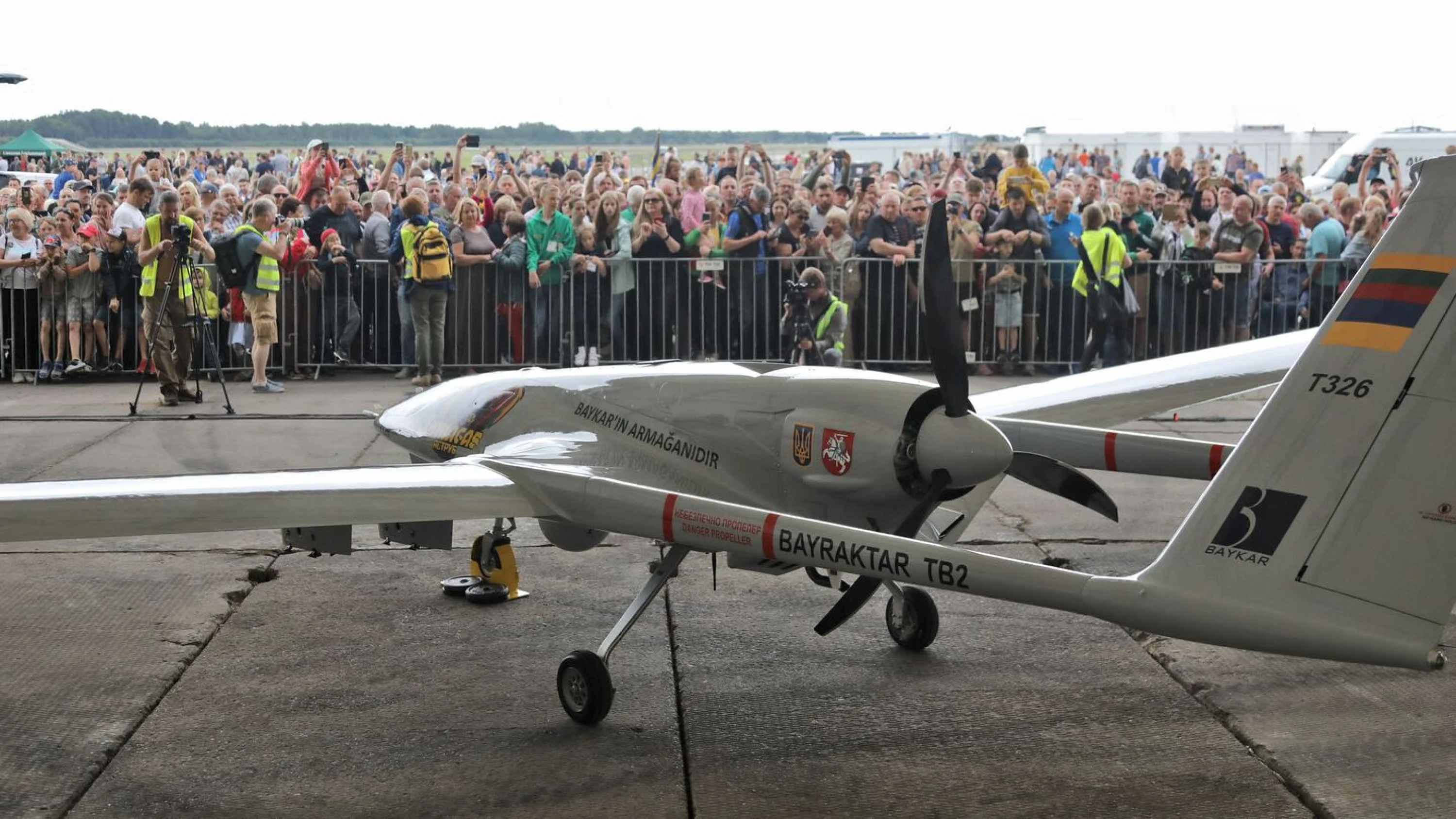
The two-day summit opens on Tuesday with the Defence Industry Forum -- once a sideline event, now formally part of the programme -- at which some 3,500 companies will be showcasing the best of Turkey's burgeoning defence technologies.
"It is inconceivable to establish European security without Turkey," President Recep Tayyip Erdogan has said while pushing relentlessly for Turkey's "inclusion" in all of Europe's defence and security structures, notably the EU's 150-billion-euro ($176-billion) SAFE programme.
Turkey boasts NATO's second-biggest army after the United States with 355,000 troops and another 378,000 reservists, with its defence industry notably booming over the past decade.
But its desire to switch from supplier to a strategic partner has been held in check.
"Turkey has been largely left out of Europe-wide programmes and projects. That is what Turkey wants to change... And to do that, it will use the summit to showcase its capabilities," said Ozgur Unluhisarcikli, head of the German Marshall Fund in Ankara.
Turkey's defence industry -- which ranks 11th in the world, accounting for 1.8 percent of the global arms market, according to the Stockholm International Peace Research Institute (SIPRI) -- saw exports grow by 48 percent in 2025, up from 29 percent a year earlier, officials said.
"We now achieve in one week what we used to achieve in one year," Erdogan said last month of Turkey's exports of drones, tanks, armoured vehicles and warships, one of which was delivered to Romania, becoming "the first export of a military ship to an EU and NATO member country".
- 'Detoxification' -
"We do not want to be seen only as a supplier. We want to be regarded as a strategic partner.. (for) joint production and technology cooperation," Haluk Gorgun, head of Turkey's SSB Defence Industry Agency told Defence24 news website last month.
But allies are questioning Ankara's long-term reliability with European technology.
"They are asking because of Turkey's track record with Russia," said Unluhisarcikli, referring to Ankara's 2017 acquisition of a Russian S‑400 air-defence system that alarmed its NATO partners.
"This is what Turkey needs to persuade France, Italy and Germany about."
Ties soured in 2015 with Turkey's military operations in Syria and Libya, then worsened over tensions with Greece and Cyprus in the eastern Mediterranean.
Although the relationship has entered a process of "detoxification", helped by Turkey's support for Kyiv, the S-400 issue has remained a stumbling block, notably with Washington, with Ankara struggling to find a way to offload the offending system.
Today Turkey's relationship with the UK and a handful of European nations is working, but "it's not working with the European Union as a whole because there are a couple of members who are blocking it," explained Professor Mustafa Aydin, an international relations expert at Istanbul's Kadir Has University.
"Apparently it's not for Germany and France, and these are the two countries that matter," he told AFP.
- 'Irrational to exclude Turkey' -
Under SAFE, firms from non-EU countries like Turkey can only supply up to 35 percent of the component costs of weaponry funded by the scheme.
To tap a bigger part of the funds, Ankara must sign a security partnership with the EU and then negotiate special access with Brussels -- requiring approval from all 27 members.
"The political issues blocking Ankara's access to the SAFE programme are the dispute between Turkey, Greece and Cyprus, but also France's ill will," said Sinan Ulgen, a senior fellow with Carnegie Europe.
Given the difficult geopolitical context facing a Europe caught between the war in Ukraine and the diplomatic standoff with Washington, it was "irrational" not to let Turkey take part, he said.
Within the EU, Spain, Romania, Poland and notably Italy have forged deep defence ties with Turkey, with Turkish drone maker Baykar buying Italy's Piaggio Aerospace and signing a partnership with defence giant Leonardo over the past 18 months.
Outside of the EU, Britain is cooperating with Turkey's flagship KAAN project to build its own fifth-generation stealth fighter.
Ankara hopes Washington will unblock delivery of a batch of US-made jet engines that will be used in the project when US President Donald Trump flies in for next week's NATO summit.
 Facebook
 LinkedIn
 Telegram
 X
X