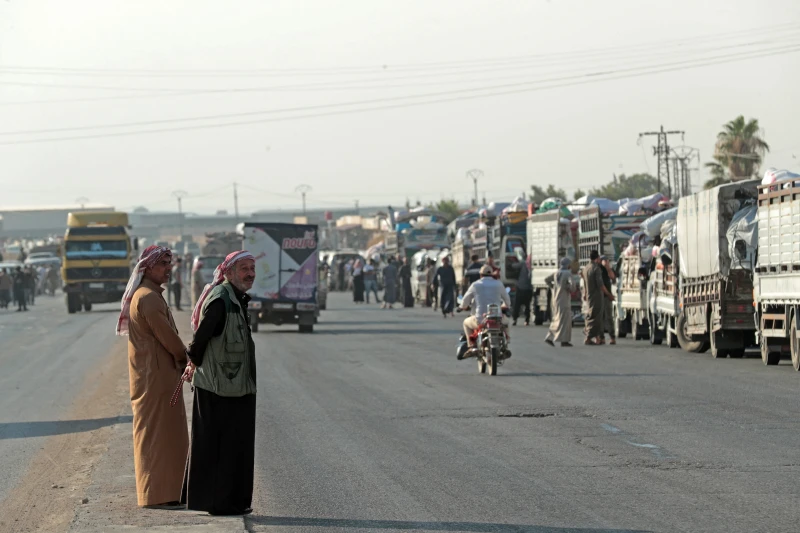
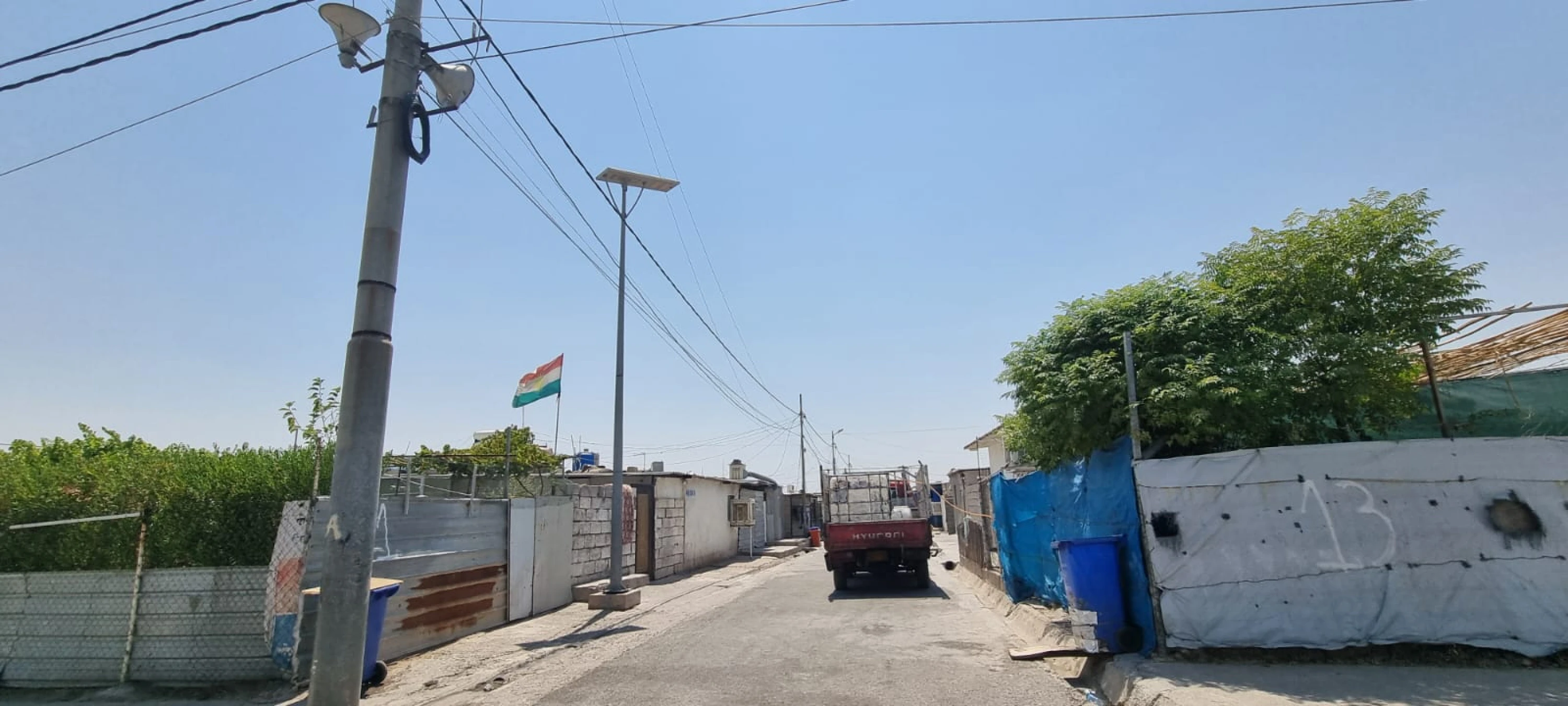
ERBIL, Kurdistan Region of Iraq - In contrast to Syrian refugees in other countries, those displaced in Iraq - especially Kurds who sought refuge in Iraqi Kurdistan - have proven reluctant to return home following the fall of the Assad regime in December 2024, despite 1.67 million from other states having done so.
According to data from the UNHCR, the UN refugee agency, there are around 281,260 Syrian refugees living in the Kurdistan Region.
Almost all of them are Syrian Kurds who face an uncertain future in their homeland following the Damascus government's January offensive that brought an end to the Kurdish-led administration in Rojava (northeast Syria), with economic, cultural, and security concerns underpinning this inertia.
“Many Syrians are waiting to see the outcome of the 29/30 January integration agreement between the GoS [Government of Syria] and SDF [Syrian Democratic Forces], as well as the 15 January GoS Decree 13 [on Kurdish rights]; they remain concerned by lingering security threats in parts of Syria and by the lack of reconstruction & investment in key return areas,” Toby Harward, the UNHCR representative in Iraq, told The New Region.
“At the same time, the welcoming policies adopted in Iraq, and particularly the Kurdistan Region of Iraq, gives them breathing space to assess the situation and make genuine voluntary decisions on when is the right time to return. I am confident that a large majority of refugees will return to Syria as the country stabilizes, investment returns, and opportunities materialize.”
According to UNHCR data, since December 2024, 8,700 Syrian refugees have returned from Iraq, including the Kurdistan Region, to Syria. In May, only 227 refugees returned from the Kurdistan Region.
A survey carried out by the agency in December 2025 that interviewed 689 Syrian refugees across Iraq, including in the Kurdistan Region, found that only 2 percent of that cohort reported interest in returning within the next 12 months. Still, more than 50 percent of the respondents hope to return within the next five years.
The majority of them did not want to return to Syria due to security concerns (66 percent), economic challenges (55 percent), destroyed homes (36 percent), or concerns over service availability in Syria (16 percent).
In the Darashakran camp in Erbil province, which was created in 2013 and hosts over 13,000 Syrian refugees, one cannot find many people willing to return.
In January, heavy fighting between Damascus and the SDF took place in northeast Syria, with the Kurdish-led force losing the majority of its territory, apart from Kobani and parts of Hasakah province.
Despite the SDF-Damascus integration agreement, many Syrian Kurds still do not trust the situation in Syria.
Security fears
“People are still afraid. There are fears of the Arab tribes, and the security situation is still unstable. There are still armed factions,” said Mohammed, a pseudonym, a 56-year-old who has lived in the Darashakran camp since 2013.
“There are also people who are worried about retribution. There is no stability. We are seeing gatherings by certain Arab groups against the Kurds; they want to take away what the Kurds have achieved.”
Last week, Arab tribal armed factions set up war tents in the Hasakah province and threatened to attack Kurdish-led security forces. Damascus eventually told the tribes to stand down, and no new clashes erupted.
“I spoke to my parents yesterday in Hasakah, and they told me that they have electricity for about one hour a day. And now with the gatherings in the tents, calling for war - what on earth is that?” said Faysal Qasim Ibrahim, a 59-year-old from Hasakah.
“There is no peace and stability that the people expect. Job opportunities are limited. Another problem is the language; our children are studying in Kurdish here, and there are no proper schools in Syria. And if people were to return, they need a place to stay; otherwise, how can they think about returning?”
“If a person lives in Erbil, they wouldn't change life here to go back to Syria where there are no certainties. There, your life could feel as if you are always surviving a threat.”
Economy
Furthermore, others say that there are fewer job opportunities in northern Syria after the SDF lost the war against Damascus.
“Before the so-called Integration Project, there were relatively more job opportunities in northeast Syria, but since then, they have decreased, especially in the admin institutions. Some employees have lost their jobs,” Ibrahim said.
“The Kurds are not being recognized and registered. The truth is that we cannot trust the situation. Someone who lives there was here on a visit, and he told me that 'we don't understand anything from the current situation; it's unclear where it will go!'”
“On the economic side; people are not sure where they can work and what they can do. If people were to return, they would need economic and financial insurance. People are also worried on that level,” Mohammed also added.
Many also said job opportunities are much better in the Kurdistan Region than in Syria. ”Here, we manage; if you work one day, you can provide for your family for two or three days. There are challenges here, but we manage,” Mohammed said.
Some Syrian Kurds have also visited their families in Syria to test the waters and see if a return is possible.
“They often say that the situation there is 'not good'. They say, 'We don't understand the state and the new arrangements'. People are still afraid. There is no electricity; food is expensive, and most important of all is the lack of safety and security,” Mohammed said.
“Returning has not been an option for me; it's difficult. About six or seven months ago, I was there, and I saw that living there was very hard,” said Islam (34), who is using a pseudonym. “People live day to day; if you are a guest at someone's house, they will have a financial deficit on that month. Even a lunch would cause them costs. If they don't have a relative in Germany to send them money, they can't live well. It's very difficult to live there.”
“I was in Derik during my visit. I also visited Qamishli. It was the same thing, same hardship everywhere. There is still inflation, and if you don't take a sack of money, you can't get around. I had 300 USD changed to get my mother some stuff from there; I had a bag of money in my hand.”
“There is no Syrian regime, but [those in power] are still harassing the Kurds; they don't want the Kurds to succeed,” he added.
Properties
Another reason is that many do not return since they do not own houses or properties in northern Syria.
“Very few people have returned; and they are those who have properties there. We are seven brothers, and we don't have any properties there; we cannot do much there,” Shapal Brahim (37), who is originally from Derik, told The New Region.
“The old life is no longer available in Syria, same is true for agriculture. This year, the crops were very good, but state pricing caused losses to the farmers. Here in Kurdistan, there is no fear; there is safety, and people have jobs, and get along. They cannot get the same things in northeast Syria.”
Jihan (61), added that many Kurds living in the Darashakran camp are Kurds who used to live in Damascus for work.
"[They] didn't have many properties in northeast Syria and when they moved to Iraqi Kurdistan, they had no rent to pay, and this was financially positive for them - there were also services, even if not with consistency."
“The refugees here are part of the poor line, and if they go back there, they don't have a house or any livelihood to live their life. Those who are 75 percent [of the refugees] sold everything they had in Syria in order to survive here.”
“If anyone from here decides to go to Syria, they need services and jobs; and people are not going mainly because of the economic situation there.”
Education
Another issue is education. Many children have been born in Iraqi Kurdistan and now go to public schools in the Kurdistan Region, which aim to integrate them in the local society. The downside is that it also makes it more difficult for these children to return to Syrian Kurdistan.
“The Sorani dialect was challenging at the beginning but over time, we have learned that, too. The early groups of refugees found the dialect difference very challenging; they could not get a handle of it at the beginning. But at the moment, our children have mastered the Sorani dialect, and they easily speak it,” Mohammed said.
Read More: Giving a chance to refugee children and qualified teachers
“Many students have finished high school and now they are at colleges and universities, and they graduate. The graduates find jobs in the private sector since the public sector is not available to them.”
“I don't know how it will work if the children who grew up here were asked by their families to go to Syria; after all the kids were either born here, or they grew up here. Such a change in location would require a long time, and that's not easy. Some have been here since 2011, and their kids are now in 10th or 11th grade; they don't recall much from Syria,” Ibrahim also added, who is also a teacher.
Furthermore, many Syrian Kurds living in the Kurdistan Region do not have Syrian papers. “Those here have Kurdistan Region residency; we don't have Syrian passports; where do we even get them?” he said.
However, this might change since Damascus is planning to open a consulate in Erbil.
Sirwan Kajjo, a journalist and researcher specializing in Kurdish politics, told The New Region that Syrian Kurds, unlike most Syrian refugees in other countries, do not live in refugee camps.
“Syrian refugees in Lebanon and Jordan and Turkey don't live in urban centers, but in Iraqi Kurdistan, the fact that the majority live in urban centers means that they have both integrated into the local communities, and also the fact that these are Kurds, most of them find Iraqi Kurdistan as home.”
“Iraqi Kurds have been welcome, have been supportive and helpful to their brethren from Syria,” he added. “So they've been part of the education system. Their children, for you know more than a generation, have been living there, learning at local Kurdish schools.”
“Many of the people who have moved to Iraqi Kurdistan have gone on to do great things in different fields, medicine, academia,” he said. “So for many Kurds, while the situation in Syria remains uncertain, both politically and economically, and also security-wise, a lot of Kurds would rather stay in Iraqi Kurdistan because they have established lives here.”
 Facebook
 LinkedIn
 Telegram
 X
X