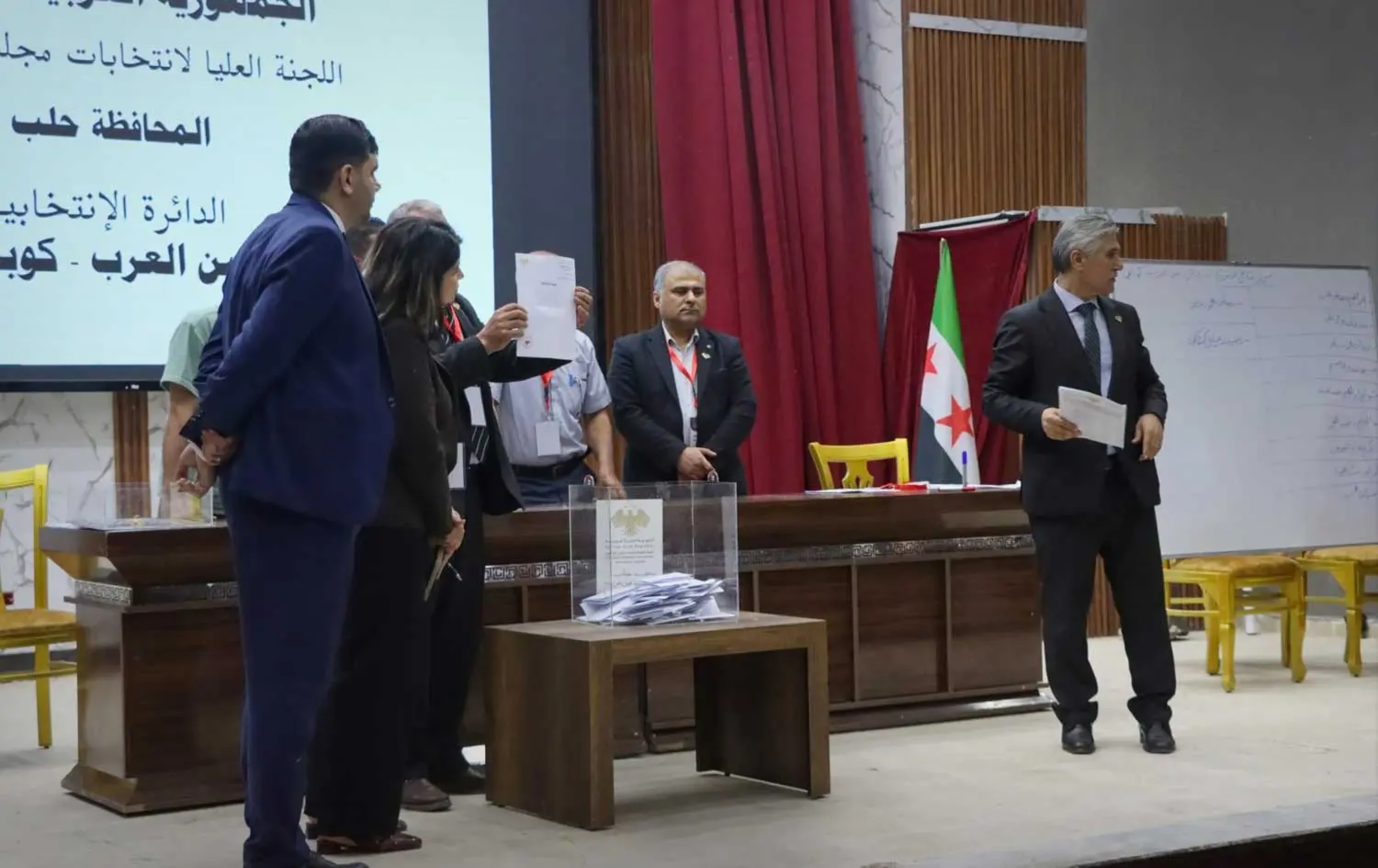
ERBIL, Kurdistan Region of Iraq – Kurdish representatives have secured a total of eight seats in the new Syrian People’s Assembly, but a major Kurdish party boycotted the polls, splitting the community over representation in the national legislature as core disagreements between Rojava’s (northeast Syria) ruling and rival parties continue to persist.
The 210-member Syrian People’s Assembly is selected two-thirds through local electoral bodies while one-third of the lawmakers are appointed by the president. Damascus has argued that direct elections have not been possible due to administrative challenges, with many Syrians lacking IDs and remaining displaced.
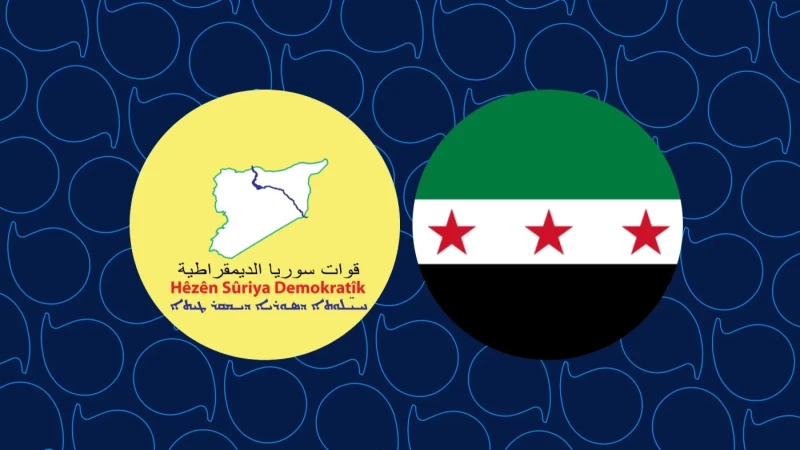
The elections in Rojava’s province of Hasaka, as well as the Kurdish cities of Kobane and Afrin, were boycotted by Rojava’s ruling Democratic Union Party (PYD), while its rival, the Kurdish National Council (KNC/ENKS), chose to participate in the vote.
In April of last year, the PYD and KNC held a Kurdish Unity Conference and agreed to work together and send a joint delegation for talks with the Syrian government.
“Even after recent unity talks and the conference which took place in April, many core disagreements remained unresolved, and skepticism about the durability of any agreement remained widespread,” Ghassan Bazo, a Syria-based researcher for the Rojava Information Centre (RIC), an independent monitor, told The New Region.
Kurds also sense a “growing feeling” that their political parties “have become too focused on rivarly and competition while ordinary people are more concerned with economic hardship, security, and protecting the gains achieved,” Bazo explained.
He added that many Kurds fear that during such a sensitive period, “major decisions about Syria’s future political structure and constitution could move forward without meaningful Kurdish influence.”
Hasaka and Kobane were initially excluded from the vote in October when they were still under full control of the Kurdish-led Syrian Democratic Forces (SDF).
However, the January clashes that saw Damascus-led forces make massive strides across Rojava led to a deal with the SDF to integrate Kurdish-held areas under Damascus control, making elections possible.
An assembly member - from an Arab background - was also appointed for the northern town of Sari Kani (Ras al-Ayn).
“We are with the principle that the Kurds must have a balanced representation in the Syrian parliament, and this is one of the main objectives of the Kurds in Syria,” Sihanouk Debo, a member of the PYD’s General Council and representative of the Rojava administration to the Gulf countries, told The New Region, on the PYD’s decision to boycott.
”But we distinguish between what this goal is and the latest comparison by the interim government. In the boycott of parliament we have our real reasons: The Kurds make up about 20 percent of the people of Syria, and this percentage must be achieved in parliament as well.”
“We do not believe that those who have been appointed represent the goals and aspirations of the Kurdish people and the Kurdish cause. They make a big mistake,” he underlined.
On Monday, PYD Presidential Council member Aldar Xelil wrote on X that one of the reasons the PYD boycotted the vote was the way that the electoral districts were organized in Hasaka.
“While most Syrian provinces were treated as a single electoral district or within a unified administrative framework, Hasaka was divided into separate districts such as Hasaka, Qamishli, and Derik (al-Malikiyah). In addition, Arab-majority areas were separated from Kurdish-majority areas, and subdistricts were divided from one another in a manner that appears to reflect a deliberate effort to redistribute seats along ethnic and regional lines,” he said.
In each of the Kurdish-inhabited areas, the Kurds and Arabs both won seats, including in Hasaka, Qamishli, Derik, and Kobane.
“It is a catastrophic mistake to accept the policy of Arabization in the Baath regime and consider the Kurds a minority in Hasaka,” Dibo stressed, speaking about the participation in the elections of Arab settlers, who were brought by the Assad regime to the Hasaka province in the 1970s to alter the ethnic composition of the northern border region.
“This is a Syrian national problem and not directed against the Kurds alone. So it must be solved realistically, not passing this Baathist plan and fixing it,” he said.
Idriss Nassan, former deputy head of Kobane’s foreign relations committee, told The New Region that the number of Kurds elected are not reflective of the community in Syria.
“People are disappointed with the electoral system, as the number of elected Kurdish nominees does not reflect the actual percentage of the Kurdish population in Syria,” Nassan said.
“Normally, Kurds demand at least 40 seats in parliament out of the total 210 parliamentary seats. Many political parties, including the PYD, boycotted the election results and called on the KNC to join them in the boycott. However, it seems that nothing will change, as both the KNC and the independent nominees are proceeding with the process,” he lamented.
Such few seats in parliament “will lack true political weight to influence the agenda” for the Kurds, according to the RIC’s Bazo.
“The KNC’s participation gives Kurdish politics a legal and institutional channel inside the state, while the PYD’s boycott leaves the most prominent Kurdish force in northeast Syria outside the process,” he explained, adding that the PYD’s boycott will harm their ability “to directly influence political debates from within state institutions.”
Sirwan Kajjo, a Syrian Kurdish journalist and researcher focusing on Kurdish politics, told The New Region that the PYD realized that the number of seats allocated to Kobane and Hasaka did not reflect the demographic realities of those areas.
“As a result, the PYD felt that the outcome was largely predetermined and that individuals affiliated with the Syrian government would secure seats for the KNC in both Hasaka and Kobane,” Kajjo said.
The KNC has previously boycotted elections in the PYD-dominated Rojava administration, formally known as the Democratic Autonomous Administration of North and East Syria (DAANES), and opposed elections in 2014 that were postponed due to US opposition.
Shellal Geddo, head of the Syrian Kurdish Centrist Party and a member of the KNC’s General Secretariat, told The New Region that they believe that the Kurds, after the great sacrifices they made in Syria, must evolve into stronger political and parliamentary engagement.
“Since the transitional Syrian parliament will determine the country’s fundamental laws and shape its new direction, it is essential that the Kurds are present and participate as a core part of this process,” he said.
On the KNC’s stance, Geddo explained that the party believes their participation in the elections “is still better than nothing,” asserting that “this could be foundational for whatever comes next, and so whatever gain they make, it will be something that will be a newfound political capital for them.”
As a result, the majority of the Kurdish elected representatives have links to the KNC.
In January, Syria's Interim President Ahmed Al-Sharaa issued a decree affirming the linguistic and political rights of the Kurds, but the PYD-led Autonomous Administration said it fell short of the recognition of Kurdish rights.
“I don't think having some representatives in the Syrian parliament will be enough to secure Kurdish rights in Syria in the long run,” Kajjo concluded.
“It should be part of a broader understanding of how Kurds should be treated in a new Syria that has not happened yet, because what the Kurds really want and have demanded for so many years is constitutional recognition of their rights, not a presidential decree here, and a few parliamentary representatives there, and that just doesn't satisfy long-standing Kurdish demands.”
 Facebook
 LinkedIn
 Telegram
 X
X