ERBIL, Kurdistan Region of Iraq - Iranian Foreign Minister Abbas Araghchi said in an event on Saturday that negotiations with Oman regarding a temporary route are “nearly complete,” adding that the new route’s establishment does not necessarily mean the opening of the Strait of Hormuz.
“Negotiations with Oman regarding the establishment of a temporary route are almost complete,” Araghchi said at a ceremony for journalists’ day.
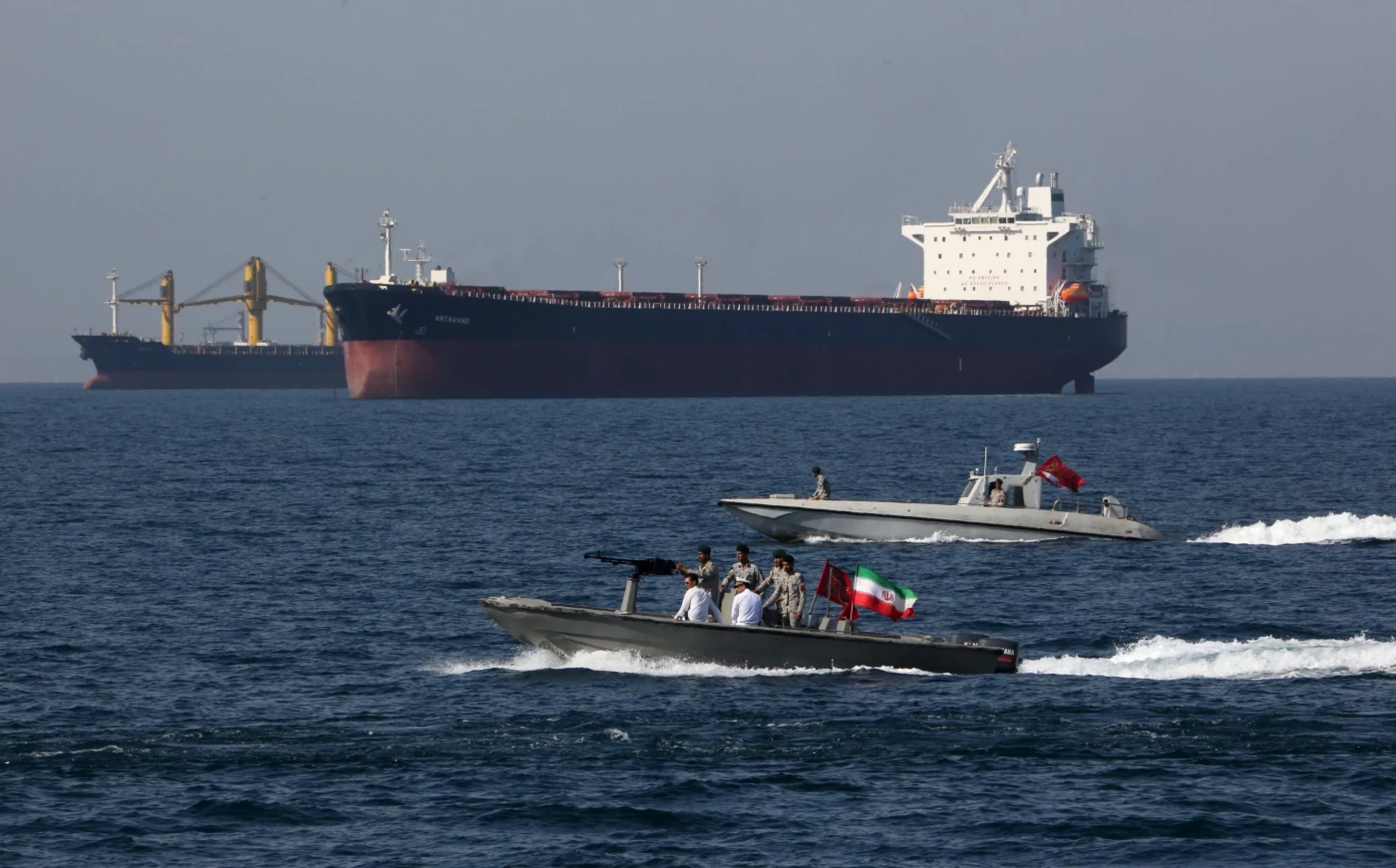
As a means in its war against the US and Israel which restarted in late February, Iran has closed the Strait of Hormuz, a vital waterway responsible for the transport of roughly 20 percent of the world’s oil, sharply driving up global oil prices.
Iranian authorities have repeatedly stressed Tehran's right to maintain control over the vital waterway in cooperation with coastal Oman, a proposition that Washington has repeatedly rejected, insisting on a greater role in overseeing the waterway and the free passage of ships.
Tehran has approached Oman to co-manage the waterway, while also proposing a tolling system, which has been rejected by Washington, which stresses that it is an international waterway.
“Establishing this route between Iran and Oman does not necessarily mean the opening of the Strait of Hormuz; it is subject to other conditions, and all instances of the memorandum of understanding violated by the United States must be addressed one by one,” Araghchi added.
Oman’s foreign ministry said earlier on Saturday that ongoing negotiations regarding navigation in the Strait of Hormuz are “proceeding in a positive and constructive atmosphere,” stressing the importance of avoiding actions that could affect the negotiations.
Earlier in the day, US Vice President JD Vance said Washington is “in the middle of the game” with Tehran to reach a possible deal that will end the conflict, adding that “some people” have talked about tolling the Strait of Hormuz but “the Iranians have told us” there are no plans of doing so.
The warring parties reached a memorandum of understanding (MoU) on June 17 to end hostilities and resume negotiations for 60 days. A key Washington condition in the MoU was free navigation in the strait.
The deal fell apart only 21 days later after the US Central Command (CENTCOM) said Iranian forces had attacked a Cyprus-flagged ship in the Strait of Hormuz.
“I state explicitly that the current outcome is a result of the violation of the memorandum of understanding by the United States,” Araghchi asserted.
Meanwhile, regional countries have repeatedly condemned Iran for attacking vessels in the Strait of Hormuz.
Oman on Saturday also condemned the “repeated attacks” on commercial ships transiting the waterway.
 Facebook
 LinkedIn
 Telegram
 X
X