
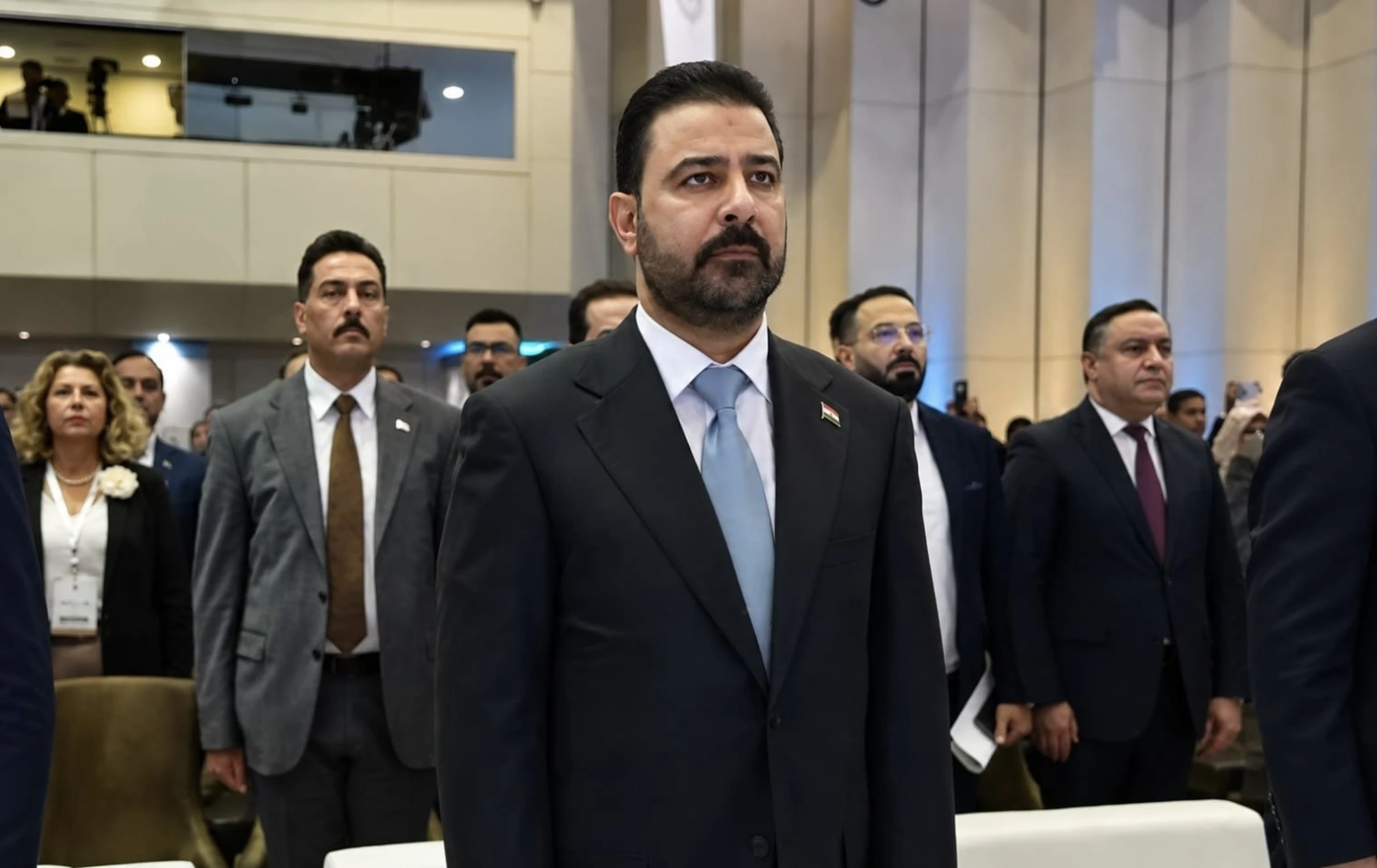
ERBIL, Kurdistan Region of Iraq – Iraqi Prime Minister Ali al-Zaidi said Friday that all political forces in the country are in “complete agreement” on the government’s efforts to establish state monopoly on weapons, adding that work is underway to develop mechanisms for weapons handover.
“All political forces are in complete agreement on proceeding with the state's monopoly on weapons, and work is underway on the mechanisms for weapons handover, and to end this situation completely,” the premier said during a panel at the 8th Baghdad Dialogue Conference.
The Iraqi government, led by Zaidi, has set September 30 as the deadline for armed groups to hand over all weapons to the state. The initiative is heavily backed by the US, which has long pushed for those groups – many of whom have strong ties to Iran – to be disarmed.
The groups have long been accused of using Iraqi territory as a launching pad for attacks on neighboring countries as well as the Kurdistan Region, with the latest regional unrest seeing the groups launch hundreds of airstrikes against essential infrastructure.
On July 29, American and Saudi forces carried out coordinated strikes against several bases of the Popular Mobilization Forces (PMF), a state-integrated but Iran-backed paramilitary umbrella group, across seven provinces of Iraq, killing at least 20 fighters and injuring 32 others. Saudi authorities said the attack came after the country’s oil facilities were targeted by Iran-aligned militias inside Iraq.
Zaidi has been the subject of threatening messages from Iran-backed groups over his efforts to disarm the groups. Most recently, Kataib Hezbollah warned that its “patience is running out regarding the provocative and irresponsible actions of the young Zaidi,” saying it could begin to act according to the principle of “an eye for an eye.”
“There are no intentions or possibilities of any military confrontation, and we will not allow Iraq's enemies to exploit any opportunity,” Zaidi said.
The attacks by Iran-backed factions have frequently targeted Kurdistan Region’s oil and gas infrastructure, leading many foreign producers to halt production.
“The presence of weapons outside the control of the state will create an environment that repels investment, and this is unacceptable as it does not serve the interests of Iraqis,” said the Iraqi premier.
He added that Baghdad “cannot sever ties with its Arab and regional surroundings,” noting “we have sensed a strong desire for openness towards Iraq.”
Zaidi affirmed his support for transforming Iraq from an “arena of conflict” to “a bridge for negotiations and understanding,” adding that Iraq’s influence “is significant and decisive in the stability of the region.”
The disarmament deadline is also set to coincide with the withdrawal of the US-led coalition against the Islamic State (ISIS) from Iraq.
Many pro-Iran armed groups have long used the US-led coalition’s presence in the country as a reason to maintain their weapons. These groups initially helped state forces in combating the threat of ISIS, but have since shifted to also attacking American personnel and interests as tensions soared between Washington and Tehran in the following years.
While several pro-Iran armed factions have announced their willingness to hand over their weapons and integrate into the state security apparatus, others have categorically rejected the calls to disarm.
 Facebook
 LinkedIn
 Telegram
 X
X