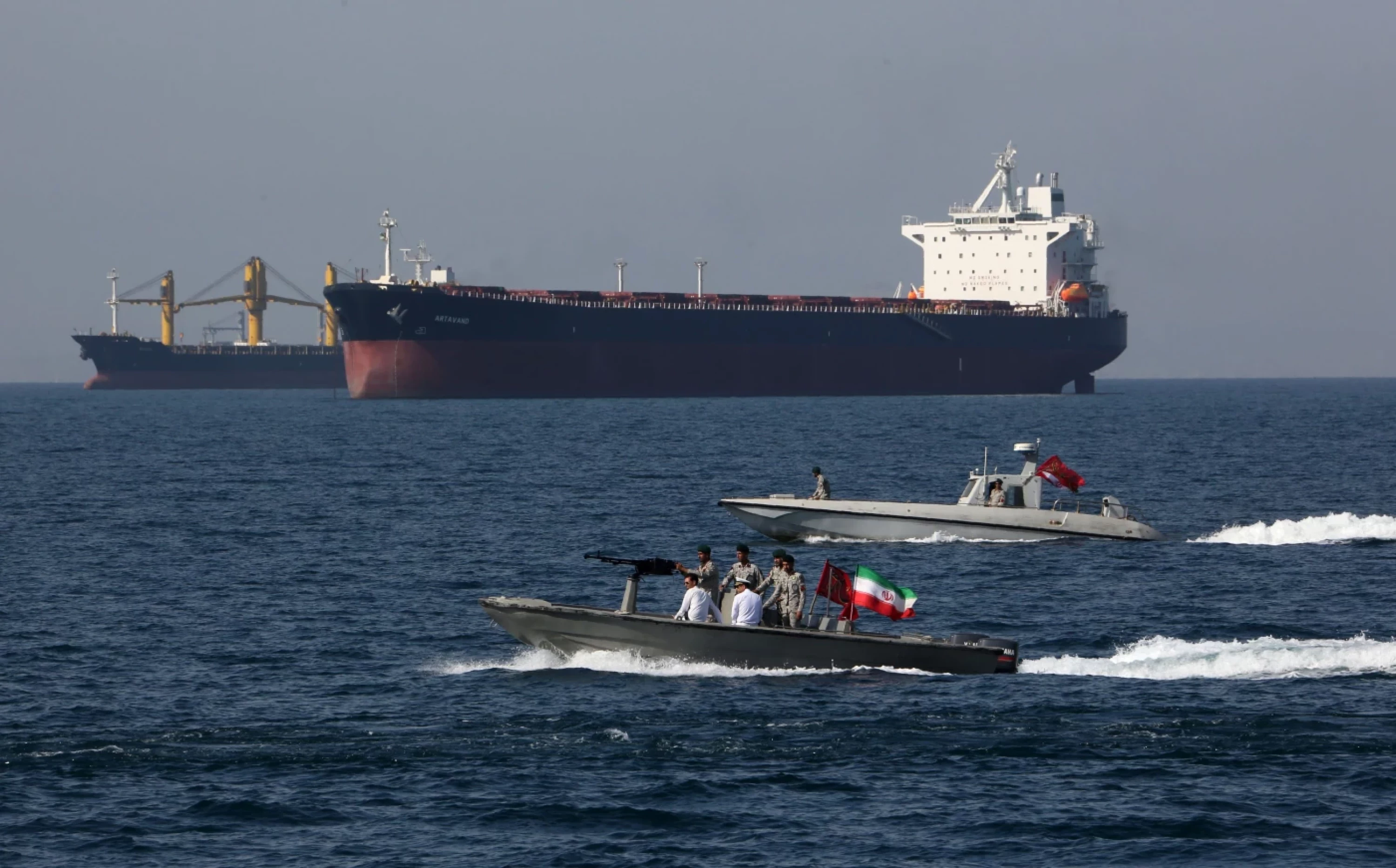
ERBIL, Kurdistan Region of Iraq – Iran has allowed some Iraqi oil tankers to pass through the Strait of Hormuz “so far,” despite its ongoing maritime blockade of the waterway, Iranian state media said Saturday, citing repeated requests from Iraqi authorities.
“So far, the Islamic Republic of Iran has authorized a number of Iraqi tankers to cross the Strait of Hormuz despite the most severe military measures and severe insecurity in the Strait of Hormuz,” the state-owned IRNA news agency reported.
It stressed that among Baghdad’s “most important demands” from Tehran during the three-day visit of Iranian parliament speaker Mohammad Bagher Ghalibaf to Iraq was “the issuance of a special permit for the passage of Iraqi tankers through the Strait of Hormuz.”
“This is not the first time Iraqi authorities have called for special authorization,” the report added, citing repeated requests by Iraqi authorities during past talks between the two sides.
Iraq has been facing a worsening financial crisis since the start of the US-Israeli war with Iran, with the closure of the Strait of Hormuz massively cutting off Iraq’s main source of income: oil exports.
Iraqi parliament speaker Haibat al-Halbousi said Friday that his Iranian counterpart, during his recent visit, had told him he would “discuss exempting Iraq from the Strait of Hormuz with Iranian leaders.”
According to state media, Iranian Foreign Minister Abbas Araghchi in April said that Iraq was among the countries that had received permission to cross the waterway during the war.
Iraq has since explored alternative routes to export oil through neighboring Syria and Turkey and revive former pipelines in the north, as passage through the Strait of Hormuz is widely considered dangerous and remains largely restricted.
Following the collapse of the US-Iran memorandum of understanding (MoU) in late June after Iran targeted a vessel in the strait for failing to heed its approved routes, Tehran has once again maintained restrictions on navigation through the waterway, directly affecting global energy prices.
The continuation of the war has raised concerns that measures implemented by the Iraqi government to offset declining revenues may not be viable long-term solutions, potentially leaving Baghdad with difficulties paying civil servant salaries in the coming months.
 Facebook
 LinkedIn
 Telegram
 X
X