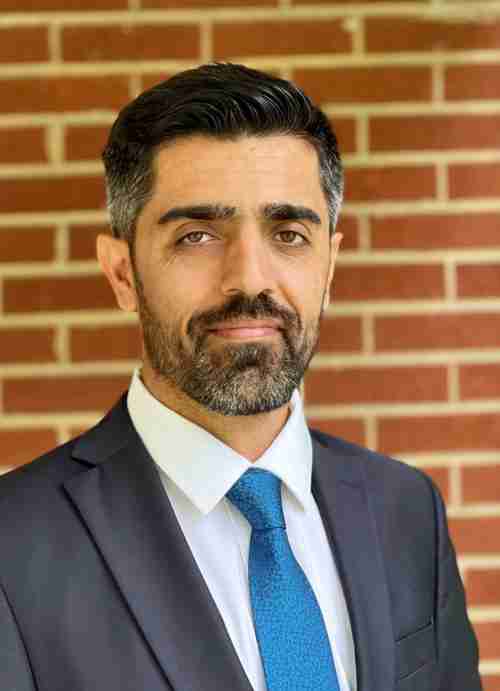
In the latest episode of The New Region’s GeoSpace podcast, host Mohammed A. Salih dives into the implications of the US-led Global Coalition’s planned September 30 withdrawal from Iraq with Dr. Muhanad Seloom, a Doha-based scholar of intelligence and national security, who has worked with the US State Department, the US Army Corps of Engineers, and the UK Ministry of Defence, and currently trains American diplomats on Iraq.
“I think it is symbolically very important and significant,” Seloom said of the withdrawal, noting that US and international coalition forces have been gradually reducing their presence in Iraq since 2011. But he warned that Iraq may still lack some of the capabilities needed to fully manage the security situation on its own.
“I don’t think the Iraqi government has a good plan for what comes next,” he said. “I didn’t read anywhere that the Iraqi government has a plan to fill the vacuum that would be left by these forces.”
Seloom cautioned against drawing a direct line between the 2011 US withdrawal and the subsequent rise of ISIS, arguing that political failures in Baghdad were equally important. “It’s true that after 2011, ISIS rose up and took one-third of Iraq’s territory, but that was not only because of the US withdrawal from Iraq,” he said. “It was also because of political mismanagement in Baghdad.” He warned that the Iraqi government could again become more sectarian or ethnopolitical toward minorities in the absence of an external force.
“If this force would leave suddenly, and especially with what’s going on in the region, there is a lot of tension,” Seloom said, pointing to tensions between Iran, the US and Israel as well as between Iran and the Gulf states. He warned that the departure could create space for political actors to “misbehave” and potentially create opportunities for extremist groups to rise again, particularly because Iraq lacks sufficient military capabilities to monitor them.
When asked how much progress Baghdad had made in its recent push to disarm the Iran-backed militias within Iraq, “not much,” Seloom said. “I know that the Iraqi government is saying that they are very serious about this, and they want to disarm these militias, but I think there is a problem here.” He said Baghdad has not clearly specified which armed groups it intends to disarm.
Seloom said the distinction between state-sanctioned forces, groups operating outside the PMF, and Iran-aligned factions has become increasingly difficult to establish. “There are no clear lines between who is under the PMF, who is outside the PMF only, and who is with Iran,” he said.
He also said Iran is actively working to prevent the disarmament process from moving forward, arguing that Tehran has dispatched senior figures to Iraq to intervene on the issue.
“Yes, Iran is intervening, trying to stop this,” Seloom said. At the same time, he argued that Washington is closely watching how Baghdad and the Coordination Framework respond, saying Iraqi Shiite political forces “perceive an existential threat coming from the US.”
Seloom said the issue extends beyond Iraq’s internal politics because Washington’s continued protection of the country has helped underpin the post-2003 political order. “The new political process in Iraq after 2003, it has been created, maintained, and protected by the US since 2003,” he said. “If the US lifts its hand over protection over this country, then other countries in the region would be intervening.” He argued that a new regional order is already taking shape as countries seek new security arrangements.
Seloom said the competition over the post-US regional order has already begun. “Well, it has already started,” he said, pointing to growing efforts by Turkey, Saudi Arabia and Pakistan to expand their roles in the region. But he argued that the emerging order would likely be based on a collection of bilateral and multilateral arrangements rather than a single country replacing the US. “These countries now, they’re trying to have these bilateral, trilateral treaties to provide deterrence, and also to complement their relationship, their existing commitments and relationship with the US,” he said.
Ultimately, Seloom said, the consequences of the September 30 withdrawal will depend not only on what happens to US forces, but on whether Baghdad can establish effective control over Iraq’s armed groups and navigate the growing competition among regional powers. “If the US would say to Iraq, okay, well, you failed to disarm these militias, now you are on your own,” he said, “then other countries in the region would be intervening.”
 Facebook
 LinkedIn
 Telegram
 X
X