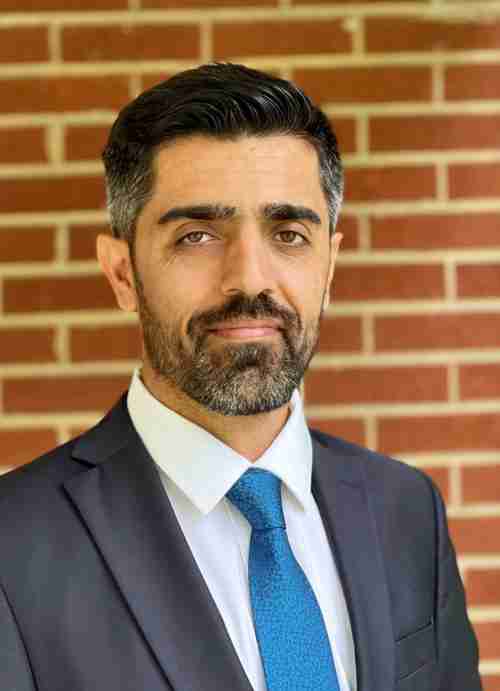
In the latest episode of GeoSpace, host Mohammed A. Salih sits down with Mohammed Hussein, resident research fellow at the Dhia Jafer Center for Energy and Natural Resources at the American University of Iraq, Sulaimani, and editor-in-chief of Iraq Energy Outlook, to discuss Iraq's decision to devalue the dinar, the widening gap between official and parallel exchange rates, and what the country's proposed 2027 budget reveals about the fragility of its finances.
The decision to raise the official dollar exchange rate from 1,320 to 1,520 dinars was, Hussein argued, both an emergency measure and a symptom of deeper structural dysfunction.
"The federal government, over the past ten months, has not been able to make half of its expenses," he said. "The dinar devaluation is the first thing the ruling elite usually do when they face a serious fiscal shock."
"It's easy for the ruling elite… It's actually not easy for the Iraqi citizens and households who are still depending on a fixed dinar income. Their purchasing power is dramatically reduced."
On the parallel market, where the dollar now trades at around 1,660 dinars, well above the new official rate, Hussein pointed to the Iraqi public’s lack of trust in the banking sector.
"Out of 107 trillion Iraqi dinars, we still have less than half of this in banks," he said. "The rest is in the pockets of people, in their homes. It tells us that the majority of Iraqi people still don't trust banks."
Since the start of the year, the Iraqi government has placed a dollar embargo on the Kurdistan Region’s businessmen, withholding US dollar access from Kurdish traders at the official exchange rate set by the Central Bank of Iraq (CBI), citing what they regard as Erbil’s non-compliance with the ASYCUDA international customs system, which is implemented in federal Iraq.
Hussein pointed out that almost all importers in the Kurdistan Region have been excluded from access to the Central Bank's dollar, forcing them to rely entirely on the parallel market. Paradoxically, he said, this exclusion has made Kurdistan slightly more resilient to the devaluation's inflationary impact, since the Region was already operating at a market rate closer to the new official one.
"Almost everyone knows that [Iraqi Prime Minister] Ali al-Zaidi is handling the problems and the mess of previous governments," he said. But he warned that the anti-corruption campaign's credibility is already being questioned in some quarters. "Somebody has described it as a trap to catch only small fish, and leaving the big fish to keep doing what they have done so far."
On the 2027 federal budget, Hussein was doubtful the country can produce and export oil at the rate it is reportedly set to outline in the bill.
"Iraq has never been able to export even three and a half million barrels per day," he said. "To export four million, we need to produce at least five million. In the history of Iraq, we have never seen the oil ministry produce five million barrels per day."
He was similarly skeptical of Zaidi’s stated ambition of reaching ten million barrels per day by 2030.
"We had such talks in 2007, 2008, and again in 2015 and 2017," he said. "We are still at the export level of 1979. In 1979, without the support of international oil companies, Iraq was producing more than four million barrels per day. Let's be realistic."
On Iraq's plans to diversify its export routes through pipelines connecting Basra to Syria's Mediterranean coast and Turkey's Ceyhan port, Hussein acknowledged the projects are theoretically sound, but expressed deep concern about whether Iraq's institutions are capable of realizing them.
"The project is viable, it's the right solution, but it needs stability, capital, and institutional capacity," he said. "I am afraid the current fiscal difficulties will overwhelm the whole Iraqi government in a way that will not allow it to lead these projects as an opportunity."
"At the end," he added, "we will lose the opportunity and stay in this poverty trap."
 Facebook
 LinkedIn
 Telegram
 X
X