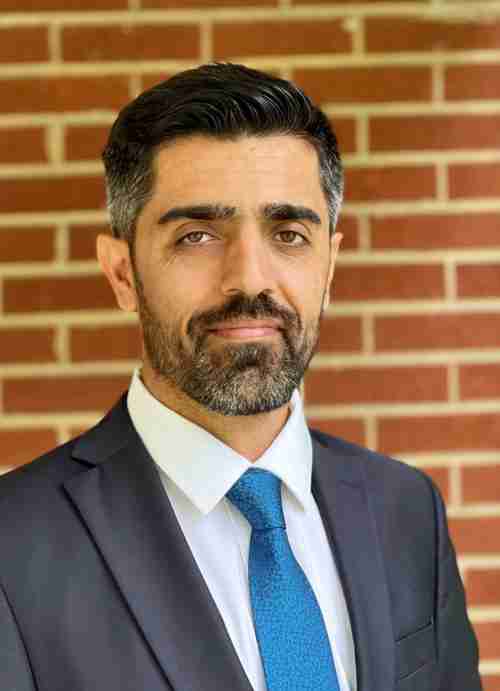
In the latest episode of The New Region's GeoSpace, host Mohammed A. Salih sits down with Sirwan Kajjo, a journalist and researcher focusing on Kurdish politics and Syrian affairs, to discuss what he saw during his recent visit to Rojava, the tensions between Kurds and local Arab groups, and whether the arrangement between Damascus and the Kurds can last.
Kajjo, on his first trip back to northeast Syria (Rojava) since the fall of the Assad regime, described a region that looks different from the moment one crosses the border.
“It's really a mixed bag… Before, the region was entirely under Kurdish administration. That is no longer the case. Syrian government officials are there, Syrian flags have been installed,” said Kajjo.
He said reactions depend on who one asks. Some Kurds are disappointed over the loss of autonomy, while others hope the change will bring better services to a historically marginalized region.
“Autonomy that is now lost is perceived in the context that it provided a margin of safety for the local population,” he said. “That is no longer there, at least in the bigger cities like Hasaka and Qamishli.”
On Damascus's outreach, Kajjo pointed to visible projects, including a new highway, the reopening of Qamishli airport, and the Nusaybin border crossing with Turkey, set to reopen before the end of the year.
“The government wants to show the Syrian Kurds: look, we're not enemies,” he said. “I don't know whether the Syrian government has entirely succeeded at winning hearts and minds, but I could sense that there is an effort to do that.”
The researcher asserted that the significance of the steps taken so far should not be downplayed, such as the recognition of Kurdish as a national language, Newroz being celebrated as a national holiday, and Kurdish classes being offered as an elective in schools.
“We shouldn't discount the significance of these developments,” he said. “Syria no longer views the Kurds from a security prism.”
However, Kajjo was doubtful that a similar treatment would be extended to other minorities in Syria.
“I don't think Damascus has the intention to include other elements, other components and communities in this process,” he said. “The only reason Damascus is working with the Kurds is that it has faced international pressure to do so.”
Kajjo said Kurds are asking for guarantees that do not yet exist.
“As long as these new changes are not enshrined in the Constitution, I don't think the Kurds will have any guarantees in the future,” he said. “Who knows what's going to happen to the status of the Kurdish language in a few years?”
He also criticized Damascus for viewing the Kurdish issue only through the Syrian Democratic Forces (SDF), stressing that “Kurdish politics is much more complicated than that.”
“There is a burgeoning civil society in Rojava that is very active, and these people are not included in the conversation right now.”
On resistance from some local Arab groups, Kajjo said the tensions are not new but have resurfaced because some Arabs feel empowered by the shift in power.
“They viewed the whole time that Kurds were in power as a temporary thing,” he said. “Now things need to go back to what was pre-2011, where the Baathists were in charge of every aspect of life.”
He described two groups who each reject the new reality: Arabs who feel Kurdish gains should never have happened, and Kurds who feel they have conceded too much.
“You have almost daily protests by Kurdish students demanding full Kurdish language education, and you have counter-protesters who just don't accept that altogether,” he said.
Kajjo also noted that many displaced people from Sari Kani (Ras al-Ayn) and Afrin have yet to return home, citing mutual mistrust and a lack of basic services.
On the impact of the Democratic win in the US midterm elections, Kajjo did not expect a major shift in Syria policy, since both parties share the view that Syria's government should be given a chance.
“The only thing I might see more often is more scrutiny over human rights violations in Syria,” he said. “That might be an opening for the Kurds and other advocates in Washington.”
 Facebook
 LinkedIn
 Telegram
 X