ERBIL, Kurdistan Region of Iraq - Iraq’s ruling Shiite Coordination Framework called on “all parties” to commit to “a complete and comprehensive de-escalation” following the full withdrawal of the US-led coalition from Iraq, the prime minister’s office said Saturday.
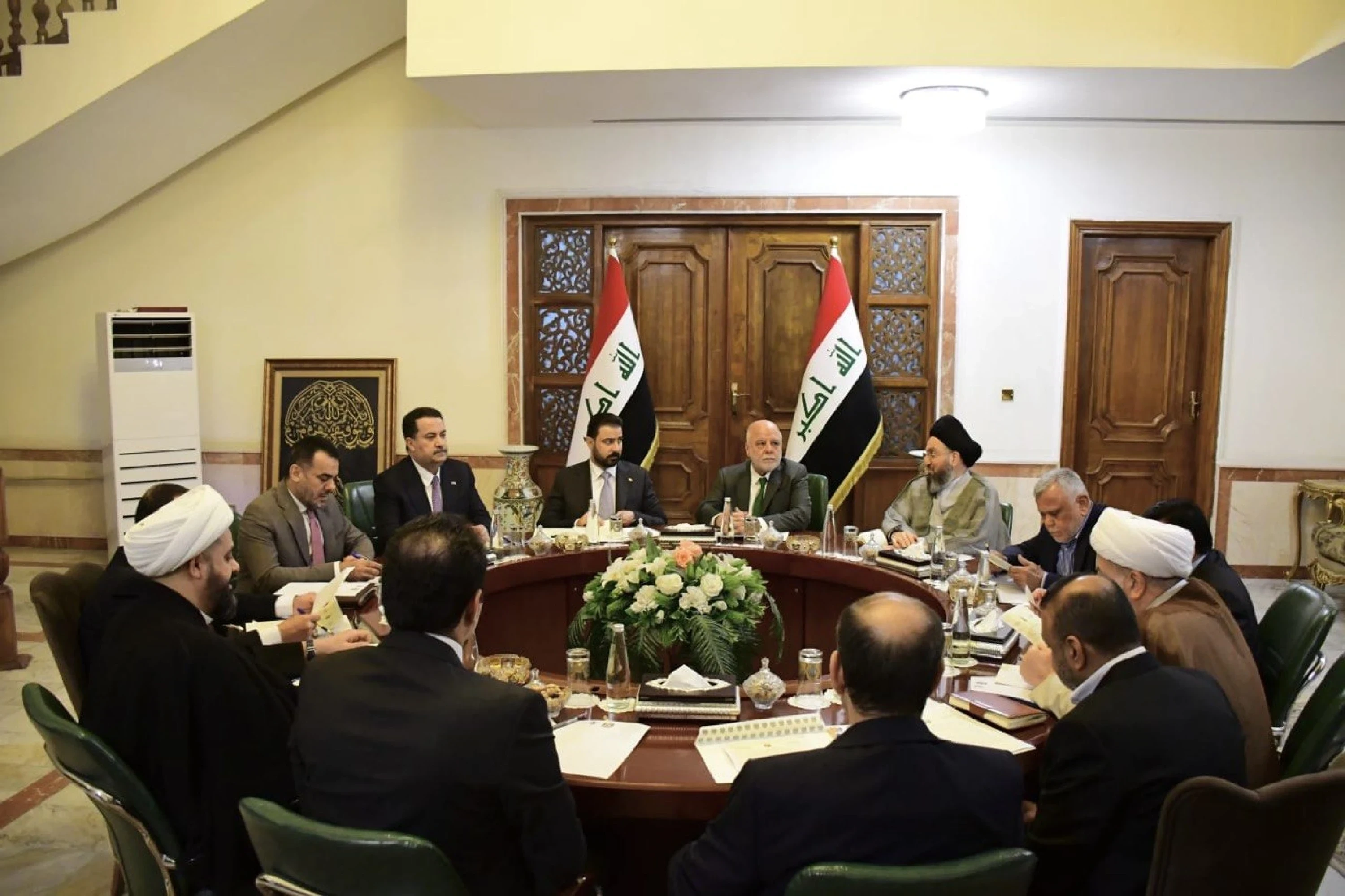
At Prime Minister Ali al-Zaidi’s invitation, the Coordination Framework held “an emergency meeting” on Friday at the government palace, where it discussed “current political and security developments and the requirements of the post-‘Sovereignty Day’ phase,” according to a statement from Zaidi’s office.
The so-called Sovereignty Days were a four-day national public holiday from September 30 to October 3, marking the complete withdrawal of the US-led coalition in the fight against the Islamic State (ISIS), following years of joint military coordination against the group.
The coalition’s withdrawal had been a key demand of several political forces and Iran-backed Iraqi militias, with some armed groups saying its departure was a prerequisite for considering the handover of their weapons to the state.
“The Coordination Framework called on all parties to commit to a complete and comprehensive de-escalation,” the statement added.
Zaidi’s government had initially set September 30 as the deadline for armed groups to hand over their weapons, but later shifted to a phased process extending into 2027 after several groups rejected the deadline. Under the plan, armed factions would first observe a 90-day period without attacks, with guarantees that they would not be targeted by US strikes, before moving toward the gradual handover of weapons and integration of fighters into state institutions.
The Coordination Framework formed a committee in coordination with the government to determine mechanisms for implementing the process of restricting weapons to the state.
The bloc on Friday also called on the committee to continue working “at the same pace” on the disarmament process until June 30, 2027, the deadline set by Zaidi for the complete disarmament of the groups.
The committee’s formation came as the ruling Shiite bloc was reportedly tasked by Tehran with negotiating on behalf of the factions with the Iraqi government to prevent an escalation between the two sides.
Two Iran-backed Iraqi militias, Kataib Sayyid al-Shuhada and Ansar Allah al-Awfiya, confirmed their commitment to Zaidi’s disarmament timeline on Thursday.
The ruling bloc “highly commended the responsible factions for their stance regarding the public interest and their commitment to the agreement document,” Zaidi’s office added.
Kataib Sayyid al-Shuhada is one of three factions that comprise the so-called Islamic Resistance in Iraq (IRI). Its statement came despite a statement released under the IRI’s name a day earlier, which said that they are “not bound by any timeline or agreement” with the Iraqi government or political entities to disarm, despite the coalition’s withdrawal.
Leader of the powerful Iran-backed Kataib Hezbollah, Abu Hussein al-Hamidawi, said Wednesday that the group had not reached an understanding with Zaidi regarding the disarmament process, while describing the existence of independent armed groups as a “positive attribute.”
 Facebook
 LinkedIn
 Telegram
 X
X