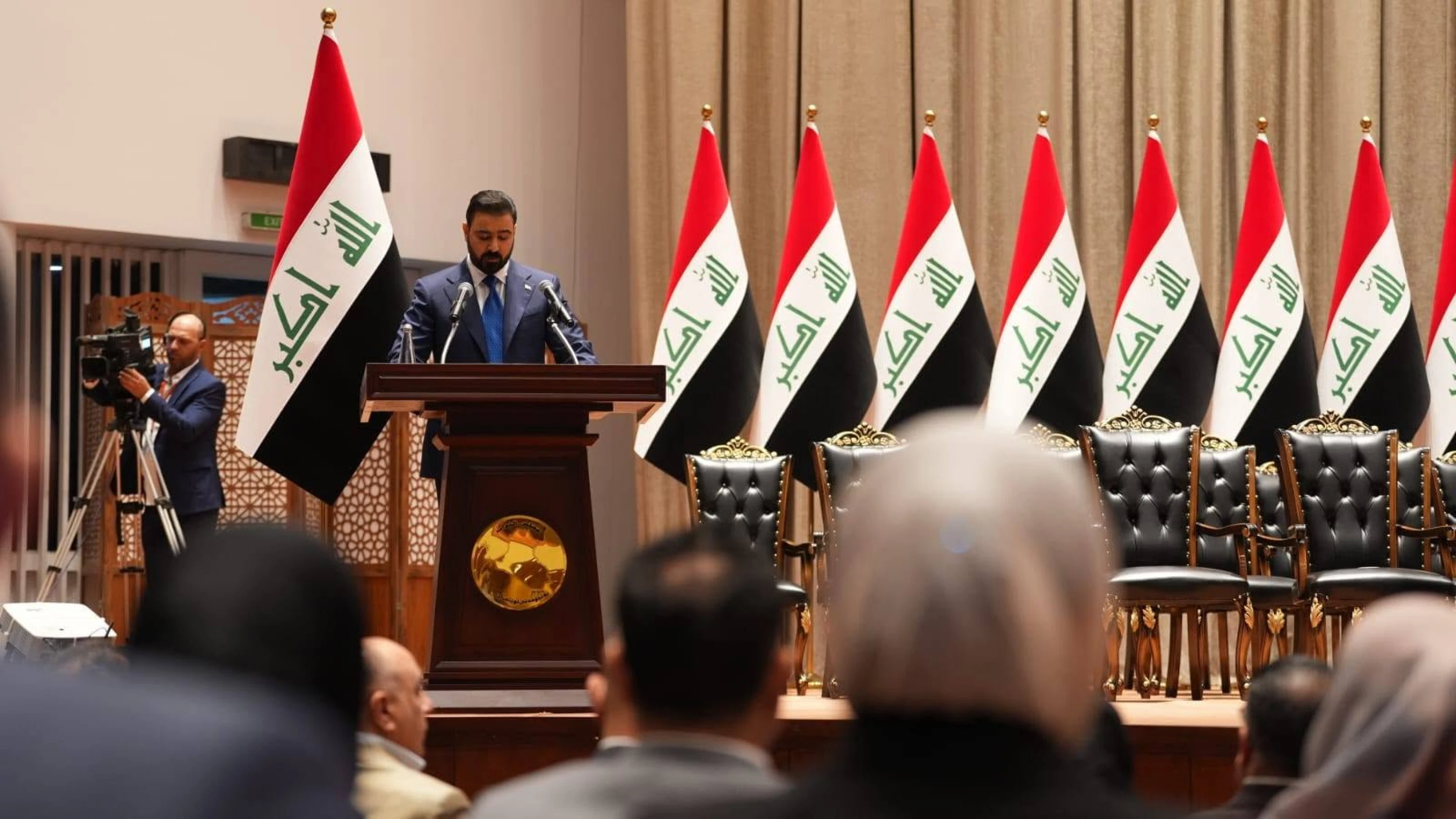
ERBIL, Kurdistan Region of Iraq – Iraqi Prime Minister Ali al-Zaidi will reportedly appear before lawmakers in the parliament on Thursday evening to discuss the government’s devaluation of the dinar, a member of the legislature told The New Region.
On Tuesday night, Iraq’s Council of Ministers amended the exchange rate of the dinar to the US dollar from 1,320 per dollar to 1,520, with the measure coming into effect on Wednesday. The decision has sparked widespread backlash across the country, where the population is already struggling with surging prices of goods and inconsistent public sector salary distributions.
The parliament was set to host Finance Minister Faleh al-Sari and Central Bank of Iraq (CBI) Governor Nizar Nasser on Thursday, but the session was never held. Iraqi state media also denied reports that a meeting was held between Nasser and the parliament’s finance committee on the issue, claiming that the meeting was postponed based on the committee’s request.
“There are talks that at 8:00 PM tonight that Ali al-Zaidi, Iraq’s Prime Minister, will come to the parliament. Which is why the meeting of the finance minister and the CBI governor with the finance committee was postponed to 8:00 PM so that they may attend the meeting alongside the prime minister,” Sherwan Dubardani, an MP from the Kurdistan Democratic Party (KDP), told The New Region.
Dubardani further claimed that parliament speaker Haibat al-Halbousi is set to meet with the head of the parliamentary blocs before the session with Zaidi to review the positions on the issue.
There has been no official confirmation from the prime minister’s or the parliament’s media office that Zaidi will indeed be present in the session.
The government’s decision was followed by a sudden plunge in the Iraqi dinar’s value, surging past 170,000 dinars per $100 - a dramatic shift compared to the 163,000 rate the night before.
The Iraqi dinar initially fell during the onset of the Iran war, but then stabilized as Prime Minister Ali al-Zaidi’s government was elected. Since then, it has continued to gradually fall in value.
A weaker dinar raises the cost of imported goods, including food, medicine, and consumer products, putting additional pressure on Iraqi households already grappling with rising living costs.
 Facebook
 LinkedIn
 Telegram
 X
X