
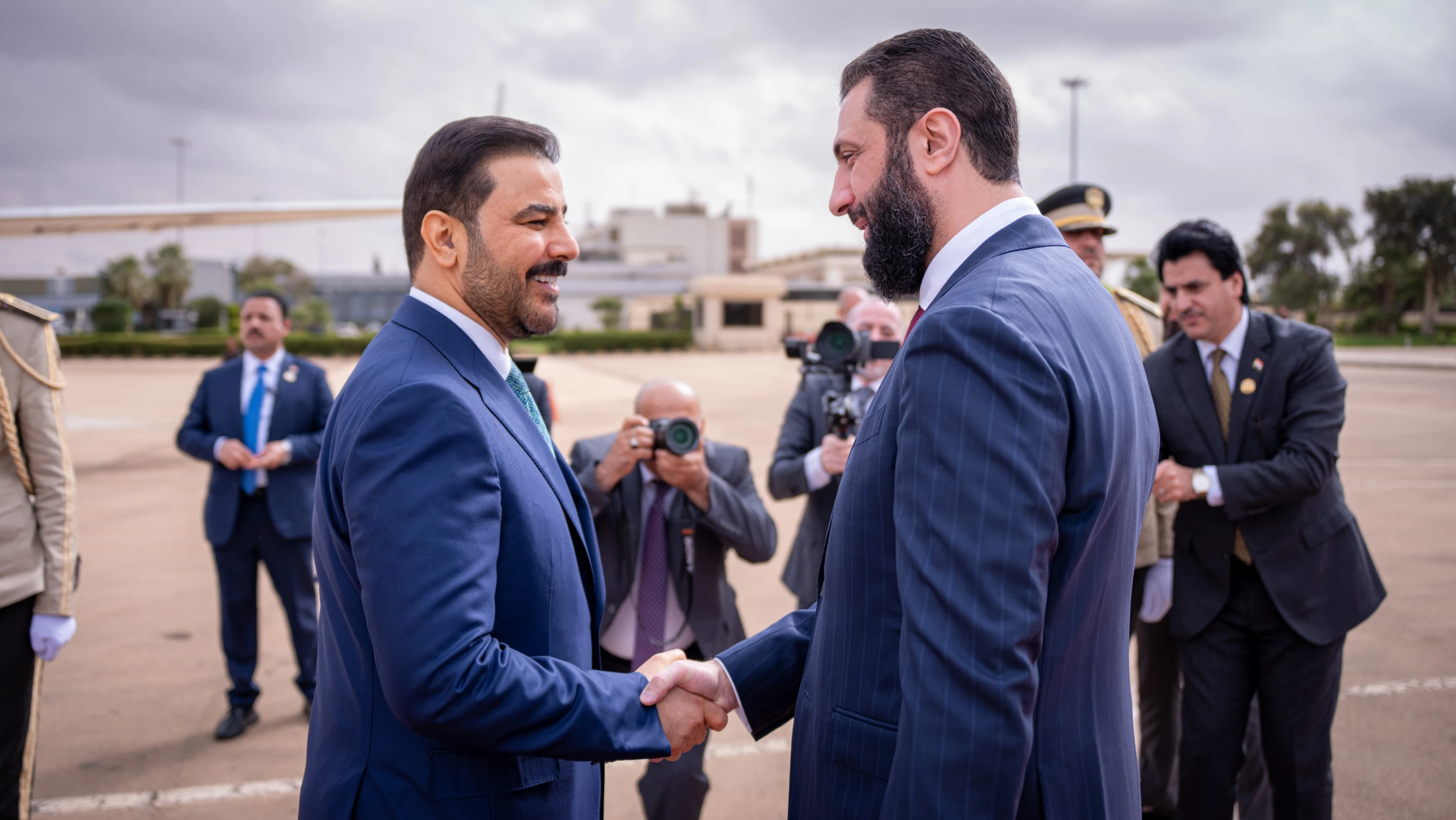
ERBIL, Kurdistan Region of Iraq – Iraqi Prime Minister Ali al-Zaidi on Wednesday met with Syrian President Ahmed al-Sharaa in Damascus, where they discussed the export of Iraqi oil via the Baniyas pipeline as Baghdad seeks alternative routes to the Strait of Hormuz.
Zaidi is in Syria on his first official trip to the country, where he and his accompanying delegation were received by Sharaa at Damascus International Airport upon arrival.
The Iraqi premier "affirmed that the Iraqi and Syrian peoples are one people in two countries, pointing to efforts to develop partnership and joint cooperation in various fields, especially economic and social ones, and to enhance security cooperation and unify positions on regional and international issues, and to work towards achieving peace and stability in the region," according to his office.
The two also discussed “the export of Iraqi oil via the Baniyas pipeline—with a capacity of up to two million barrels per day.”
The US-Iran war and the subsequent closure of the Strait of Hormuz have taken a significant toll on Iraq’s oil exports and economy, as the country ships much of its crude through the strategic waterway.
As a result, Baghdad has sought alternative long-term measures to ensure its export stability, both by increasing exports to Turkey’s Ceyhan port and through transporting truckloads of oil to Baniyas.
Iraq and Syria signed a memorandum of understanding (MoU) in June to restore a pipeline from Haditha in the western Anbar province to Baniyas on the Syrian Mediterranean coast.
The Haditha-Baniyas pipeline dates to 1925, according to Syria’s state-owned SANA news agency. It was damaged during the US invasion of Iraq in 2003 and went out of service.
The two also discussed “strengthening security cooperation, aligning positions on regional and international issues, and working toward peace and stability in the region,” the statement added.
Ahead of the meeting, The New Region learned that the meeting would also talk about the security vacuums on their shared border that are exploited by criminal gangs and the Islamic State (ISIS).
 Facebook
 LinkedIn
 Telegram
 X