
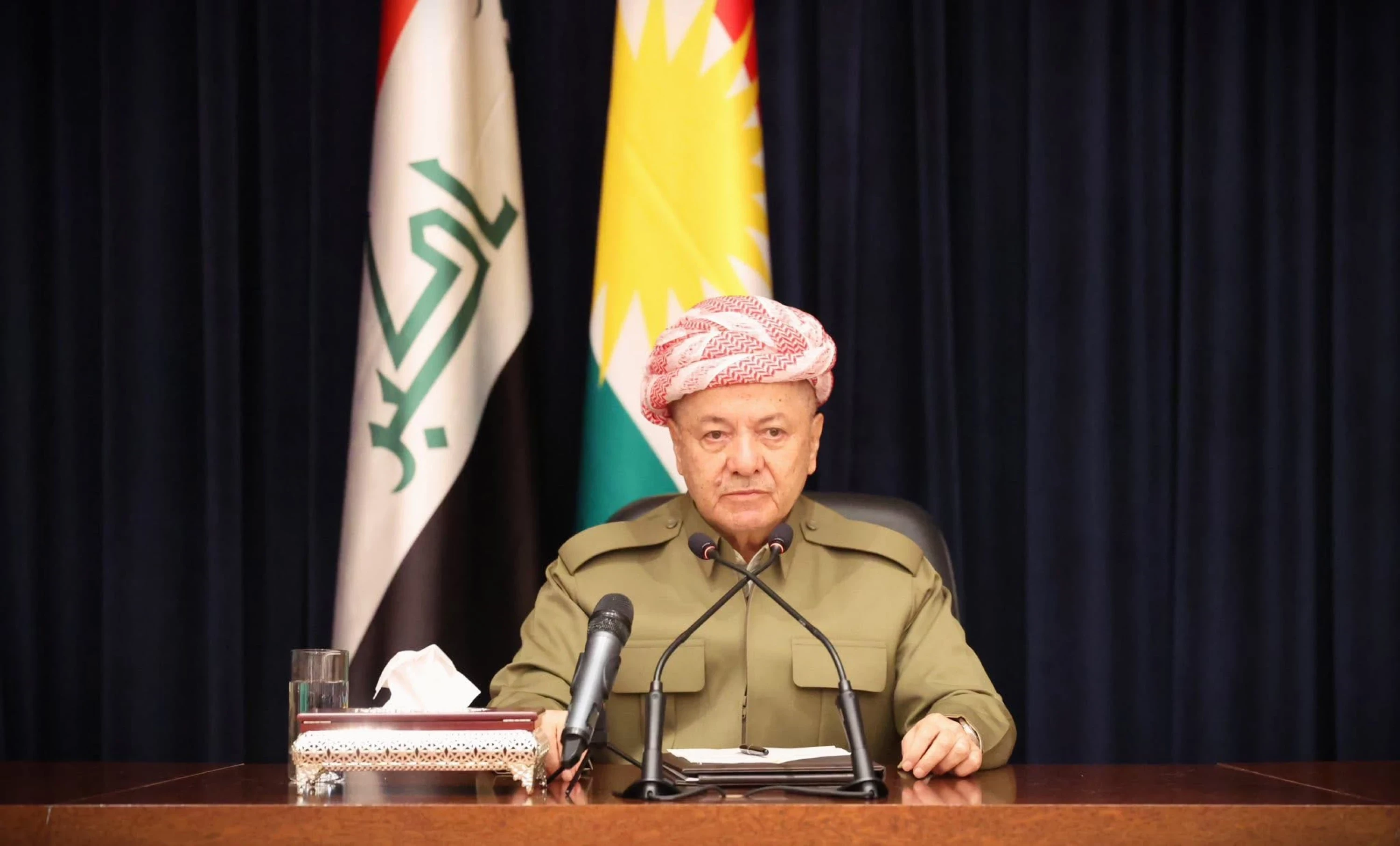
ERBIL, Kurdistan Region of Iraq - President Masoud Barzani on Tuesday condemned the Iraqi government's "attempt to violate the principles of federalism and the Iraqi constitution" regarding the Kurdistan Region, vowing that Kurdistan "will not be subject to unconstitutional decisions."
Iraqi Prime Minister Ali al-Zaidi on Tuesday directed Iraqi security forces to enter the Kurdistan Region and set up checkpoints across the Region’s provinces, and instructed Iraq’s Border Ports Authority to take control of the Region’s border crossings.
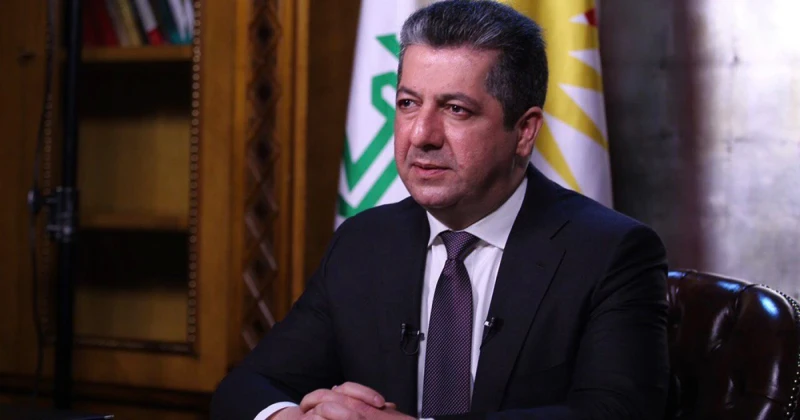
The move, which also would also entail Iraqi forces assuming control of the oil fields in disputed areas held by the Kurdistan Region and the closing of all unofficial crossings between the Region and neighboring countries, as well as informal crossing routes between the Region and federal provinces, was met with surprise by Kurdish officials, with Kurdistan Region Prime Minister Masrour Barzani terming the directives "unacceptable".
The Kurdistan Democratic Party (KDP) and Patriotic Union of Kurdistan (PUK), the Region's ruling parties, issued a joint statement rejecting any moves by Baghdad that violate the Iraqi constitution, stressing that this constitutes a "red line."
"There has been an unnatural movement against the Kurdistan Region in the Iraqi decision-making centers, which is an attempt to violate the principles of federalism and the Iraqi constitution, ignoring the rights of the Kurdish people and presenting unhealthy decisions and ideas," President Masoud Barzani said in a subsequent statement.
Stressing the resilience of the Kurdish people in the face of genocide at the hands of the former Baathist regime, Barzani spoke of the hope Kurds placed in the post-Saddam Hussein constitution in enshrining the rights of all components in Iraq, though lamenting its lack of implementation that has resulted in the rights of the Kurdish people being "violated day by day."
"We must all hold on to the principles of the constitution and in a country that has suffered a lot to get rid of dictatorship and achieve freedom."
The Kurdish leader also spoke of Erbil's support for Prime Minister Zaidi in combating corruption and pledged to lend the Kurdistan Region's support to efforts to clamp down on "illegal activities and smuggling" through "legal and constitutional means."
"The Kurdistan Region will not be subject to unconstitutional decisions and the imposition of the will of anyone," Barzani concluded.
Since assuming the premiership, Zaidi has made the expansion of Iraqi state sovereignty a staple of his government, though his directives regarding the Kurdistan Region mark an unprecedented push for control in what is a constitutional entity under Iraq's federal system.
Kurdish authorities have long bemoaned efforts by Baghdad to diminish its effective status as such, with issues such as budgetary allocations, public sector salaries, domestic revenues, oil exports, and the implementation of the ASYCUDA customs system at the Kurdistan Region’s border crossings having plagued Erbil-Baghdad relations for years.
Speaking to The New Region on Tuesday, Prime Minister Masrour Barzani said that Kurdish authorities "are willing and ready to cooperate" with both the Iraqi federal government and oil companies to ensure that the Region's natural resources are used "for the benefit of the entire population."
The Kurdish premier on the same day also spoke of his surprise at Zaidi's newly unfurled directives, stressing that the move "contradicts the content of the discussions that we have had with Baghdad authorities."
 Facebook
 LinkedIn
 Telegram
 X