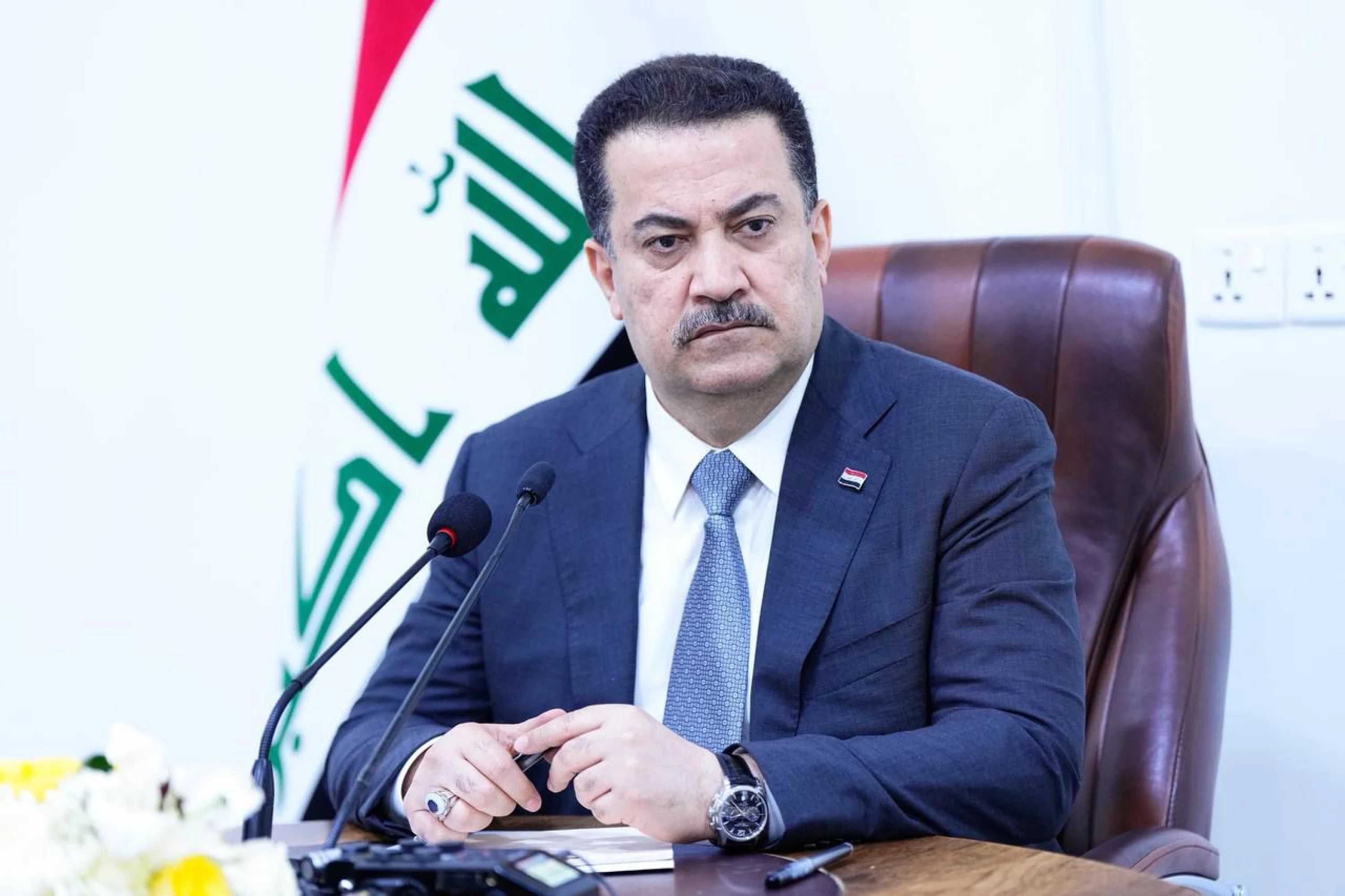
DUBAI, United Arab Emirates - Iraqi Prime Minister Mohammed Shia’ al-Sudani on Thursday ordered an urgent investigation into the mistaken designation of Hezbollah and the Houthis as terrorist groups and the subsequent freezing of their assets, a move that was promptly reversed.
Iraq’s Committee for Freezing Terrorist Funds earlier on Thursday published a decision through the Official Gazette ordering “the freezing of terrorist assets” of 24 entities, including Lebanon's Hezbollah and Yemen's Ansar Allah (Houthis), on charges of “participating in committing a terrorist act.”
However, it quickly revoked the decision, saying the list was published before revision, as many circles across the country expressed shock over their inclusion.
According to a statement issued by Sudani's office, the decision included language that did not accurately reflect Iraq’s actual policy position, with the premier instructing that those responsible for the drafting or publication error be identified and held accountable.
"Rhe approval of the Iraqi side to freeze the funds based on the request of the Malaysian side was limited to listing the entities and individuals associated with the terrorist organizations [the Islamic State (ISIS)] and al-Qaeda."
The statement emphasized that the mistake does not affect Iraq’s political or humanitarian stance toward the conflict in Lebanon and Palestine, describing its position as “principled and unwavering.”
It said Iraq continues to support what it called the legitimate rights of affected populations to freedom and a dignified life, and rejects aggression, occupation, genocide, and forced displacement.
“No detractors or bankrupt voices can dispute the Iraqi government’s record of supporting the historical rights of indigenous peoples,” the statement said.
Iraq’s first deputy parliament speaker, Muhsin al-Mandalawi, urged officials to “quickly review the decision and correct the errors,” after the designation was announced. He said the published order contained “technical and procedural mistakes that require revision and verification.”
Mandalawi also called for honoring groups that fought Israel, saying Iraq should “pay attention to the movements and parties that resisted the Zionist enemy,” adding that “without the blood of their martyrs, the enemy would have overrun the entire region.”
An official source later confirmed to The New Region that Hezbollah and the Houthis are not included in the corrected list, and their assets remain unfrozen.
Hezbollah and the Houthis are key components of Iran’s “Axis of Resistance,” a network of proxy groups used by Tehran to expand its hegemony across the Middle East and counter Israeli and American interests.
The Axis of Resistance also includes a myriad of Iraqi militia groups, which are strong allies of Hezbollah and the Houthis.
A large portion of Iraqi society, especially within the majority Shiite community, considers the two groups as legitimate resistance against the Israeli state.
The Committee for Freezing Terrorist Funds is affiliated with Iraq’s Council of Ministers and headed by Central Bank of Iraq (CBI) Governor Ali al-Alaq. It includes representatives from a spectrum of ministries, including the finance, foreign, and interior ministries, as well as the Integrity Commission and the Counter-Terrorism Service.
 Facebook
 LinkedIn
 Telegram
 X
X