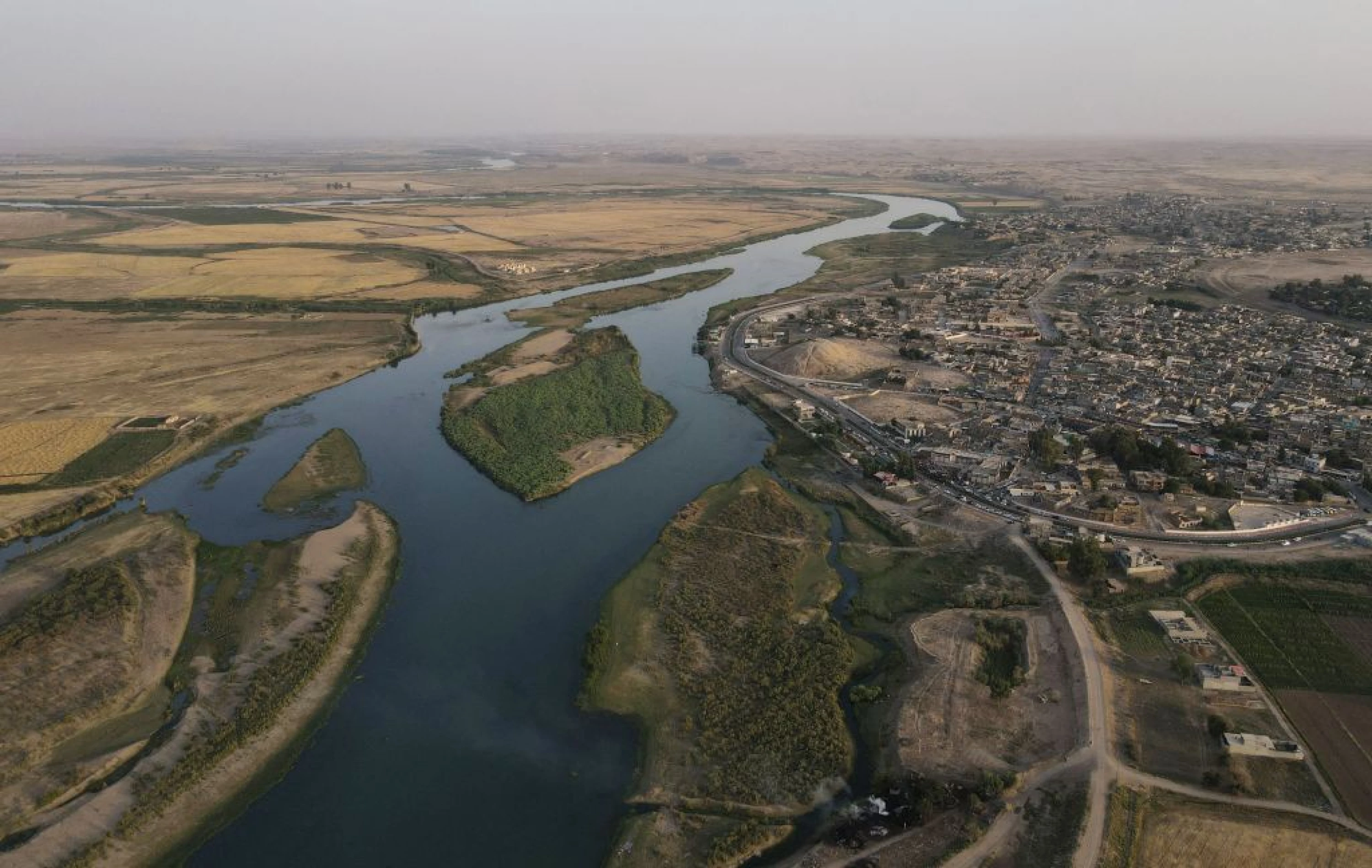
ERBIL, Kurdistan Region of Iraq - Iraq has released large amounts of water from the Dibis Dam in northern Kirkuk province to support the Tigris River, following heavy rainfall that boosted water storage and revived small dams.
Shakhawan Saeed, director of the Dibis Dam regulatory project, said authorities released about 500 cubic meters of water per second into the river system to strengthen the Tigris' flow.
Speaking to the state news agency on Saturday, Saeed said, “Rainfall in western Kirkuk province, especially in the Dibis district, reached 105 millimeters, prompting the dam’s management to pass large volumes of water downstream.”
He said floodwaters coming from Dokan, Taqtaq, Altun Kupri, and other areas increased Iraq’s water storage by about 700 million cubic meters.
Saeed explained that Dibis is a regulatory dam that divides water releases between the Kirkuk Irrigation Canal, which supplies water treatment plants and oil facilities, and the Lower Zab River, which feeds into the Tigris and supports dams along its course. He said the water inflows recorded over four days were “very good.”
Separately, Zaki Karim, director of the Kirkuk Irrigation Department, said rainfall levels varied across the province, with the highest amounts recorded in the Shwan subdistrict at 110 millimeters and in Hawija district at 105 millimeters.
Karim said floodwaters were directed toward the Lower Zab and then into the Tigris River. He added that small dams benefited from the rains, helping rain-fed farmland and providing the first irrigation for many cultivated areas.
Iraq was hit by heavy rainfall and flash floods this week, as large parts of the country, especially the Kurdistan Region, saw rainfall exceed 120 millimeters in some areas.
The floods caused widespread damage, including power outages in parts of Sulaimani province, but officials say the water offers a rare chance to replenish Iraq’s severely depleted reserves after months of drought.
The water resources ministry said it is working to direct floodwaters into dams and reservoirs across the country to rebuild water storage, support irrigation for farmland, and ease pressure on rivers and canals.
The ministry also aims to use the excess water to re-flood dried marshlands, improve water conditions in the Shatt al-Arab, and push back saltwater intrusion affecting Basra.
Iraq is facing one of its worst droughts on record, with climate change driving water shortages, desertification, and displacement.
The United Nations has ranked Iraq among the world’s most climate-vulnerable countries, while authorities have warned that water reserves have fallen to dangerous levels, making conservation and careful management essential.
 Facebook
 LinkedIn
 Telegram
 X
X