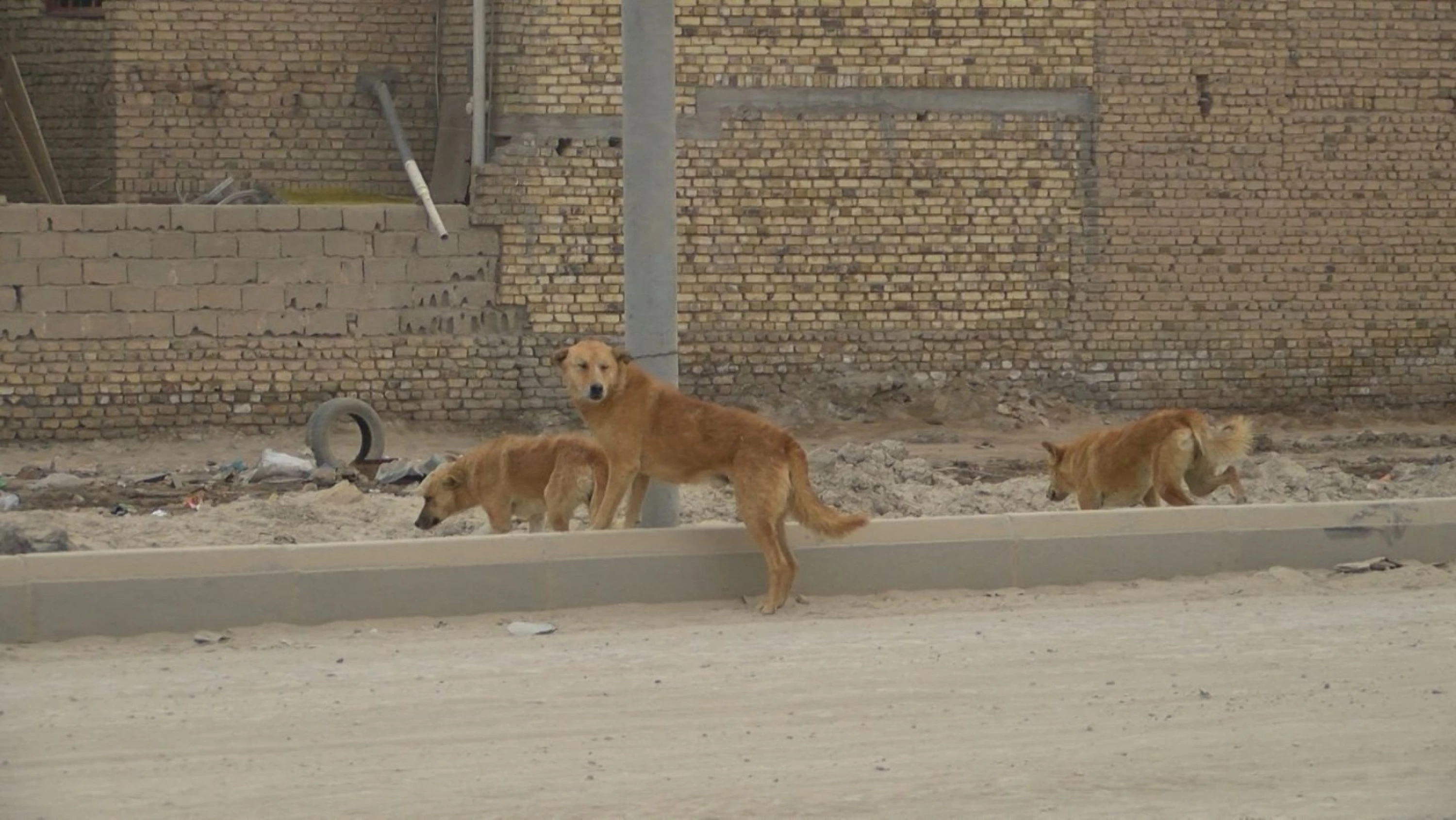
ERBIL, Kurdistan Region of Iraq – Residents of Nasiriyah in Iraq’s southern Dhi Qar province launched a fundraiser campaign on Tuesday to confront the alleged “increasing danger” posed by stray dogs, blaming authorities for failing to deal with their rising number.
“The idea for the campaign started from a group on WhatsApp, after the problem and its increasing danger to citizens, especially children and the elderly, were raised,” Abbas al-Badri, a member of the fundraiser initiative, told The New Region.
According to Badri, at least ten million Iraqi dinars have been collected “in just two hours,” labeling the public’s reception to the initiative as “unexpected.”
Ali Abdul-Hussein, head of Dhi Qar’s veterinary hospital, told The New Region that the hospital has formed joint committees with the municipality and security departments “with the aim of supporting the campaign and ensuring its implementation within the approved legal and health frameworks.”
The campaign was launched a day after Baghdad’s municipality announced that its teams had killed over 19,000 stray dogs in 2025.
Animal rights activists routinely slam Iraq for its treatment of stray animals, which has triggered vast outrage. Welfare groups argue that mass culling is inhumane and ineffective, calling instead for vaccination, sterilization, and shelter programs.
Officials and public safety advocates, however, say lethal measures are necessary to contain the risk of diseases and protect residents.
About 30,000 stray dogs roam the streets of Nasiriyah, the provincial capital of Dhi Qar, according to Abdul-Hussein, calling the number a “reflection of the size of the environment and health challenges facing the city.”
On Monday, Iraq’s health ministry announced that rabies vaccines have been made available across all health institutions in the country after a man lost his life due to a dog bite a month prior.
In Iraq, stray dogs are often stigmatized as “dirty” and considered a health and security risk. Laws to safeguard their lives are virtually nonexistent, with killings, beatings, and other forms of abuse remaining rife.
 Facebook
 LinkedIn
 Telegram
 X
X