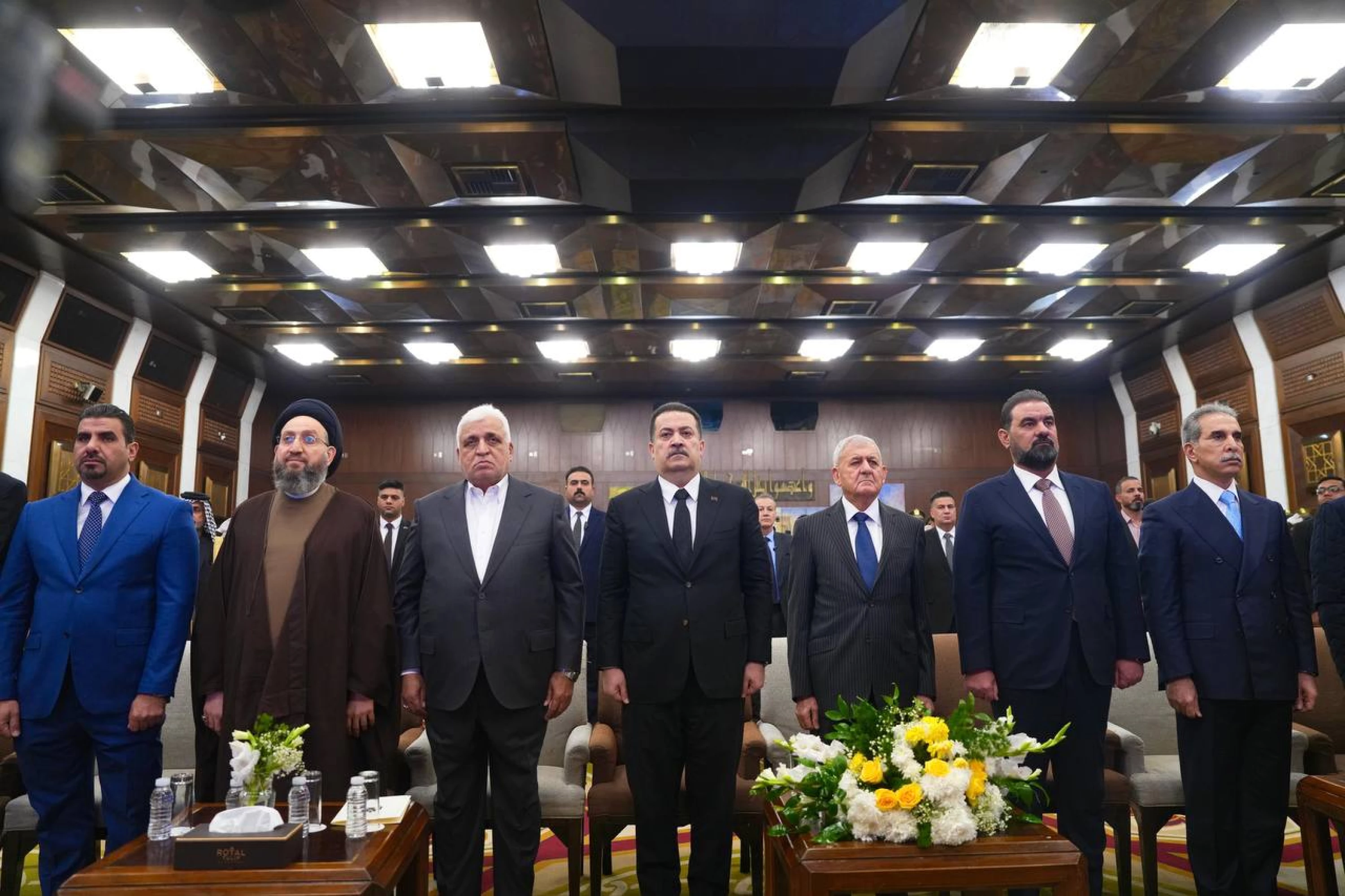
ERBIL, Kurdistan Region of Iraq – Iraqi Prime Minister Mohammed Shia’ al-Sudani and several senior officials on Sunday reiterated calls for restricting weapons to the state, during a ceremony commemorating the assassination of Iranian top commander Qasem Soleimani and former deputy chief of the Popular Mobilization Forces (PMF) Abu Mahdi al-Muhandis.
Iraq on Sunday held an official ceremony to commemorate the sixth anniversary of the assassination of Soleimani and Muhandis in an American airstrike ordered directly by President Donald Trump, during his first term.
“The vision of confining weapons to the state contributes to establishing sovereignty, and it is not targeting Iraq but rather protecting it and removing the pretexts of those who want to attack it,” Sudani said at the ceremony.
He noted the planned withdrawal of the US-led coalition against the Islamic State (ISIS) from the Ain al-Asad airbase and the end of the UN Assistance Mission for Iraq (UNAMI) as key factors to “restoring national sovereignty” in the country.
“The process of restricting weapons will be a purely Iraqi process,” the prime minister stressed.
On Wednesday, Iraq’s interior ministry announced a new phased plan to remove unlicensed weapons across the country on a city-by-city basis in 2026, coming after a growing, though controversial, national dialogue on the topic of disarming non-state actors.
Faiq Zidan, President of Iraq’s Supreme Judicial Council, announced in mid-December that the leaders of some armed factions had adhered to his advice on cooperation, “to enforce the rule of law, confine weapons to the state, and transition to political action now that the national need for military action has ceased.”
The development came amid intensified calls by Washington on Iraq to curb Iranian influence, pushing Baghdad to dissolve all armed factions, including the state-integrated PMF.
Several Iran-backed armed factions have already rebuffed the disarmament calls, saying they maintain the right to “resistance” as long as there are foreign forces present in the country.
Speaking during the ceremony on Sunday, Zidan reiterated the need for restricting weapons, saying the move does not mean giving up on “sacrifices” but indicates that Iraq is now at peace.
“There is no longer a need for weapons outside the framework of legitimate institutions. That battle has ended, and the new challenges require a different kind of weapon – law, justice, and development,” Zidan stressed.
Illegal weapons in Iraq stand out as one of the most pressing challenges to security and stability. Unofficial data puts the number of arms within Iraqi society at around 15 million medium and light weapons, with armed groups and tribes possessing the bulk of them.
 Facebook
 LinkedIn
 Telegram
 X
X