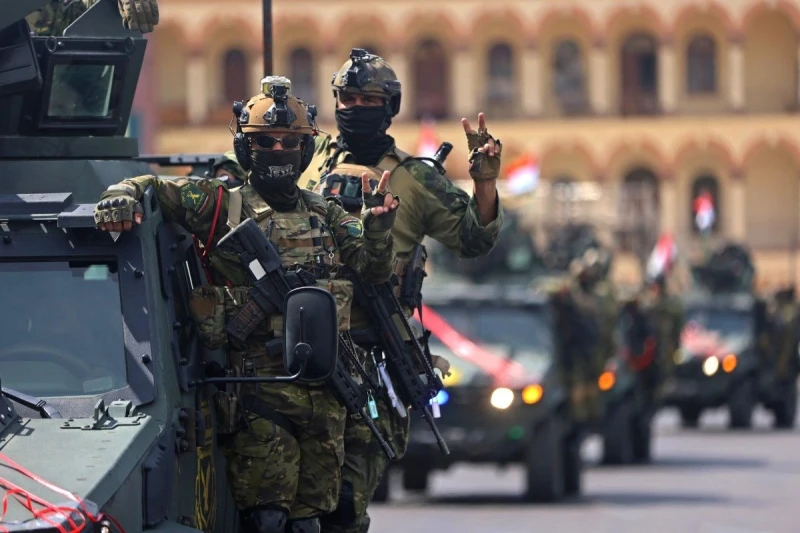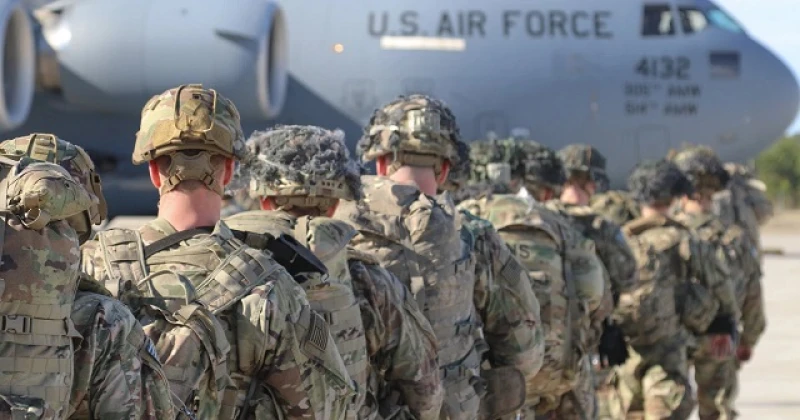
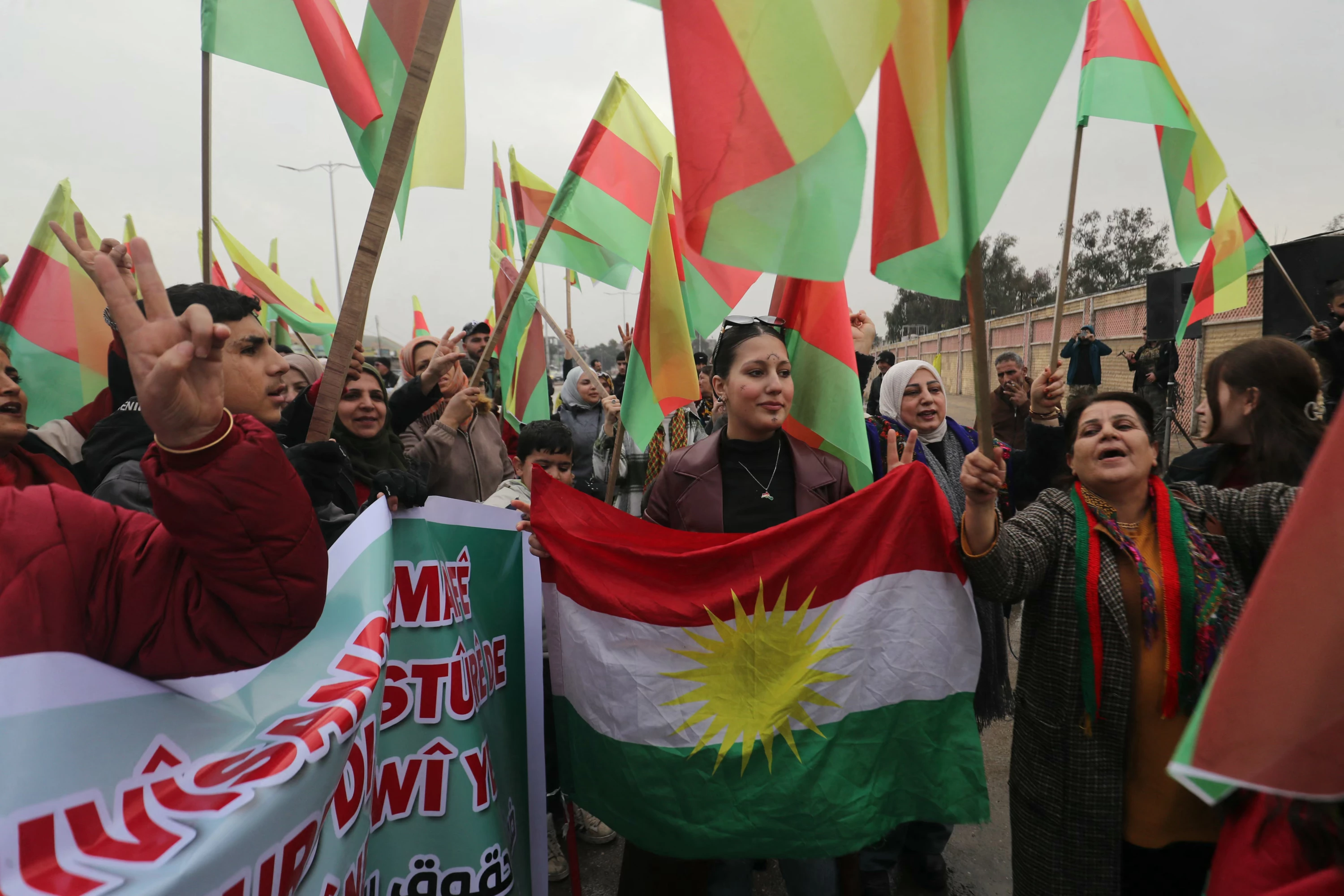
In late January, while the Syrian government was in the middle of a military campaign against Kurdish forces, a consequential—if largely overlooked—development took place in Washington. Senators Lindsey Graham (R–North Carolina) and Richard Blumenthal (D–Connecticut) introduced the Save the Kurds Act, an unprecedented bipartisan initiative aimed squarely at protecting Kurdish forces in Syria. Graham, in particular, was vocal as Syrian government troops and allied tribal militias advanced against the Kurdish-led Syrian Democratic Forces (SDF), repeatedly urging the US administration to safeguard America’s Kurdish allies.
The pressure exerted by Graham and a small group of lawmakers, alongside parallel diplomatic engagement by France and sustained efforts by the Kurdistan Region’s leadership, helped shape an outcome that, at minimum, arrested the most dangerous phase of the campaign. The result preserved a continued Kurdish military presence in Syria’s core Kurdish areas—known to Kurds as Rojava or Western Kurdistan—and maintained a prominent Kurdish role in administering and securing key parts of Hasaka province and the Kurdish districts of Kobane in Aleppo province. This was no small achievement given the scale and intensity of the assault and the fact that it had the backing of Turkey and some Gulf states.
The 39-page bill is concerned with the Kurds of Syria, and more specifically with the SDF as a military and security actor. Section 3 of the bill describes the SDF as a “reliable and critical partner in preventing the resurgence of ISIS [i.e. Islamic State],” and goes further by asserting that “any behavior by the Government of Syria or regional actors that undermines the role of the Kurdish-led Syrian Democratic Forces in countering ISIS and protecting United States security interests is inconsistent with the national security objectives of the United States.” This language is striking both for its clarity and for the degree to which it ties Kurdish security directly to American national security interests.
Building on that premise, the bill outlines a range of sanctions and punitive measures aimed at deterring further attacks on the SDF. Apart from targeting Syrian financial institutions and restricting external trade and investment with Syria, the bill notably calls for the imposition of sanctions on the Syrian president, senior ministers, and armed forces upon enactment. While such provisions could be softened during the legislative process, their inclusion signals a willingness, at least among some lawmakers, to attach personal and institutional costs to policies that endanger Kurdish allies.
As written, the bill reflects a clear commitment among parts of the US political system—in the Congress in particular—to the protection of Syrian Kurds. It acknowledges the decisive role played by the SDF in defeating ISIS and preventing its resurgence. At a moment when some in Washington frame foreign policy through the lens of commerce, trade, and transactional interest, the Save the Kurds Act also projects a moral argument: that obligations born of once critical alliances do not simply expire when circumstances become inconvenient. And as the history of US–Kurdish relations shows, sustained mutual commitment has been strategically beneficial for both sides.
At the same time, the bill’s authors are careful to draw clear boundaries. The final sections state explicitly that “nothing in this Act may be construed as an authorization for use of military force.” This caveat is deliberate. It reflects an awareness of deep war-weariness in Washington and signals that the bill is intended as a tool of deterrence and leverage—not a prelude to renewed US military intervention in Syria. Smart move.
In many respects, the proposal is historic and ambitious. It has been widely welcomed by Kurds across Syria, Iraq, and the diaspora, where Senator Graham’s long record of support for Kurds in Iraq and Syria has earned genuine credibility. Many Kurds would have preferred a broader framework, one that explicitly included the Kurdistan Region of Iraq and perhaps created space for future protections elsewhere. Still, even in its current form, the bill represents a qualitative shift in how Congress views Kurds.
Whether the bill ultimately becomes law is an open question. It remains at an early stage and has not yet been assigned a formal bill number. Still, its introduction alone serves an important signaling function. It frames the debate, establishes red lines, and places the fate of Syria’s Kurds on the legislative agenda. Procedurally, for it to become legislation, it has to be referred to the appropriate committee, likely the Senate Foreign Relations Committee, where hearings may be held and the text negotiated. If reported out of committee, it would move to the Senate floor for debate and amendment before a vote. Passage in the Senate would then send the bill to the House, where a parallel process would unfold. And it would then have to be signed by the president, or secure a two-thirds majority in Congress to override a presidential veto.
The politics surrounding the bill are complex. Influential circles in Congress and the broader policy community have invested heavily in the new government in Damascus and are likely to resist measures that constrain it or attach costs to its behavior. Now that large-scale fighting between Damascus and the SDF has paused, these actors may argue that the moment has passed and that legislation of this kind is unnecessary. Yet such arguments underestimate both the fragility of the current cease-fire and the enduring vulnerability of the Kurdish community in Syria.
Despite these obstacles, the bill is far from symbolic. Kurds enjoy broad sympathy on Capitol Hill, rooted in their record as reliable US partners and their efforts to build tolerant, relatively stable, and pluralistic governance in an unforgiving regional environment. They stand out as perhaps the only political community in the Middle East, with the exception of Israel, where both public opinion and political elites consistently favor strong engagement with the United States. For the Save the Kurds Act to advance, however, this sympathy must be translated into sustained engagement—by Kurdish representatives, diaspora networks, and allied policymakers in Washington.
An additional opening may come from elsewhere in the legislative calendar. Under the National Defense Authorization Act for 2026, the US president is required to submit a report to Congress on the security situation and political representation of minorities in Syria, as well as the government’s commitment to eliminating ISIS and other terrorist threats, by March 18. That report could become a focal point for renewed debate about the future of Kurds and other minorities in Syria—and an opportunity to broaden or reinforce the logic of the Save the Kurds Act.
US President Donald Trump granted Syrian interim President Ahmed al-Sharaa an opportunity to rebuild Syria after decades of war and international isolation. That opportunity did not include carte blanche to treat non-Sunni Arab communities at will. The phone calls between Trump and Sharaa during the January campaign were a clear indication of Washington’s unease with how the operation was conducted under the banner of restoring state authority. Ultimately, Sharaa’s treatment of minorities will be the decisive test: whether he has genuinely broken with the extremist practices of the past or is building an exclusionary Syria that kills and suppresses its minorities.
 Facebook
 LinkedIn
 Telegram
 X
X