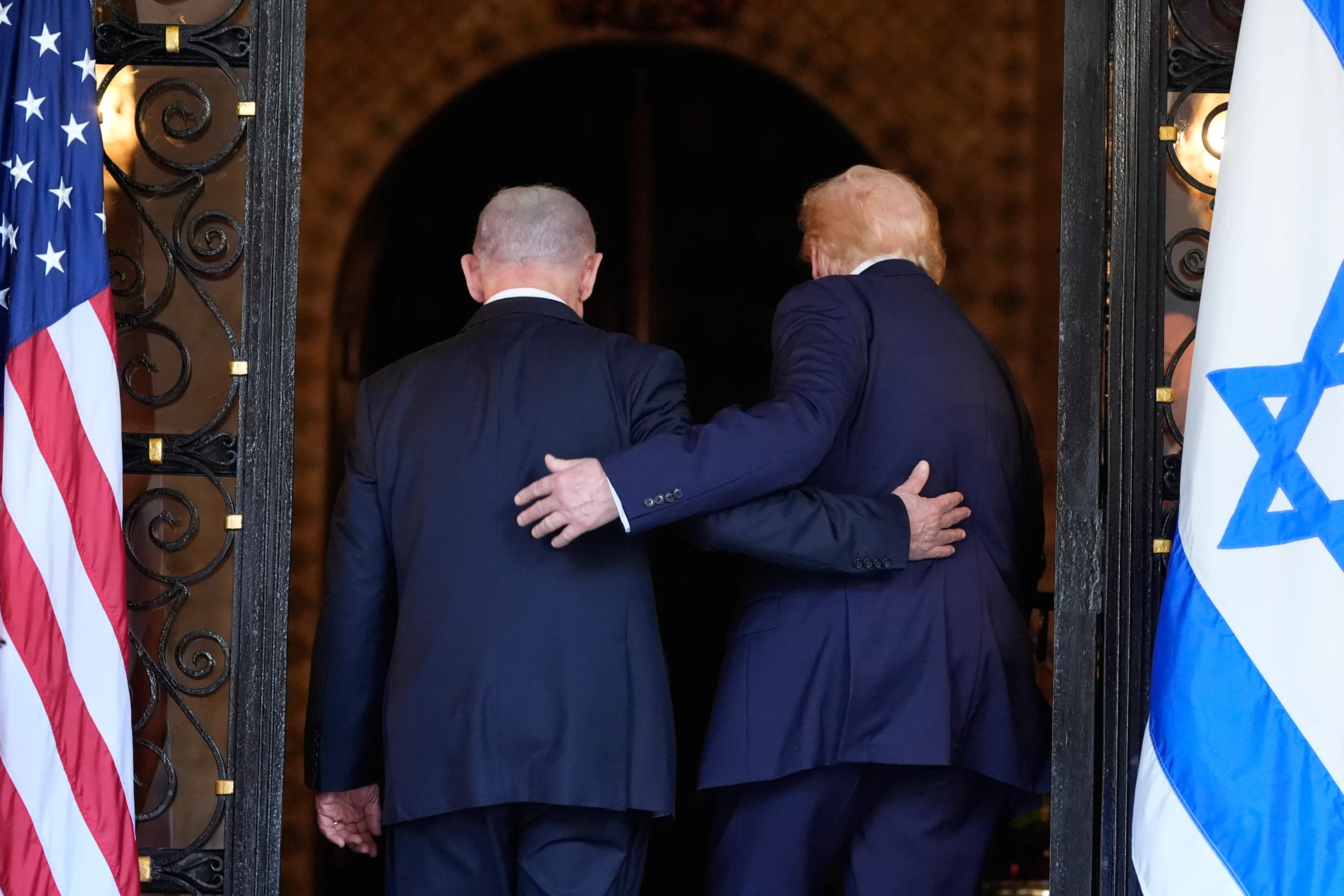
ERBIL, Kurdistan Region of Iraq - Following a recent White House visit, Israeli Prime Minister Benjamin Netanyahu said Thursday that US President Donald Trump is creating “the conditions for achieving a good agreement” with Iran and that Trump believes Tehran has “already learned who they are dealing with.”
Netanyahu was on an official visit to Washington, where he and Trump discussed the restarted indirect nuclear talks between the US and Iran in Oman. During the meeting, Trump insisted to the Israeli premier that talks continue, he wrote on Truth Social on Wednesday.
“He wanted to hear my opinion. I will not hide from you that I expressed general skepticism regarding the quality of any agreement with Iran,” Netanyahu told reporters, adding that if a deal is reached, it must also include the Iranian ballistic missile program and its proxies.
The issue of ballistic missiles has been explicity rejected by Iranian authorities as a topic of the ongoing negotiation process, who insist that the nuclear file should be the subject of the talks and that the country must have the ability to defend itself.
Israeli Foreign Minister Gideon Sa’ar said Sunday that “the huge amount of long-range ballistic missiles that the regime seeks to produce in enormous quantities endanger Israel, but not just her,” stressing that European and Middle Eastern states also fall within the range of Tehran's missile arsenal.
Iran has repeatedly asserted that the Netanyahu government seeks to draw the Trump administration into a war with their country, often tailoring statements and social media posts to express a willingness to negotiate with the US while lambasting Israeli influence over Washington.
In his Wednesday Truth Social post, the US president said that Iran paid the consequences for not making a deal via the brief conflict, asserting, "That did not work out well for them."
Israel killed top brass Iranian military commanders and nuclear scientists in June last year, with the US bombing key nuclear sites in the country at the end of the conflict. Israel and Iran traded salvos of missiles for 12 days, with the latter also bombing a US military base in Qatar in response to Washington's participation.
Tehran and Washington held indirect talks for months without reaching an agreement in the lead up to the “12-Day War,” with Iran having repeatedly expressed exasperation regarding the perceived US betrayal of negotiations in favor of military action.
“I believe that the conditions he is creating, combined with the fact that they certainly understand they made a mistake the last time by not reaching an agreement, may create the conditions for achieving a good agreement,” Netanyahu said.
“The President believes that the Iranians have already learned who they are dealing with,” he added.
Both Trump and Iranian Foreign Minister Abbas Araghchi hailed the progress made during the first round of the renewed talks, though the former's repeated motif of highlighting the large US naval armada en route to the region, as well as threats to intervene on behalf of Iranian protesters who have faced a brutal crackdown by the ruling authorities, and the latter's professed difficulty in trusting the goodwill of the US remain significant complications to securing an agreement.
 Facebook
 LinkedIn
 Telegram
 X
X