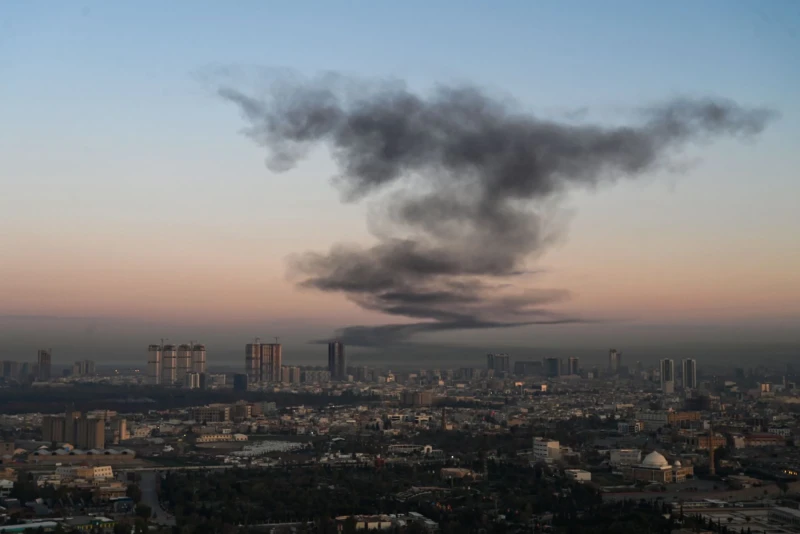
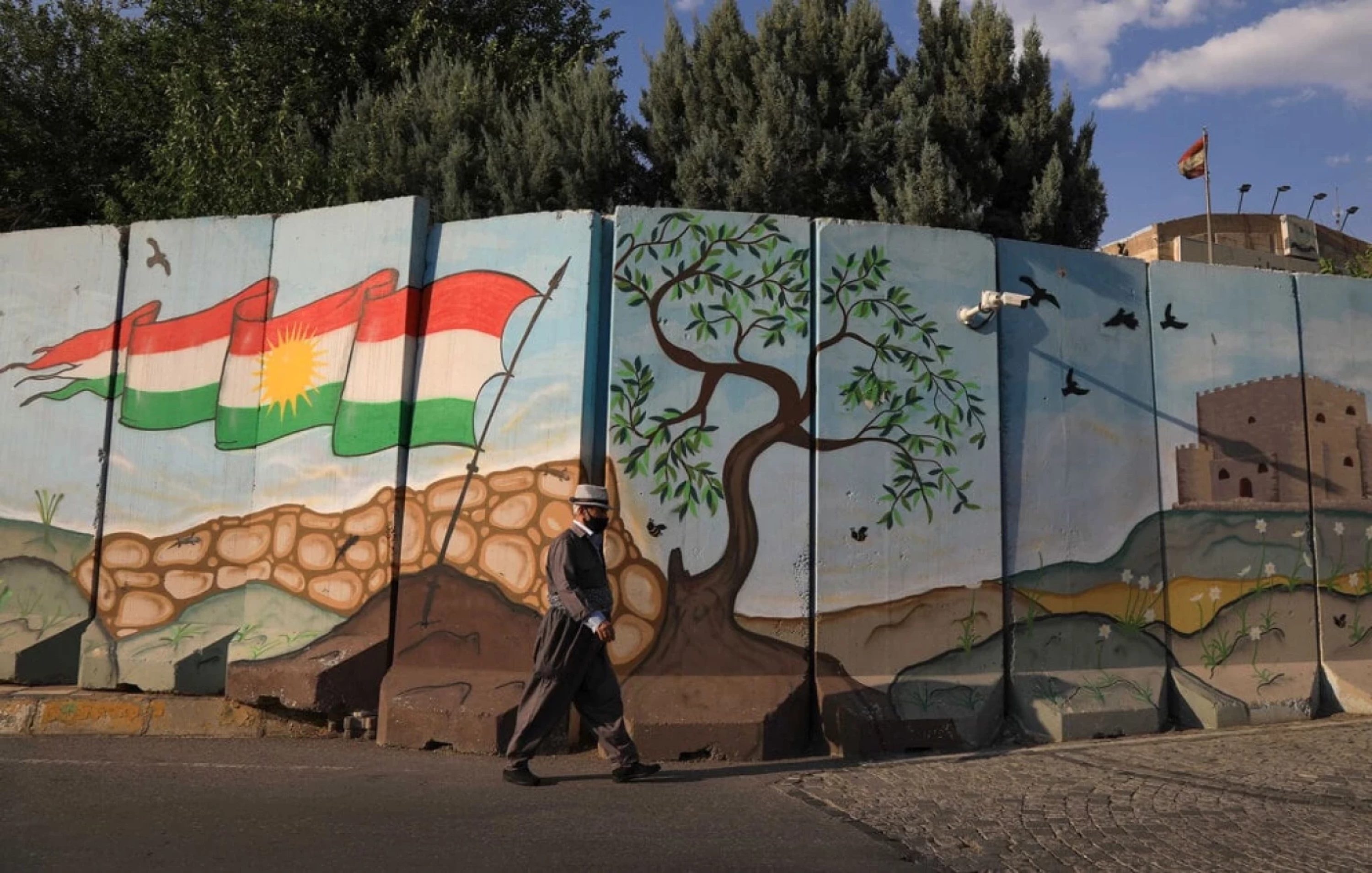
As the war between Iran, the United States, and Israel has come to a halt — at least for now — some reflection may be in order. The conflict brought more than 600 drone and missile attacks to the Kurdistan Region since February 28, exposing the Kurds to far more risks than gains; some of the most consequential blows have come not only from the battlefield but from the media. A few incidents in particular — driven by widely circulated leaks — were especially damaging.
The first came early in the conflict, when CNN reported on March 3 that Iranian Kurdish opposition parties based in Iraqi Kurdistan had been armed and equipped by the United States and Israel to enter the war as ground forces.
It is crucial, however, to understand that leakers are not neutral conveyors of truth. As Tarek El-Ariss argues in his seminal book on digital culture in Lebanon, leaks are inherently political acts — subversive interventions embedded in a broader culture of political scandal, designed not simply to reveal information but to shape narratives, provoke reaction, and influence political agendas.
That is precisely how this first leak functioned. But regrettably, it was framed, circulated, and debated less as a claim to be scrutinized than as a sensational revelation. Although a coalition of Iranian Kurdish political parties denied any plans for cross-border attacks — and the scenario ultimately did not materialize — the ethical implications of publishing such a story, particularly its potential life-and-death consequences, appear to have been largely absent from both editorial decision-making and public debate. Yet the damage was done: a narrative took hold portraying Kurds as ready-made instruments for Western military designs. Iran appears to have used this leak as a pretext for its expansive campaign against Kurdistan.
The frenzy that followed only deepened this dynamic. Two days later, Axios ran another “scoop” claiming that Kurdish forces had already launched an offensive into Iran. That report quickly unraveled, leading to a retraction and the deletion of the journalist’s post on X. Once the idea of Kurdish involvement had entered the public discourse, it took on a life of its own. Some voices went as far as labeling any hypothetical Kurdish participation as an “invasion.” This reaction underscored a broader outcome and logic of the leaks: they are designed to provoke, polarize, and attract attention, often at the expense of nuance and accuracy.
A second consequential leak followed on April 5, when Fox News reported that President Donald Trump had said the United States had sent weapons to Iranian protesters “through the Kurds,” who allegedly kept them. A day later, Trump himself, when elaborating on that claim, did not mention the Kurds at all. Once again, the story spread widely before being critically examined or verified, lacking detail, nuance, and context. Kurdish opposition groups again denied receiving any such weapons, reinforcing doubts about the reporting’s validity.
What has been notably absent from much of the debate in media and policy circles is any meaningful familiarity with the history and political realities of the Kurdish movement in Iran. The debate outside Kurdish circles has largely glossed over the grievances that gave rise to these organizations in the first place. For audiences unfamiliar with Kurdish politics, particularly in Iran, the resulting impression is deeply misleading: that Kurds are some sort of a mercenary force, waiting to be mobilized for the next Western intervention. This portrayal ignores the fact that these groups represent the political aspirations of a population of 8 to 10 million people. Their decisions are driven not by opportunism but by a complex cost-benefit calculus rooted in their own struggle for rights, recognition, and justice.
Part of the hesitation among these groups to join the US–Israeli campaign reflects precisely this calculus. There are serious doubts about the depth of US and Israeli commitment and the absence of a clear long-term vision for Iran’s future. Statements by Iranian Kurdish groups’ officials reveal that they seek concrete guarantees of sustained political and military support before considering such a step. Of course, recent developments in Syria and the perceived abandonment of the Kurds there by the West have only deepened Iranian Kurds’ reservations about joining any military campaign in Iran, at least at this stage.
All of this stands in stark contrast to the image projected by the leaks and their amplification in the media. Far from being eager participants in the war, Iranian Kurdish groups have so far calculated that involvement would likely be more detrimental than beneficial. That calculation alone exposes the superficiality and, at times, the irresponsibility of the narratives constructed around them. If, at some later stage, these groups decide to move into Iran, it will be based on their own strategic considerations regarding the interests of Kurds in Iranian Kurdistan and the evolving balance of power—not because they were recruited as proxies.
Amid all this, one can also discern a shift in how Kurds are portrayed and perceived in Western media and policy circles. Over the past decade, Kurds were widely portrayed as reliable and effective allies in the fight against the Islamic State (ISIS) and other forms of jihadi terrorism. This, too, was largely an orientalist trope, but it at least gave the Kurds some credit. Today, in the context of this war, that image is shifting toward one of ambiguity, inconvenience, or even liability. This shift in Western perceptions, however, does not reflect a fundamental change in Kurdish realities. Kurdish people across the region continue to pursue rights and justice under often difficult circumstances. What has changed is the lens through which they are viewed in the West.
That lens is shaped by broader ideological and political shifts and divisions in the West regarding the current war. As policymakers, analysts, and journalists grapple with a complex and evolving conflict, insufficient familiarity with Kurdish realities has led to misplaced frustration. In many cases, this frustration is less about the Kurds themselves than about the inability of external actors to make sense of a deeply complex regional landscape.
Overall, the Kurds are increasingly paying a heavy price in a war from which, at best, their gains remain uncertain up to now. While some Kurds may view wars as moments that can reshape their difficult condition of persecution and violence within the modern nation-state system in the region, the current course of this war has pushed them to reassess their strategies and tread carefully. The war might resume after the current fragile ceasefire. In a fast-paced global digital media environment, media reporting and public debate are another key front of wars, and everyone has to respond more diligently to questionable reporting in the form of leaks.
 Facebook
 LinkedIn
 Telegram
 X
X