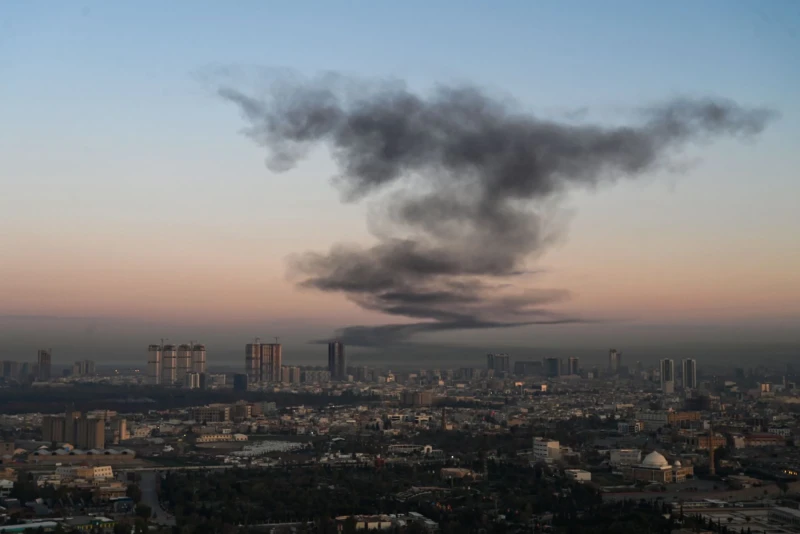
The smoke over Tehran on February 28, 2026, was not the beginning of the story. When United States and Israeli forces launched Operation Epic Fury, nearly 900 strikes in the first twelve hours, killing Supreme Leader Ayatollah Ali Khamenei and targeting military infrastructure across Iran, the world watched an audacious kinetic campaign unfold in real time. Yet the audacity of the opening move was matched, in inverse proportion, by the inadequacy of strategic preparation for everything that was to follow. The question now is not whether Washington and Tel Aviv can strike Iran. They have. The question is whether either capital had a coherent answer for what follows the last bomb.
A land invasion of Iran has historically resisted easy conclusions. The terrain, the Zagros and Alborz mountain ranges, a vast central plateau, narrow coastal corridors along the Persian Gulf, has frustrated conventional military campaigns with a regularity that ought to give planners pause. The Iran-Iraq War (1980–1988) is the most instructive precedent: Saddam Hussein launched what he expected to be a decisive territorial operation and found instead a war of attrition that consumed over one million lives across eight years. Approximately 960,000 active and reserve military personnel serve across the Artesh and the Islamic Revolutionary Guard Corps (IRGC), while the Basij paramilitary network can surge an additional 600,000 fighters under full national mobilization. The IRGC's organizational logic, however, is what concerns serious military planners most. Since the early 2000s, the IRGC have operated through 31 provincial corps, designed to function autonomously if any part of the command structure is eliminated, a successor from three command ranks below a fallen commander is activated immediately. This war doctrine (the diffused system), which has developed after watching the collapse of Iraqi forces during the US-led invasion in 2003, lets the IRGC shift to a decentralized command structure that empowers mid-ranking officers to launch independent retaliatory strikes. The IRGC institutionalized the lessons of Iraq's defeat into its own organizational DNA. Fighting a force designed to survive decapitation is a fundamentally different proposition from toppling a government that unravels when its center fails.
The most consequential miscalculation, however, is not military. It is social, and it has already been made. Classical counterinsurgency doctrine, from David Galula's foundational writings (1964) to the US Army's Field Manual FM 3-24 (2006), holds that in protracted occupation, the center of gravity is not territory but legitimacy. Without it, every square kilometer of occupied terrain becomes a liability rather than an asset. This scenario can happen in Iran in case the United States decides to put boots on the ground, since the United States has not simply failed to win hearts and minds. It has actively forfeited them. On January 13, 2026, as mass arrests swept through Iranian protest movements during the most significant domestic uprising in years, President Trump posted on Truth Social: "Iran Patriots, PROTEST — TAKE OVER YOUR INSTITUTIONS!!! HELP IS ON ITS WAY." The help did not arrive. The Guardian documented within days how protesters inside Iran felt abandoned, their political mobilization extinguished not by the IRGC but by the experience of calling out and receiving silence. In the political psychology of resistance, a threat that fails to produce its promised effect consolidates the target rather than weakening it. The Iranian government emerged from those weeks not destabilized but narratively fortified, capable of reframing an indigenous movement as foreign-orchestrated instability. The potential fifth column Washington might have counted on was neutralized not by the state's coercive apparatus, but by an unfulfilled public pledge.
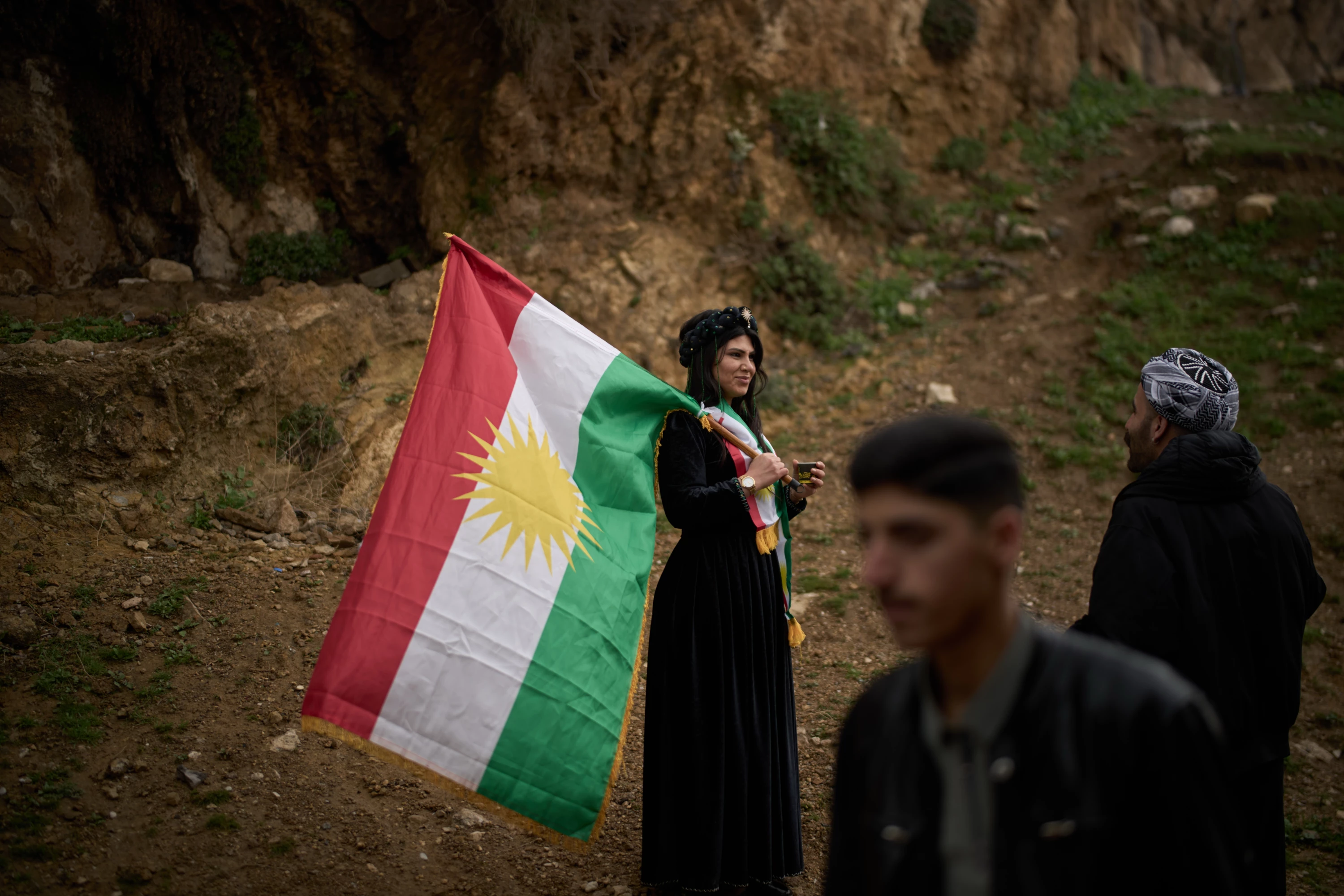
The Kurdish case embeds the same structural logic of betrayed strategic partnership. Kurdish forces, most visibly in the post-Kurdistan Referendum Incidents in October 2017 in the Kurdistan Region of Iraq (KRI), Washington declined to restrain PMF advancing against the KRI and in January 2026 incidents in Rojava, Washington declined to restrain Turkish-backed forces and the Syrian Arab Army advancing against the Syrian Democratic Forces (SDF), the reputational cost was not merely symbolic. In the framework of alliance theory, extended deterrence derives its credibility from demonstrated consistency; when a security guarantor abandons partners under pressure, smaller actors must revise their strategic calculus, what Glenn Snyder termed the "alliance security dilemma," wherein junior partners reassess whether continued dependence on an unreliable patron is sustainable. When CNN reported on March 3, 2026, that the CIA was working to arm Kurdish political parties in Iran to trigger an internal uprising, the reaction from the KRG leadership was very wise. They chose not to take a part in this war.
The erosion of American credibility as a strategic partner extends well beyond the Kurdish periphery. Among the Gulf states, it has reached a qualitatively different threshold. For years, Gulf policymakers practiced what scholars of regional security term "omni-balancing" and “hedging,” calibrating relationships with multiple external powers to avoid structural dependence on any single patron. That calculus hardened into institutional skepticism after 2019, when Iranian strikes on Saudi oil infrastructure at Abqaiq and Khurais produced a muted American response, and Gulf strategists drew an explicit lesson: that US security guarantees are contingent rather than structural. This recalibration deepened through the 2023 Saudi-Iranian rapprochement, brokered not by Washington but by Beijing. By the eve of Operation Epic Fury, most Gulf states were "quietly but actively pushing back against calls in Washington for military strikes," with leaders fearing chaos, state fragmentation, militia spillover, and energy market disruptions. The UAE conducts $28.2 billion in annual trade with Iran; Qatar is a co-partner in the South Pars/North Dome field, providing over 70 percent of Iran's gas output. These are not peripheral economic relationships. They are structural constraints that no amount of American strategic pressure could simply dissolve.
Europe, meanwhile, responded with the political distancing that signals something more consequential than tactical disagreement. European allies stressed publicly that they had not joined the Iran strikes and wished to be clearly understood as separate from the operation. A senior German security official captured the institutional bewilderment in a single sentence: "If regime change is truly the goal, what is the intended outcome? Our understanding is that even at high levels in D.C., people are as uninformed as we are." Turkey denied its airspace for the strikes; Norway and Spain raised explicit concerns about violations of international law. NATO Secretary General Rutte praised the operation publicly but clarified the alliance itself would not participate. This is the architecture of an operation conducted without multilateral legitimacy: not a coalition of the willing, but a coalition of two.
The financial reckoning is considerable and will grow. The US Department of Defense reported to Congress that the first six days of the Iran campaign cost $11.3 billion; the Center for Strategic and International Studies projected total costs through day twelve at $16.5 billion. By late March, cumulative costs were estimated above $25 billion, with the White House reportedly seeking supplemental appropriations exceeding $200 billion. The Institute for Policy Studies noted that the United States was spending over $59 million daily merely to sustain regional force posture before accounting for munitions or long-term veteran care. These immediate figures will be dwarfed by longer-term economic fallout. Iran's closure of the Strait of Hormuz on March 4, 2026, sent Brent crude above $120 per barrel, a disruption CNBC's energy analysts described as potentially generating a supply shock three times more severe than the 1970s Arab oil embargo. Some 31 percent of global maritime crude exports transit that chokepoint. An adversary capable of threatening that volume exercises a form of economic leverage that no conventional air campaign can neutralize. By comparison, Iraq and Afghanistan together cost the United States over $1.5 trillion across two decades, deploying individual soldiers at an annual cost of $750,000 to $1 million. Iran is three times Iraq's geographic size and considerably better prepared to absorb punishment.
The structural failure of domestic preparation compounds all of this. Trump launched Operation Epic Fury without formal congressional authorization, bypassing the institutional legitimacy that the War Powers Resolution was designed to require. A bipartisan Senate resolution requiring legislative approval for further operations failed 47–53 within days; a parallel House resolution met the same fate. The parallel with 2003 is not comfortable but unavoidable: the intelligence assessments that underpinned the Iraq invasion were found by the Senate Intelligence Committee's Phase II inquiry to have been shaped by political pressure rather than analytical rigor. A war entered without credible intelligence, without congressional mandate, and without defined victory conditions is not, in the Clausewitzian sense, a rational instrument of policy. It is an open-ended commitment, one from which withdrawal becomes politically costlier than continuation regardless of what the operational facts demand.
Now, half a century after the petrodollar order was consolidated, the value of the US dollar is once again under substantive question. Will Washington ultimately choose to withdraw and leave its petrodollar partners exposed, compelled to absorb Iranian drone warfare while diversifying their external alignments to the point of negotiating directly with Tehran and settling hydrocarbon trade in Chinese yuan? Or will it instead commit billions of dollars, the lives of hundreds of American soldiers, and a new round of domestic economic strain in an effort to preserve its monetary primacy and sustain its hegemonic position in the international system?
Under these conditions, mobilizing genuine support among allies is no longer straightforward. It is difficult to build consensus in a Gulf that has not received the full spectrum of protection it was repeatedly promised, in a Europe fatigued by protracted commitments in Ukraine and irritated by earlier disputes over Arctic and North Atlantic security, and in a Canada nudged toward hedging by Trump’s neo‑mercantilist tariff policies in much the same way other partners were pushed to reconsider their alignment. The question that follows is unavoidable: what future is being scripted by a pattern of impulsive presidential decision‑making, and is it rational for a small state or sub‑state entity such as the Kurdistan Region to align itself in platoon fashion with the United States against a strategically entrenched neighbor in a war whose trajectory and end state remain profoundly uncertain?
Against this accumulation of strategic failures, the measured prudence of Kurdish political leadership acquires genuine analytical weight, and reflects a coherent strategic doctrine rather than mere passivity. In an interview with The National on February 4, 2026, weeks before Operation Epic Fury commenced, Kurdistan Region Prime Minister Masrour Barzani was unambiguous: "It's not our war. We are not going to be part of this war." KDP President Masoud Barzani has been consistent and deliberate throughout. In a statement on March 5, 2026, marking the 35th anniversary of the Kurdish uprising, he wrote: "Our region is currently passing through a very complex and sensitive situation. We will do whatever is in our power to ensure that Kurdistan remains far from war, misery, and hardship." On March 9, he reaffirmed that "the Kurdistan Region is not a party in the war and always desires dialogue and peaceful solutions." Kurdistan Region President Nechirvan Barzani, in a meeting with Iranian Foreign Minister Araghchi, committed the Region to acting as a "stabilizing actor" pursuing diplomatic engagement rather than military alignment. This is the statecraft of leaders who have learned through decades of accumulated experience what instrumentalization by great powers costs and who understand that the dignity, sovereignty, and the preservation of their people's future are not bargaining chips to be offered to the next power that arrives with promises.
The calculus of alignment, in this context, deserves more than rhetorical scrutiny. For any state weighing participation in this conflict, the questions are not abstract; they are existential. Who guarantees that this war ends on a timeline favorable to those who joined it? What assurance exists that the same administration that launched Operation Epic Fury without congressional mandate, without a coherent alliance structure, and without defined victory conditions will not, in a manner entirely consistent with its transactional foreign policy doctrine, negotiate a bilateral arrangement with Tehran and withdraw, leaving its partners exposed, facing an Iran that survived, that remembers, and that is no longer constrained by the diplomatic courtesies extended to neutral parties? History does not lack for precedent. The pattern of American disengagement, from Vietnam to Iraq, from the Kurds of Syria to the promises of January 2026, follows a recognizable arc: bold commitment at the opening, quiet recalibration when the costs mount, and an exit on terms dictated by Washington's domestic politics rather than its partners' strategic realities.
A neutral, stable state, one that has invested decades in institution-building, economic development, and regional diplomatic capital, has no rational incentive to subordinate that investment to a war whose end conditions remain undefined, whose primary patron has demonstrated a willingness to abandon its partners, and whose regional consequences will outlast any ceasefire by a generation. The question is not whether such a state supports or opposes any particular outcome. The question is far simpler: why would it gamble everything it has built on a war it did not start, cannot control, and may be left alone to live with when the architects of that war have moved on to the next transaction?
Trump and Netanyahu are forcing everyone in this war. That is not the grammar of alliance. It is the grammar of coercion, and no durable strategic partnership has ever been constructed on that foundation.
The views expressed in this article are those of the writer and do not necessarily represent the position of The New Region's editorial team.
 Facebook
 LinkedIn
 Telegram
 X
X