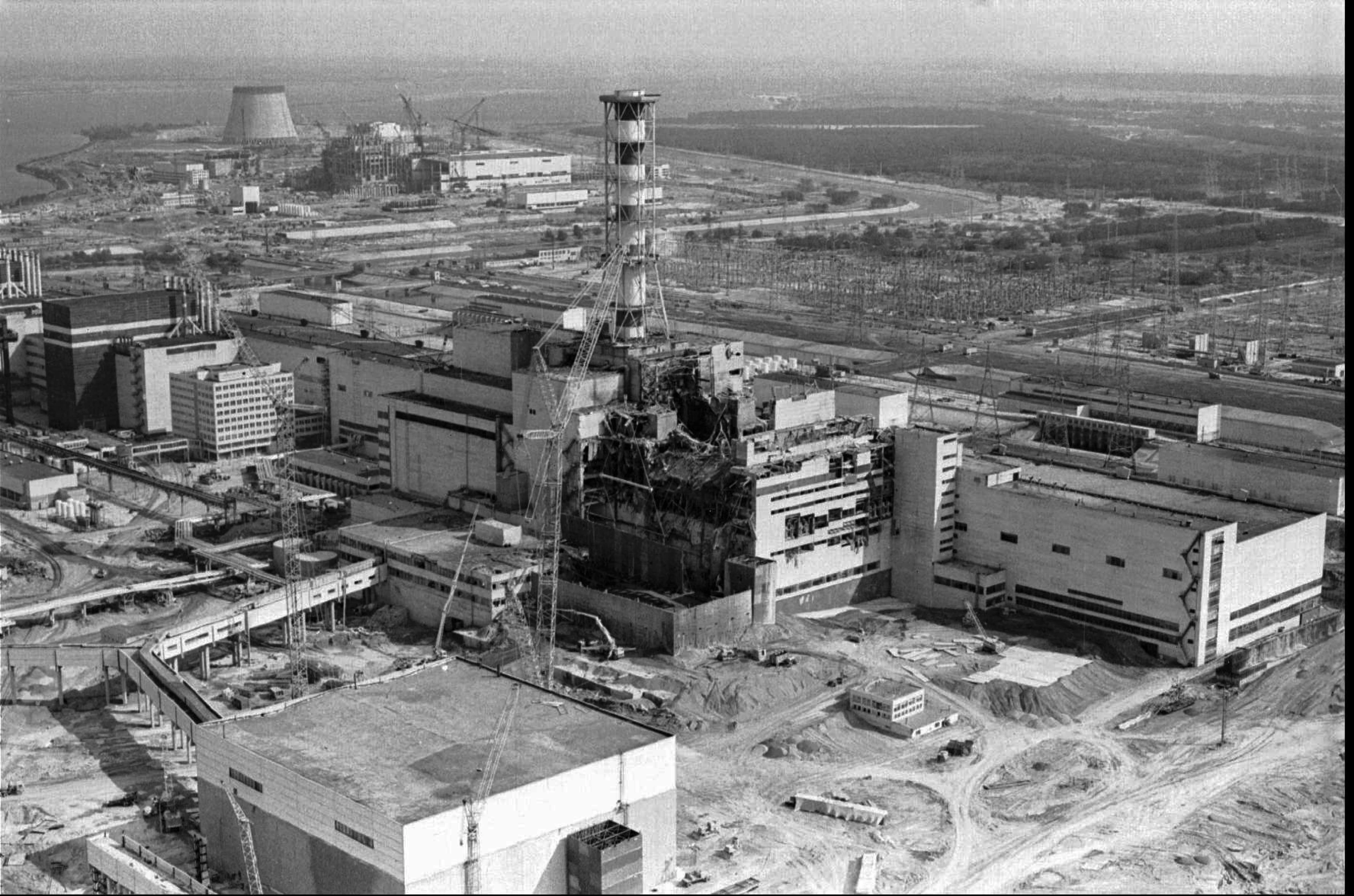
In the early hours of 26 April 1986, two explosions tore apart the fourth reactor of the Chernobyl Nuclear Power Plant in Ukraine. The reactor was destroyed completely. The total radioactive release, according to scientists, was thirty times greater than that of the atomic bomb dropped on Hiroshima. A cloud of radioactive dust drifted across Europe.
But the main explosion of that night was not the reactor. The main explosion was the lie.
For two days, the world knew nothing of the disaster. The first alarm was sounded not by the Soviet state, but by the detectors of nuclear laboratories in Scandinavia, which picked up the foreign radiation themselves and so forced Moscow's hand. And only when silence was no longer possible did Soviet central television deliver to the world four dry sentences — with no indication of the level of danger, no mention of the scale of the release, and not a single piece of advice for mothers or doctors.
On May 1, 1986, the wind turned toward Kyiv, and radiation levels in the capital of the Ukrainian SSR rose sharply. On that very morning, the Soviet authorities brought hundreds of thousands of people — schoolchildren with flowers among them — out onto Khreshchatyk, the city's main avenue, for the traditional May Day parade. Moscow refused to cancel it. People walked under an invisible radioactive rain for one reason only: so that Soviet propaganda could lie to the world that nothing serious had happened at Chornobyl.
The first public statement by the country's leader came on the eighteenth day after the explosion, on May 14 — a televised address by the General Secretary of the CPSU Central Committee, Mikhail Gorbachev. It contained no apology to his own people. It contained, instead, a counter-reproach aimed at the West. Allow me to quote him verbatim: "We have found ourselves face to face with a veritable mountain of lies — shameless and malicious…" Forty years later, that very same formula — we are the victims of someone else's lies, not their source — can be heard at every press conference given by today's Russian Ministry of Foreign Affairs. This is no coincidence. It is the hand of the same regime writing in two generations.
In that same May of 1986, the all-Union Ministry of Health issued an instruction: in the medical files of patients with obvious symptoms of radiation sickness, doctors were to enter the diagnosis "vegetative-vascular dystonia" — the Soviet catch-all euphemism for what one might loosely call "nerves." People were being killed by radiation, and their medical records denied that radiation even existed. This was no glitch in the system. This was the system. A system built on a lie.
The same playbook - on the battlefields of today’s war
The Soviet Union fell apart in 1991, and among the catalysts of that collapse, as even Russian historians now concede, was the Chornobyl tragedy itself. But the style of governance in which lies stand in for the state's conscience was passed down, as an inheritance, to the regime that followed.
The very same state that in 1986 wrote "vegetative-vascular dystonia" in its citizens' medical files instead of "radiation sickness" told the world in 2014 that "we are not there" about Crimea, and in February 2022 insisted that "we are attacking no one" just hours before invading Ukraine. On the very first day of that invasion, Russian forces advancing from the territory of Belarus seized the Chornobyl Exclusion Zone and took the plant's staff hostage. Russian soldiers dug trenches in the so-called Red Forest — one of the most radioactively contaminated patches of land on Earth — and received doses of radiation about which their own command, exactly as forty years earlier, had not bothered to warn them. When they retreated in March 2022, Russian forces abducted 169 members of the Ukrainian National Guard who had been guarding the plant, taking them into Belarus and then on to Russia. Not all of them have yet returned home.
In February 2025, a Russian attack drone struck the New Safe Confinement over the destroyed Unit 4 reactor — the largest movable engineering structure in the world, built by the international community for the single purpose of preventing a second radioactive release. And then there is the Zaporizhzhia Nuclear Power Plant, the largest in Europe, seized by Russia in the spring of 2022: for the first time in human history, an operational nuclear power station is in the hands of an aggressor state. The mining of the perimeter, shelling from within the plant's grounds, the abduction and torture of Ukrainian workers. This past winter, Russian drones circled above all three of Ukraine's operating nuclear power plants, bringing Europe to the brink of a fresh catastrophe each time.
Why the same lie has now reached Iraq
Dear Iraqi reader, allow me to speak to you very directly. The same Russian playbook of lies that was tried out in 1986 on Ukrainian schoolchildren at the May Day parade is today, in 2026, being tried out on your young sons.
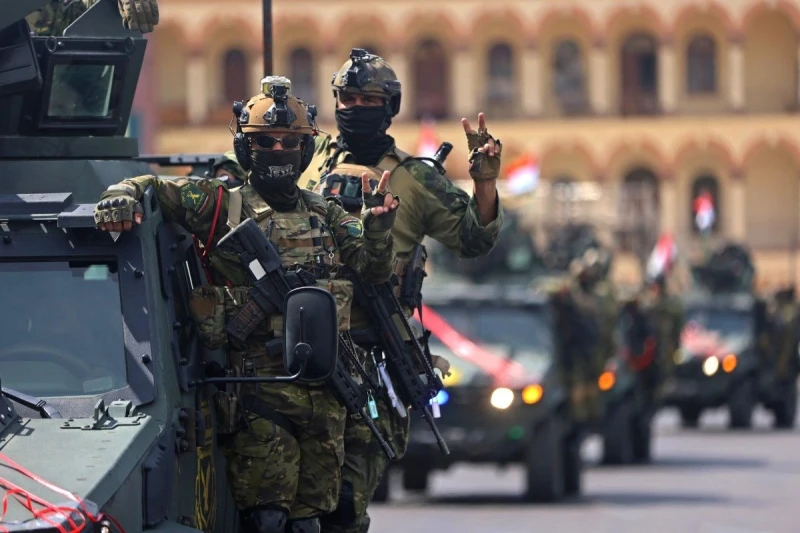
In recent times, recruitment networks linked to the Russian Federation have grown markedly more active. Through sham intermediaries, through social media and bogus "labor agents," young Iraqis are offered "security work," "technical service," or "a contract in Russia" — together with promises of decent salaries, straightforward paperwork, and safe working conditions. Young men travel to Russia, trusting in those promises — and find themselves on the front lines of the most brutal war Europe has known since the Second World War. With no training. With no command of the language. All too often, with no way back.
It is the same state that once learned how to convince Ukrainian mothers that "nothing serious had happened." Only now the very same words, in the very same tone, delivered by the very same method, are addressed to Iraqi mothers. The mother who buries a son lured by deception into a stranger's war, and the mother who once buried a Chornobyl liquidator whose death certificate falsely read "vegetative-vascular dystonia," are — in some terrible sense — the same mother. And their enemy is the same.
A hopeful Iraqi government position
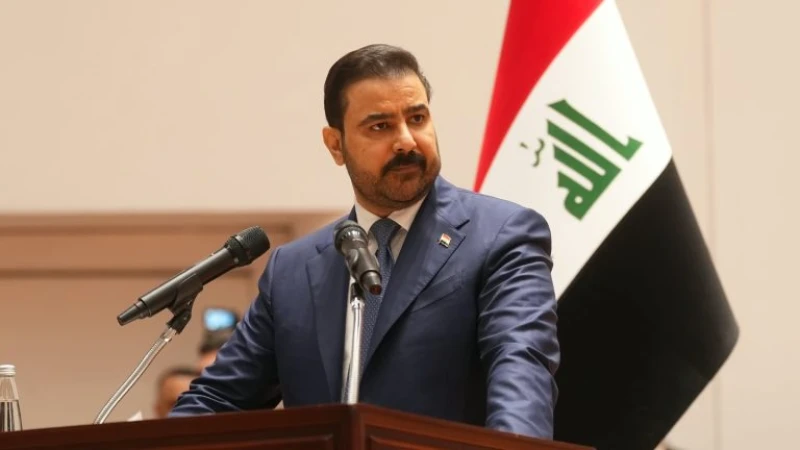
I consider it both my professional and my human duty to say it plainly: the Government of the Republic of Iraq neither hides this problem nor plays it down. The Ministry of Foreign Affairs, the Ministry of Interior, and the other competent Iraqi authorities consistently warn citizens against the dangers of "employment offers" to Russia; they investigate the activities of the intermediaries and of the recruitment networks; and they bring to justice those who, by deception, dispatch young Iraqis to a foreign war. This is the stance of a mature and responsible state that looks after its own citizens. It is precisely what the Soviet authorities failed to do for Ukrainians in 1986, when information that could save a life was officially forbidden, and those who sought it out could be persecuted for the attempt.
Ukraine welcomes this principled line of the Government of Iraq and supports it without reservation. We stand ready to share with our Iraqi partners every piece of information available to us on the recruitment schemes, to assist in the investigation of concrete cases, and to help identify the middlemen through whom Russia's security services manipulate Iraqi families. Every young Iraqi saved from the front is a small victory of our shared truth over Moscow's deceit.
What I ask of Iraqi leaders
First. If someone in your family, among your neighbours, at your workplace, or in your university is offered "a contract in Russia," "security work," or "quick money through Moscow" — stop them. Tell them what has happened to those who have already believed in it. Explain to them one simple thing: anyone who today boards a plane to Moscow on such a pretext is in reality not travelling to Russia at all — they are travelling to the front line of the Russian-Ukrainian war. And far from all of them come back from there.
Second. In this matter, trust your own state. When the Iraqi police uncover yet another recruitment scheme, when the Ministry of Interior warns families, when the courts punish the middlemen — your state is doing a vital work, and it is saving young Iraqi lives.
Third. Remember Chornobyl. Because to remember Chornobyl today is no longer an academic exercise in the history of nuclear power. It is a vigilance against the very lie that was born in Moscow in 1986, that passed through Crimea in 2014, that exploded into the full-scale invasion of Ukraine in 2022, and that is now knocking at your own door — through fake advertisements for "work abroad."
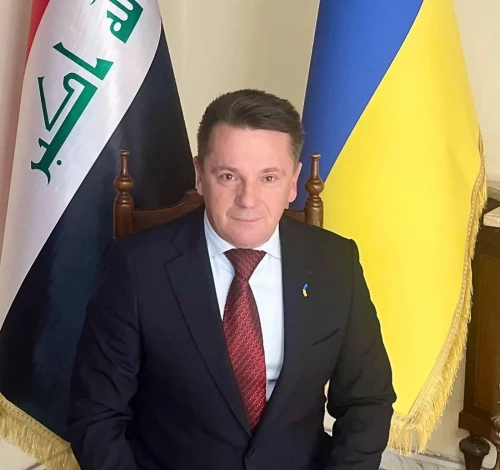
Ivan Dovhanych is the Ambassador Extraordinary and Plenipotentiary of Ukraine to the Republic of Iraq, being appointed to the role by Ukrainian President Volodymyr Zelensky in 2024.
The views expressed in this article are those of the writer and do not necessarily represent the position of The New Region's editorial team.
 Facebook
 LinkedIn
 Telegram
 X
X