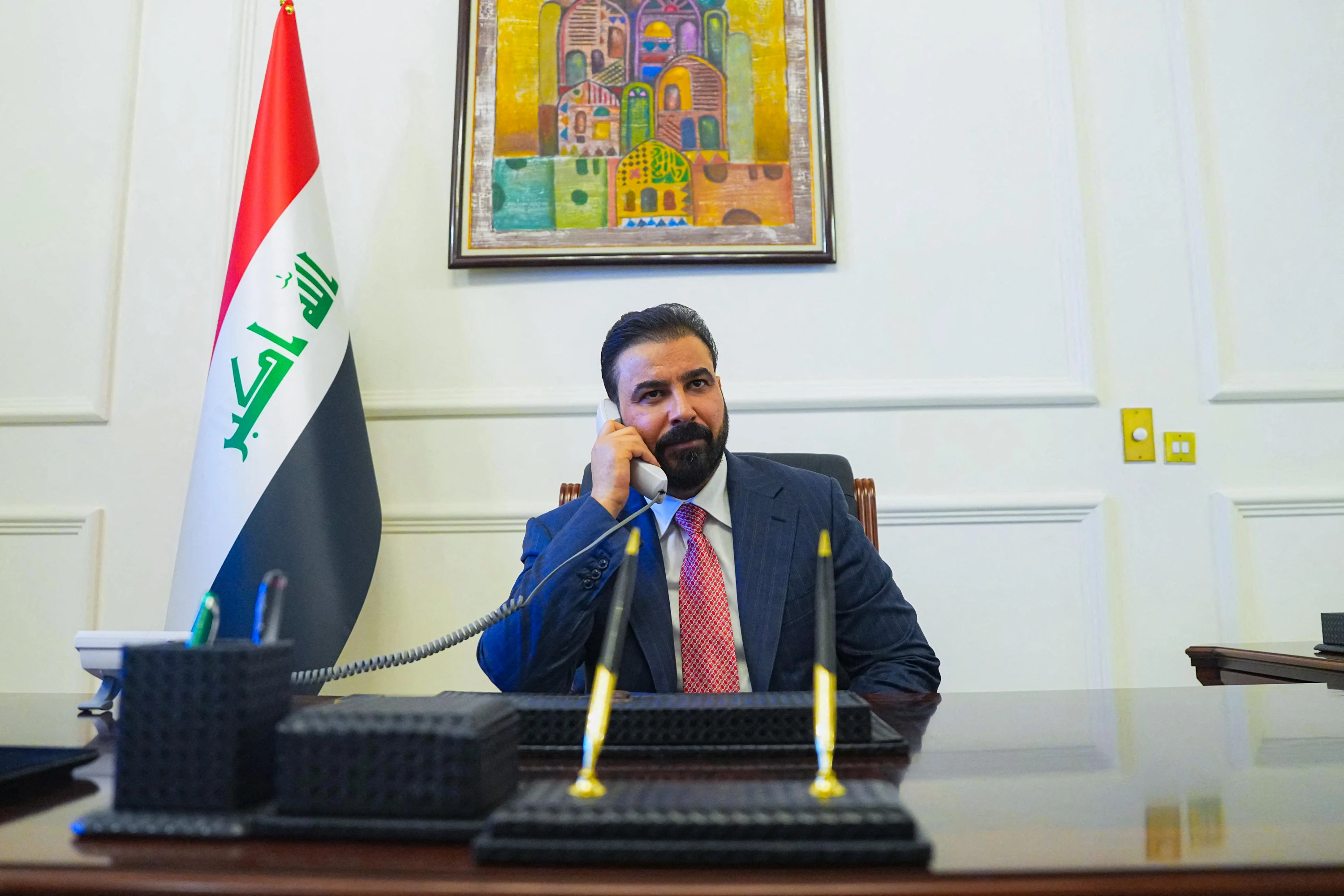
On April 27, the Coordination Framework, the ruling Shiite bloc in Iraq, put forward Ali al-Zaidi as its nominee for the position of prime minister. Based on the informal power-sharing convention in post-2003 Iraq, the premiership goes to a Shiite, the presidency to a Kurd, and the parliamentary speakership to a Sunni Arab.
At first glance, Zaidi appears to have a rare alignment of stars behind him. He has secured backing across the Shiite and broader Iraqi political spectrum, support from regional actors from Tehran to Ankara and Abu Dhabi, and, at least for now, a measure of acceptance from Washington. Yet this convergence masks a far more precarious reality. Zaidi’s path to success is shaky, and failure is more likely than not—particularly if a new round of conflict between the United States, Israel, and Iran resumes.
Zaidi’s selection came as a surprise, as he was not a recognizable name even for most Iraq watchers. Based on the conversations I have had with Iraqi sources, his name appears to have been put forward by Iraq’s judiciary chief, Judge Faiq Zidan. Among other things, the two reportedly hail from Dhi Qar province. Looking at the sequence of events and the timeline of Zaidi’s selection, an important question is whether the reported visit of Iranian Quds Force Commander Esmail Qaani to Iraq on April 20 had anything to do with bringing Zaidi’s name into the mix. We will likely learn more about that in the future.
While prime ministers emerging from Framework deliberations are usually described as consensus candidates, Zaidi is almost the opposite: an embodiment of deep disagreement and, in many ways, the breakdown of even prior norms of prime minister selection. He is a businessman with no political or government career, but well-connected to the Shiite political class through lucrative contracts and questionable banking activities within Iran-linked networks in Iraq— activities that drew scrutiny and restrictions from the Central Bank of Iraq at the behest of the United States. In that sense, Zaidi is an ideal choice for a political class unable to agree on even a junior figure from its own ranks. He is an outsider-insider with no independent base and little capacity to challenge entrenched actors but deeply implicated in existing power webs. Even if he manages to form a government within the next three weeks, he is unlikely to be more than a project manager with limited authority.
In a sign of good fortune, at least for now, Zaidi appears to enjoy US support. President Donald Trump spoke to him personally on April 30 and congratulated him on his nomination. This, combined with broad domestic and regional backing, creates the impression of a candidate acceptable to all sides. But such convergence is not new in Iraq. Since 2005, most prime ministers have emerged through some form of understanding between Washington and Tehran. What makes Zaidi’s case different is the timing: his selection comes amid an unfinished and volatile confrontation between the US and Israel on one side and Iran on the other.
Zaidi and conflicting calculations
In supporting Zaidi, Washington, Tehran, and the Shiite political class in Iraq each have their own calculations.
What is curious, though still unclear, is whether any US official played a direct role in selecting him. From the US perspective, Zaidi offers a fresh face at a time when other options were exhausted or unacceptable. Nouri al-Maliki was rejected outright, and Mohammed Shia’ al-Sudani appears to have disappointed Washington due to his failure to rein in Iran-backed militias that turned Iraq into a conflict arena during the recent war. Zaidi, by contrast, provides an opportunity—however slim—for a reset.
However, Trump’s congratulatory message, which expressed hope for a “government free from terrorism,” points to the conditional nature of this support. The phrase is open to interpretation but clearly signals expectations that Zaidi will act against Iran’s proxy networks. Since last October, US rhetoric has consistently called for “disarming” and “dismantling” Iran-backed militias in Iraq. Reports that Washington recently and temporarily withheld dollar transfers from Iraq’s oil revenues suggest that the US is prepared to use significant economic leverage. For context, Iraq’s oil revenues are deposited at the Federal Reserve Bank of New York.
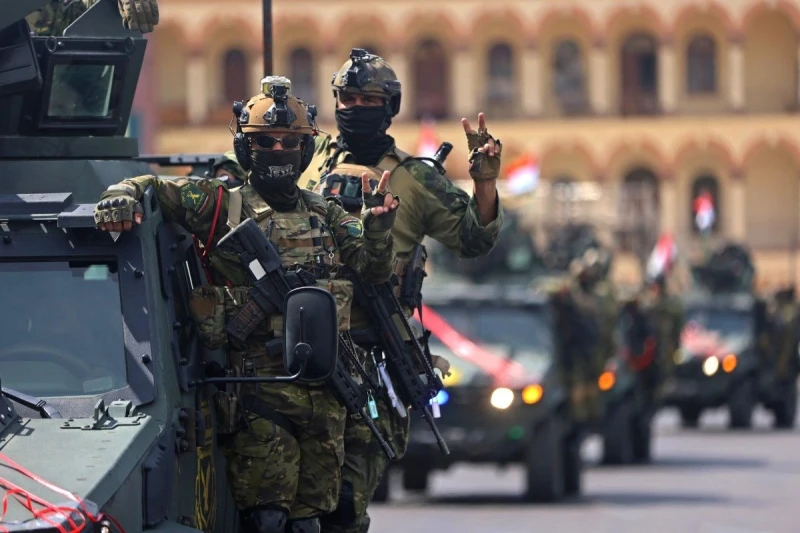
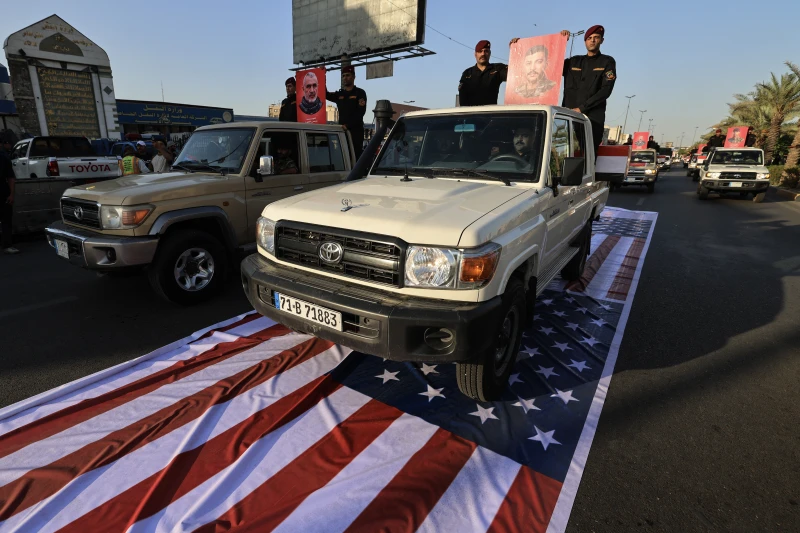
For now, Washington appears to be pursuing a carrot-first approach. But if Zaidi fails to meet expectations, pressure will likely escalate sooner rather than later. More importantly, US policy toward Iraq remains closely tied to Washington’s broader posture toward Iran. If tensions with Tehran intensify or escalate into renewed conflict, Zaidi will face an impossible task. He has no leverage over the militias and little backing within the Shiite political class to confront them. In such a scenario, Iraq could once again become a battlefield, and Zaidi would be largely a bystander.
For the Shiite political class, the calculation is different. Their priority was to find a candidate who preserves their control over state resources and networks while remaining acceptable to Washington. Zaidi fits that role. His premiership is expected to be closely managed by powerful actors in the shadows. These actors know that Washington understands it has limited options for someone to run the government in Iraq. In that sense, the Shiite political class do not see themselves as entirely weak.
Their strategy appears to be to buy time. By putting forward a figure like Zaidi, they hope to maintain a workable relationship with Washington for the duration of the current US administration while continuing to consolidate their influence over the state institutions and territory internally. This would allow them to sustain their ties with Tehran, manage relations with the US, and further subordinate Kurdish and Sunni political actors.
Underlying this strategy is a longer-term calculation: that US pressure will not be permanent. Whether under a future Democratic administration or a more isolationist Republican one, the Shia political elites expect Washington’s engagement in Iraq to eventually recede. Zaidi’s role, in this sense, is to carry the system through the current moment of turbulence, not to transform it. He is young, appears charming, and should be able to engage and reduce friction with Washington and the region more broadly, acting as a diplomatic buffer in that sense.
Tehran’s calculus is equally strategic. In the face of economic pressure and the risk of renewed conflict, Iraq remains a critical lifeline. Zaidi represents continuity without provocation—a semblance of a fresh opportunity to keep Washington satisfied, and a channel through which economic flows, trade, and sanction-evasion schemes can continue in Iraq. For Iran, this is a low-risk, high-reward outcome.
The core problem underlying all these calculations is that they rest on a degree of optimism that may not hold given deep antagonisms. For now, Washington, Tehran, and Baghdad appear to be moving in parallel, each seeing in Zaidi what they want to see. Washington appears to hope that Zaidi will prove capable of advancing its agenda, while Tehran and the Iraqi Shiite political class assume he will remain under their control. But there might be a degree of misreading among some actors in Iraq and Iran regarding US intentions. Deep down, Washington’s opposition is not limited to specific figures such as Maliki; it is directed more broadly at Iran’s influence in Iraq. Depending on how US-Iran relations evolve, Zaidi could quickly find himself caught in a shifting and, very possibly, hostile relationship with Washington. At that moment, —when expectations collide with reality—one side is likely to be disappointed.
All things considered, the challenge for Zaidi is structural. As a politically inexperienced figure with no independent base, he will be pulled in multiple directions, by domestic power brokers, by Tehran, and by Washington, with minimal space for autonomous decision-making. He may have the wind at his back today, but the forces shaping his premiership are far beyond his control.
The views expressed in this article are those of the writer and do not necessarily represent the position of The New Region's editorial team.
 Facebook
 LinkedIn
 Telegram
 X
X