ERBIL, Kurdistan Region of Iraq - In June, the newly appointed Iraqi Prime Minister Ali al-Zaidi announced an ambitious plan to integrate factions pertaining to the Iranian-backed Popular Mobilization Forces (PMF) into state institutions, a plan welcomed by the United States that has pushed for the disarmament of these groups.
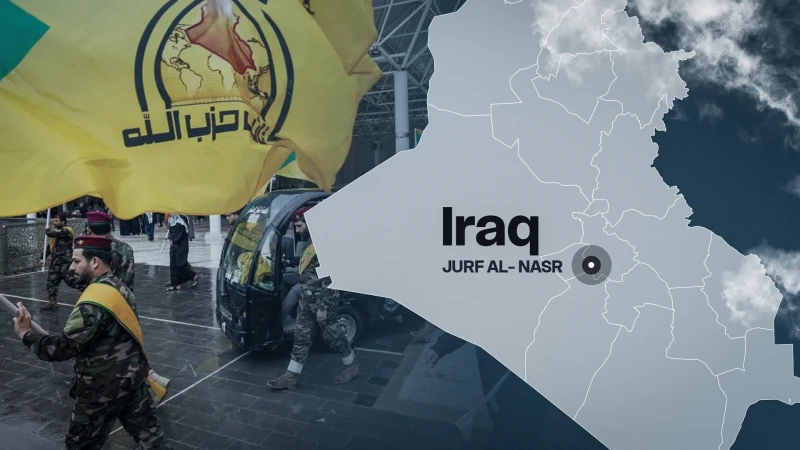
These groups recently during the 28 February war between the US, Israel, and Iran, carried out hundreds of attacks on neighbouring Gulf countries, US diplomatic and military facilities, and other targets in the Kurdistan Region.
The attacks have angered Gulf countries, and the United Arab Emirates banned its nationals from traveling to Iraq in April.
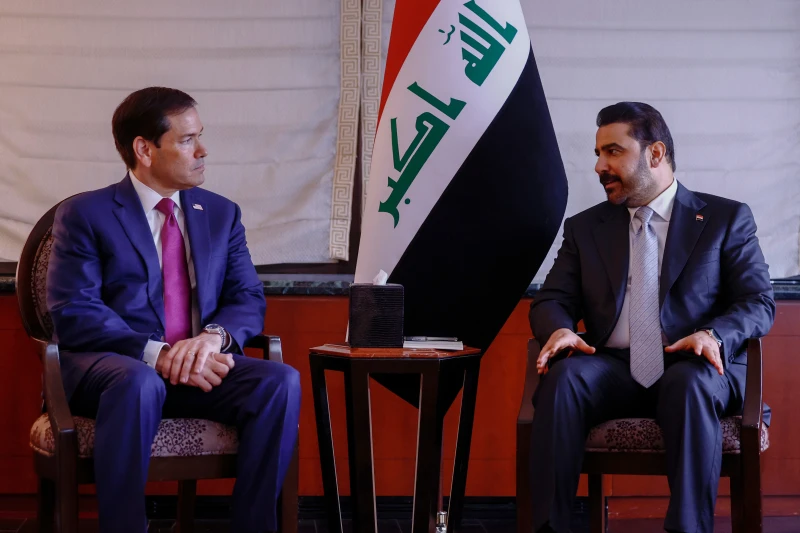
US Special Presidential Envoy for Syria and Iraq, Ambassador Tom Barrack, on June 2 on X congratulated Zaidi on the integration efforts, calling them "the nascent foundation for a renewed Iraqi self-governance — grounded in restored sovereignty, enduring stability, and the promise of national renewal."
In 2024, during the Biden administration, then-US Secretary of State Antony Blinken demanded that the Iraqi government disarm Iraq’s militias.
“Historically, American administrations of both political parties have pushed for disarming of non-state-controlled militias (versus regular state armies). This is rarely 100 percent successful, but still a worthy goal,” said a former senior US Government official and intelligence officer who served under both administrations, to The New Region.
“It seems unlikely that the current Iraqi government can enforce its demands for disarmament, at least without significant outside help, which likely won’t be forthcoming. Still, it’s a worthy goal. Additionally, there is not a traditional administration and does not make decisions in what most national security experts would view as a rational process. Whether or not they decide to support such disarmament in principle, it is unlikely the US would provide material military or financial support for the effort.”
Alex Plitsas, a Nonresident Senior Fellow at the Atlantic Council, who previously worked in the US Secretary of Defense’s office and was twice deployed to Iraq, told The New Region that “efforts by the Iraqi government to incorporate the PMF into the Iraqi Army or disarm it appear to be genuine after what US officials told they put significant pressure on the Iraqi government.”
“The Saudis also put the Iraqi government on notice that if the PMF militias continue to fire drones and projectiles at Saudi Arabia and GCC states that they would be hit hard. The question is will all of the individual subgroups that make up the PMF comply.”
“The PMF is a quasi state actor as it receives funds from the Iraqi government and was used as a ground force to combat ISIS. PMF leaders have enriched themselves by using their militias to serve as muscle to take over segments of the economy and act like mafia bosses. They are amongst the wealthiest people in Iraq now,” he added.
Last month, the US arrested a senior member of Kataib Hezbollah in Turkey for their involvement in planning attacks abroad in Europe, Canada and the United States, showing the international reach of these groups. The group also kidnapped the U.S. journalist Shelly Kittleson, who was released after a week.
Iraqi government spokesperson Haider al-Aboudi told reporters on June 10 that the Iraqi state plans to consolidate all weapons under state control by next September, when the mission of the US-led Coalition in Iraq ends.
David Witty, a retired US Army Special Forces Colonel and Foreign Area Officer, told The New Region that the Iraqi government's efforts are serious and Baghdad says it has set up a committee to oversee it.
“They are afraid of US sanctions and the US Congress is tying 2027 military assistance to how effective Baghdad is in limiting Iranian aligned militias.”
“I think all the militias as a whole are trying to buy time and maintain their presence and influence in the government, (which are an extension of Iran),” he added. “Will attacks stop? I think it is tied to what happens next with Iran. The Quds force commander said yesterday they are prepared to open a new front in the Red Sea and the Houthis say Israeli ships are forbidden from the Red Sea.”
On June 7, Kataib Hezbollah warned the Trump administration that it will target US bases if it intervenes in the escalation between Iran and Israel. Nevertheless, there were no claimed attacks by the group during the last US strikes on Iran in June, and most of the attacks that were carried out by drones since the April 8 ceasefire have been carried out directly by Iran.
Hazem Alghabra, a former senior adviser at the US State Department, told The New Region that it is hard to assess the disarmament process at this point, as the process is still in its very early stages.
“But if what we've heard so far is true, even partially, it's monumental. Zaidi's attacking two things at once. He's a brave guy. He's attacking the two legs that the PMF really, and the Iranian influence sits on: the corruption and the armed militias.”
“If he can successfully tackle both, major changes will take place, and Iranian influence will never be the same again if he successfully fights corruption, and he is able to collect the weapons at least partially from the PMF.”
However, Alghabra added that he opposes the plan by Iraqi Shiite cleric Muqtada al-Sadr to integrate PMF forces into the army and security forces. “That's a dangerous thing to do. If you don't believe me, look at Lebanon.”
He warned that if that happens it's possible that these fighters could regroup again into militias outside the army. “And there is no shortage of weapons in that neighborhood. So, you haven't really solved the PMF problem, you just delayed it technically.”
Phillip Smyth, a researcher focused on Shiite armed groups, also added that the Iraqi government plan doesn’t address the other question of what integration looks like and how these factions are going to be disarmed. “Nothing's ever fleshed out these vagaries that really go nowhere,” he said.
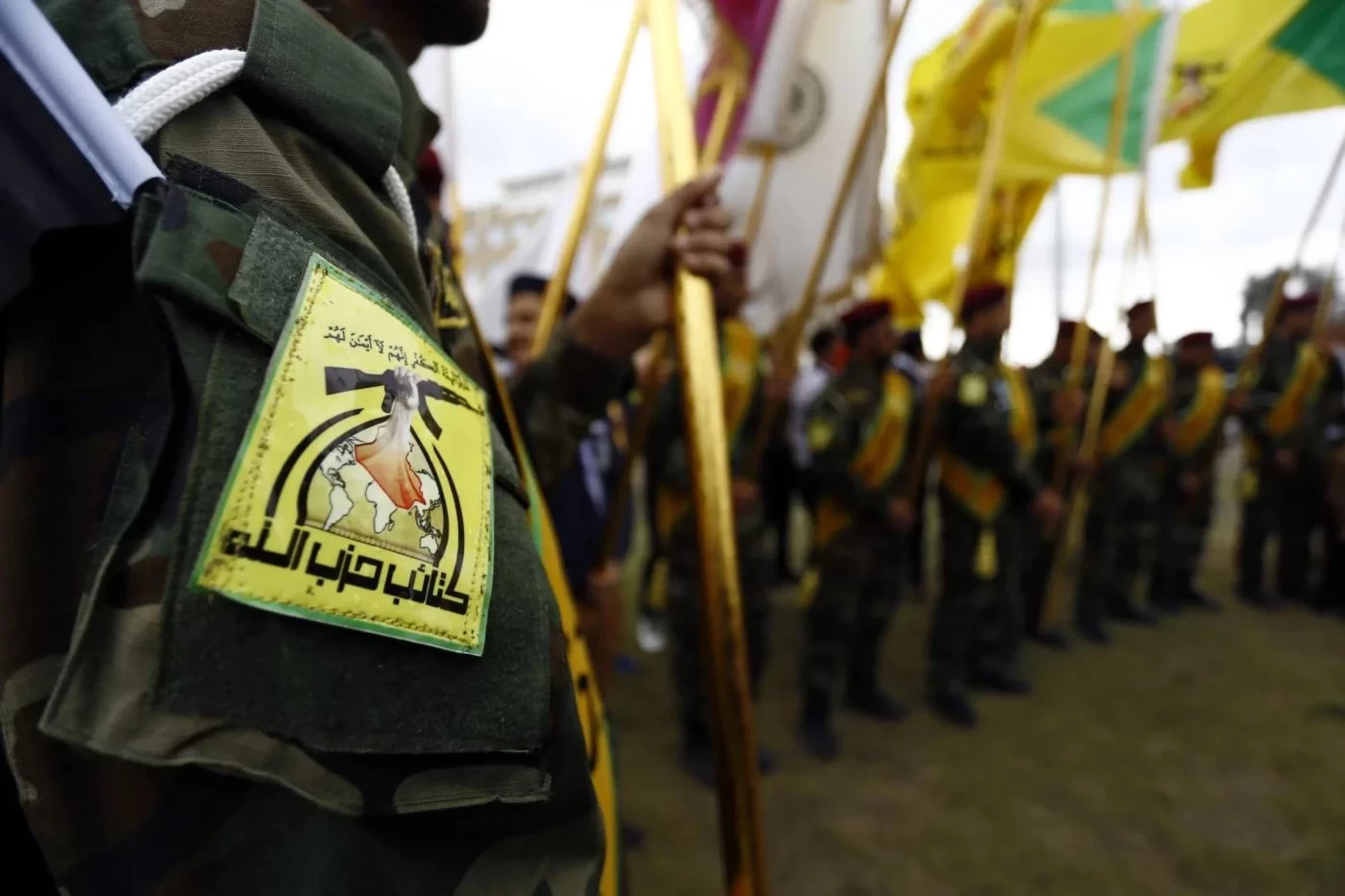
Until now, Kataib Hezbollah, Ashab al-Kahf, Harakat al-Nujaba, and Saraya Awliya al-Dam have vowed not to disarm, while Muqtada al-Sadr’s Saraya al-Salam, Asaib Ahl al-Haq, and Kataib al-Imam Ali, have supported the decision by the Iraqi government.
“It’s two Shiite militia groups, as opposed to the other 56—some say up to 75—that are still going to remain armed and linked to these organizations. It’s the same pattern every time. They'll always follow this every once in a while.. Kataib Hezbollah, Kata'ib Sayyid al-Shuhahda, and even the largest, Badr, aren't doing this. It just looks like a political play. Meanwhile, highly likely the militia elements will still exist, but in a different form.”
Andrew Tabler, Senior Fellow at the Washington Institute for Near East Policy and a former official at the US National Security Council and Department of State, told The New Region that it seems that the Iraqi government's plans are serious. “But let's see how far they get. It's very hard to do. The problem is that there are so many of these groups.”
According to Alex Almeida, a lead security analyst at political risk consultancy Horizon Engage, who actively follows Iraq the core Iran-backed armed groups “will work around efforts by the Iraqi government to disarm them or demobilize them - they will rebrand, or spin off new armed cells and front groups, even if they keep a facade of complying and turn in some of their heavy weapons.”
Thus, it remains to be seen if the September deadline will be reached.
“Iraq needs to get control not only for its own sovereignty, as allowing armed non-state actors to take orders from another country is wildly irresponsible, but also because it is becoming more clear that regional neighbors and the west intend to hold the Iraqi government accountable,” Plitsas concluded.
 Facebook
 LinkedIn
 Telegram
 X
X