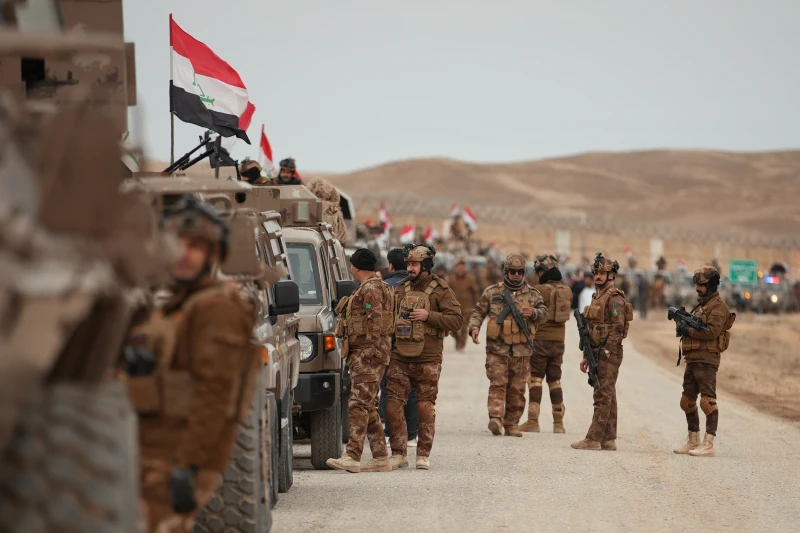
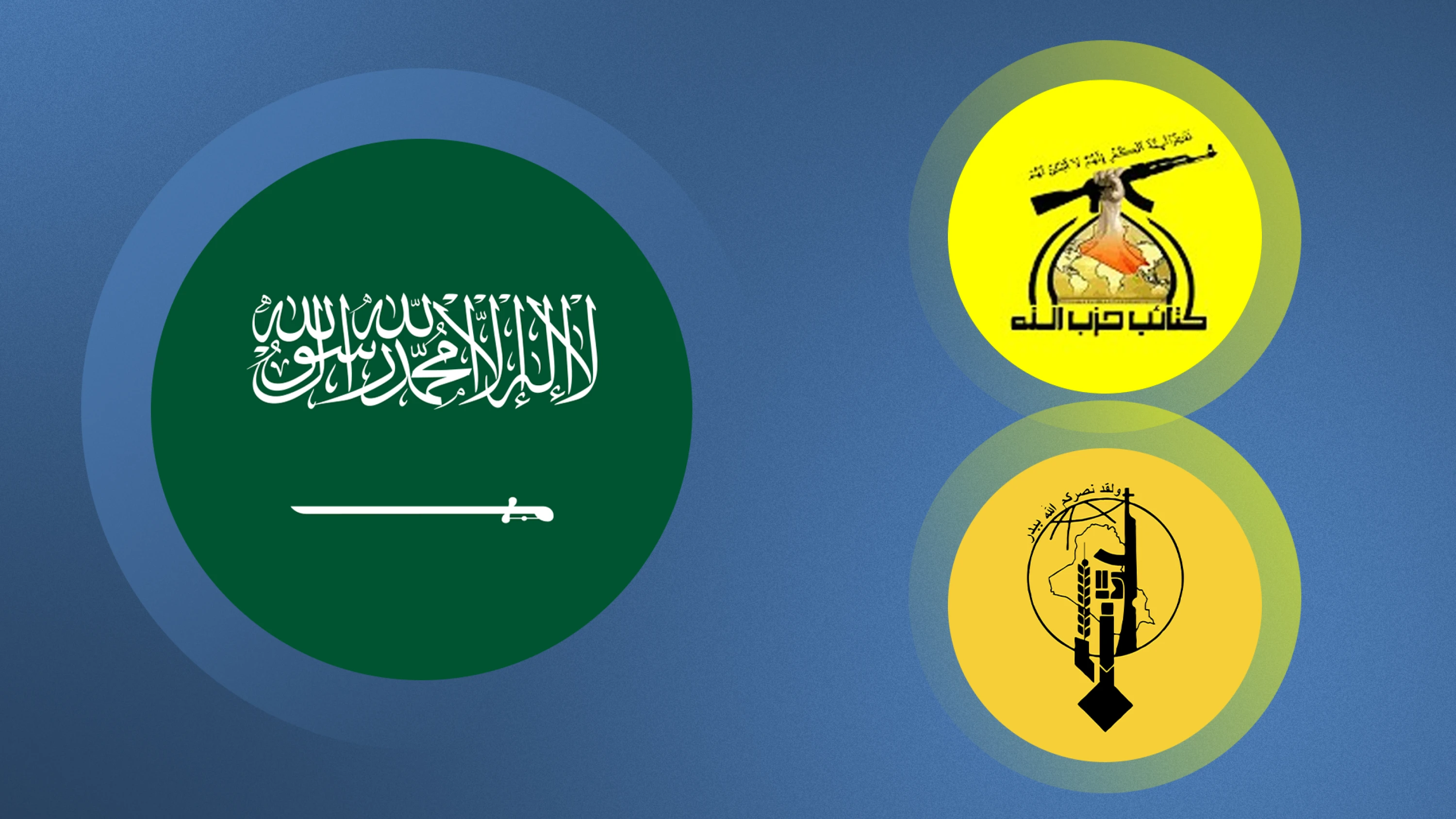
BAGHDAD, Iraq - Saudi authorities have accused the Badr Organization and Kataib Hezbollah, the most influential and organized Iranian-backed Iraqi Shiite armed groups, of being behind the attacks targeting Saudi Arabia’s oil facilities in recent weeks, Iraqi security officials told The New Region.
The accusations marked the first time Saudi authorities had identified specific Iraqi armed factions as responsible for the attacks targeting the Kingdom’s oil facilities.
Saudi authorities have repeatedly said that missiles and drones launched from Iraqi territory targeted the country’s oil facilities in recent months. The Saudi Ministry of Defense said the latest attacks, on July 27 and 28, involved drones targeting oil facilities in the Eastern Province and Riyadh, adding that its air defenses intercepted and destroyed the drones which it said had been launched from Iraqi territory by “Iran-affiliated” armed factions.
On July 29, Saudi and US aircraft carried out a series of simultaneous airstrikes targeting Popular Mobilization Forces (PMF) bases across seven Iraqi provinces. The PMF is the government-linked umbrella group encompassing brigades affiliated with both factions. At least 20 fighters were killed and 32 others wounded, according to the PMF.
Seven Iranian consultants who had been present alongside PMF units to help coordinate security for Iranian pilgrims who had traveled to Iraq to commemorate Arbaeen of Imam Hussein, the grandson of Prophet Muhammad, were also among those killed in the strikes, PMF commanders told The New Region.
The targeted sites included three locations where brigades affiliated with the Badr Organization are stationed. The remaining targets were either PMF headquarters, where units and representatives from multiple factions are deployed, or weapons and ammunition storage facilities.
The deadliest strikes targeted the headquarters of the 4th Regiment of the 30th Brigade and the Armored Fighting Directorate in the Nineveh Plains in northern Iraq, where seven consecutive strikes hit the two locations. Video footage circulated by PMF-affiliated media outlets after the airstrikes showed extensive damage to both locations. PMF commanders told The New Region that the strikes on the two headquarters killed ten fighters and wounded six others.
Another major strike targeted positions of the 24th Brigade at Martyr Abu Muntadhar al-Muhammadawi Camp, formerly known as Camp Ashraf, in northern Diyala Province, killing nine people, including the Iranian consultants, commanders said.
Both the 30th and 24th brigades are affiliated with the Badr Organization.
“Saudis accuse Badr and Kataib Hezbollah of targeting their oil facilities,” a senior PMF official familiar with the latest developments in the Iraqi investigation into the attacks told The New Region.
“They informed the prime minister through an intermediary that these two factions were responsible for the recent attacks.”
Behind the scenes
The accusation represents a significant escalation for the Badr Organization, whose armed wing was integrated into Iraq’s security forces after 2003 and later formed the backbone of the Popular Mobilization Commission (PMC), established in 2014 as a government body covering volunteers and armed factions that fought the Islamic State (ISIS) alongside Iraqi security forces.
Despite its deep and public ties to Iran’s Islamic Revolutionary Guard Corps (IRGC), the organization and its leadership have been careful to keep their fighters from playing any overt role in operations attributed to other Iranian-backed Iraqi armed factions against US forces and interests in Iraq and the region.
At the Coordination Framework’s weekly meeting on July 27, two days before the US-Saudi airstrikes, Prime Minister Ali al-Zaidi briefed the assembled Shiite leaders on the Saudi accusations and Riyadh’s threat of military retaliation inside Iraqi territory if attacks by Iraqi Shiite armed factions continued, two prominent Shiite political leaders familiar with the discussions told The New Region.
Zaidi told the attendees that Saudi Arabia had identified the Badr Organization and Kataib Hezbollah as the main suspects behind the recent drone attacks launched from Iraqi territory and had threatened a military response inside Iraq.
The accusation angered at least three of the assembled leaders, who accused Saudi Arabia and the United States of fabricating the allegations as a pretext to strike PMF units.
Hadi al-Amiri, commander of the Badr Organization and a senior Coordination Framework leader, rejected the accusations outright.
“Amiri became very angry and swore vehemently that Badr had nothing to do with these attacks,” one of the leaders told The New Region.
The Saudi threat also reinforced discussions among the participants over bringing armed factions under state authority, a policy Zaidi has advocated since taking office in May. The leaders discussed ways to deal with armed factions that have refused to disarm and come under state control, most notably Kataib Hezbollah, but reached no definitive decisions.
The statement issued after the meeting said the Coordination Framework “reaffirms its rejection of the use of one country’s territory to attack other countries, thereby dragging everyone into a conflict that serves none of the parties,” without providing further details.
“We know that none of the attacks targeting Saudi Arabia originated from Diyala or Nineveh. This is certain, but we do not rule out the involvement of Kataib Hezbollah and some undisciplined mid-level Badr commanders and fighters in carrying out the attacks the Saudis and Americans are talking about,” a senior PMF official told The New Region.
Advance warnings
Despite repeated public denials by Iraqi officials that the government had prior knowledge of the airstrikes, multiple senior military officials and PMF commanders told The New Region that the prime minister had received advance notice that Gulf states had decided to respond militarily to the recent attacks targeting Saudi Arabia and other Gulf countries.
According to the officials, the message reached Zaidi on July 28 conveyed that a decision had been made to retaliate but did not specify when the strikes would take place, their scale, or the locations that would be targeted.
It was not clear exactly when the message was delivered that day or where, as Zaidi was on an official visit to Ankara.
However, immediately after returning to Baghdad around mid-night, Zaidi met PMC head Falih al-Fayyadh at Baghdad Airport where he conveyed the information he had received and urged Fayyadh to prepare for a possible military strike, at least three senior officials told The New Region.
“Zaidi met Fayyadh at the airport that night and conveyed to him the details he had received,” a senior PMF official close to Fayyadh told The New Region.
“But at that time, neither he nor anyone else knew the timing of the strike, its scale, or the targeted locations.”
However, hours later, Iraq’s Joint Operations Command received a separate notification from US Central Command (CENTCOM) informing Iraqi authorities that strikes against PMF sites were imminent and would take place shortly, PMF commanders and senior security officials told The New Region
The Joint Operations Command immediately relayed the warning to PMF intelligence, which began contacting commanders in the field in an effort to evacuate personnel before the strikes, according to PMF and Iraqi military commanders familiar with the developments who spoke to The New Region.
Several PMF commanders said they were warned only shortly before the airstrikes, allowing some units to order their fighters to leave the targeted sites, while others either received the warning too late or not at all. They said the limited time available to relay the information largely explains the uneven casualty toll across the targeted locations.
A senior commander from the 30th Brigade, whose headquarters sustained the deadliest attack, told The New Region that his unit received the warning but did not have enough time to evacuate all its personnel before the strikes.
“We received the message by phone from the PMF intelligence unit just about 15 minutes before the attacks took place. They informed us of the potential attack and asked us to evacuate the fighters,” the commander said.
“There wasn’t enough time to reach all the positions and fighters. Most of them were asleep… Even those who were awake and received the orders didn’t have enough time to get far enough away, so they were hit by rocket shrapnel.”
 Facebook
 LinkedIn
 Telegram
 X
X