
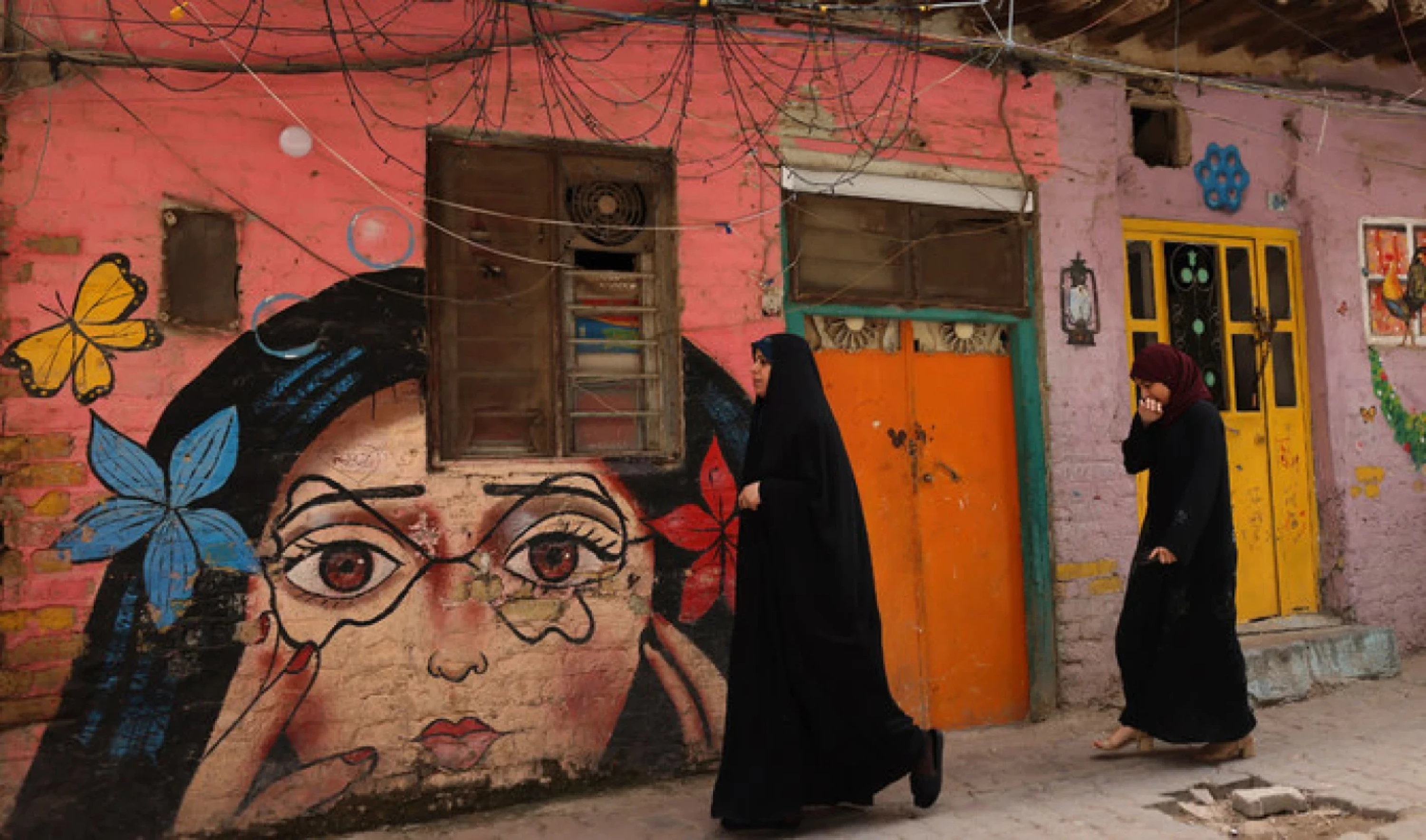
SULAIMANI, Kurdistan Region - More women from southern and central Iraq are turning to the Kurdistan Region for legal sanctuary, hoping its personal status laws will better protect their rights in marriage, divorce, child custody, and inheritance. As the federal Jaafari code takes hold, many see the Region’s courts and legislation as a safer alternative to rules they believe leave them vulnerable.
The shift has gained attention since amendments to Iraq’s federal Personal Status Law came into force in February 2025. Eligible Muslim couples can now choose between the original 1959 law and a code based on Jaafari jurisprudence. Many women fear that the latter weakens long-standing safeguards and are looking north for stronger protections.
Iraq’s Personal Status Law No. 188 of 1959 was progressive for its time. It fixed the minimum marriage age at 18, banned forced marriage, allowed women to seek divorce through the courts, restricted polygamy, usually favored mothers for custody of young children while prioritizing the child’s best interests, and gave women clearer rights to maintenance and inheritance under a single civil system.
In 2008, the Kurdistan Region strengthened these foundations with Law No. 15. The amendments raised barriers to polygamy, improved mothers’ standing in custody disputes, enhanced women’s financial rights after divorce, and placed greater weight on the child’s best interests. The region also has a dedicated domestic-violence law (Law No. 8 of 2011) covering physical, sexual, psychological, and economic abuse — something federal Iraq still lacks. Together, these measures create a legal environment many women from other parts of the country now view as more protective.
Critics of the Jaafari code say it rolls back several of the 1959 protections. They point to a higher risk of child marriage, tighter limits on women’s ability to divorce, automatic transfer of primary custody to the father at age seven, weaker financial security for divorced women, and little explicit protection against domestic violence.
Amal Kabashi, an Iraqi women’s rights activist, described the changes as a serious reduction in legal safeguards.
“The most significant injustices against women arising from the amendment to Iraq’s Personal Status Law and the Jaafari code lie in the reduction of legal safeguards protecting women and girls,” she told The New Region. She warned of more early marriages damaging girls’ education, health, and independence, and of unbalanced rights in divorce, especially over financial support, inheritance, and custody.
The new rules, she said, risk sidelining mothers without prioritizing the child’s welfare and raise questions about Iraq’s commitments under the Convention on the Elimination of all Forms of Discrimination Against Women (CEDAW), which it acceded to in 1986.
Almost a year after the Jaafari Code took effect, its everyday consequences are becoming clearer. At a seminar in Baghdad in early October 2026, organized by the “Mother and Child” Forum with the Iraqi Women’s League, speakers examined its impact on custody, alimony, visitation, and marriage, cautioning that the provisions could leave women and children more exposed and turn family disputes into lengthy legal battles.
A different legal landscape in Kurdistan
Under the Jaafari code, a husband can often end a marriage more easily than a wife can obtain judicial separation. Human Rights Watch has noted that husbands may divorce without notifying or obtaining consent from their wives, while women face stricter conditions. Primary care of children passes to the father at age seven regardless of the child’s best interests, and divorced women’s financial position is generally weaker.
Kurdistan’s framework offers stronger starting points. Kurdish lawyer Farman Hassan explained: “While the amended personal status law in Iraq imposes religious authority to rule on matters of divorce, custody, and polygamy, in the Kurdistan Region there is no religious authority over the courts. As per the Jaafari code, women cannot easily ask for divorce, while the husband can easily divorce his wife and marry more wives without the consent of the first wife. However, in the Kurdistan Region law, women have more legal provisions to ask for divorce, and men cannot marry another wife except with the consent of his first wife.”
Hassan added that custody under the Jaafari code goes to the husband from age seven, whereas in Kurdistan it remains with the mother until age 15, after which the child decides. Polygamy faces few obstacles under federal codes, but in Kurdistan a man cannot take a second wife even with the first wife’s agreement unless there is a serious illness. Women in the Region can also seek divorce if their husbands remarry — a right unavailable under the Jaafari framework.
Seeking sanctuary in the Kurdistan Region
Kurdish lawyer Shokhan Hama Rashid said many women from southern and central Iraq now view the region as a haven for their rights.
“Due to the implementation of the amended personal status law in Iraq, women feel that the law does not protect their rights; therefore, they seek sanctuary in the Kurdistan Region and often escape… because they face domestic violence and other issues,” she told The New Region. “Women from southern and central Iraq are asking us daily if they come to the Kurdistan Region, is there any place to protect them, or are their rights protected?”
She acknowledged remaining difficulties: husbands in other provinces often refuse to attend Kurdish courts, women face threats, and enforcement of judgments back home is uncertain. “Despite all these issues, women from other parts of Iraq continue to reside in the Kurdistan Region and demand their rights.”
Hama Rashid also voiced concern that Kurdistan’s protective laws could one day face federal challenge: “All options remain open, and there is a constant fear that the Iraqi judiciary or the federal supreme court will annul those laws… on the pretext that they are against Iraq’s constitution.”
Kabashi accepted that the regional law provides safeguards but said she does not yet see a large-scale movement of women relocating solely to avoid the Jaafari code.
Practical barriers remain significant. Jurisdiction, residence requirements, serving notice on husbands elsewhere, and the risk of threats all complicate cases. Even so, the daily inquiries reported by lawyers show that demand for this alternative is real and persistent.
Financial dependence, family pressure, legal costs, and slow processes often hinder women even when the law appears protective. For those travelling from another governorate, the difficulties multiply, yet the continued presence of women from the south and center suggests the perceived benefits still outweigh the obstacles for some.
Civil society groups continue monitoring the code’s effects and gathering evidence, while events such as the Baghdad seminar document its human impact.
Kurdistan’s legal framework — built on the 1959 law, reinforced by the 2008 amendments and supported by a domestic-violence statute — offers clearer protections on divorce, financial rights, custody, and safety from abuse. The accounts of lawyers and the women who continue to arrive indicate that the region is already functioning as a legal refuge.
Kurdistan’s stronger protections hold genuine promise, offering a clear path to turn them into practical, enforceable rights that women can confidently claim without new legal, financial, or personal risks.
 Facebook
 LinkedIn
 Telegram
 X