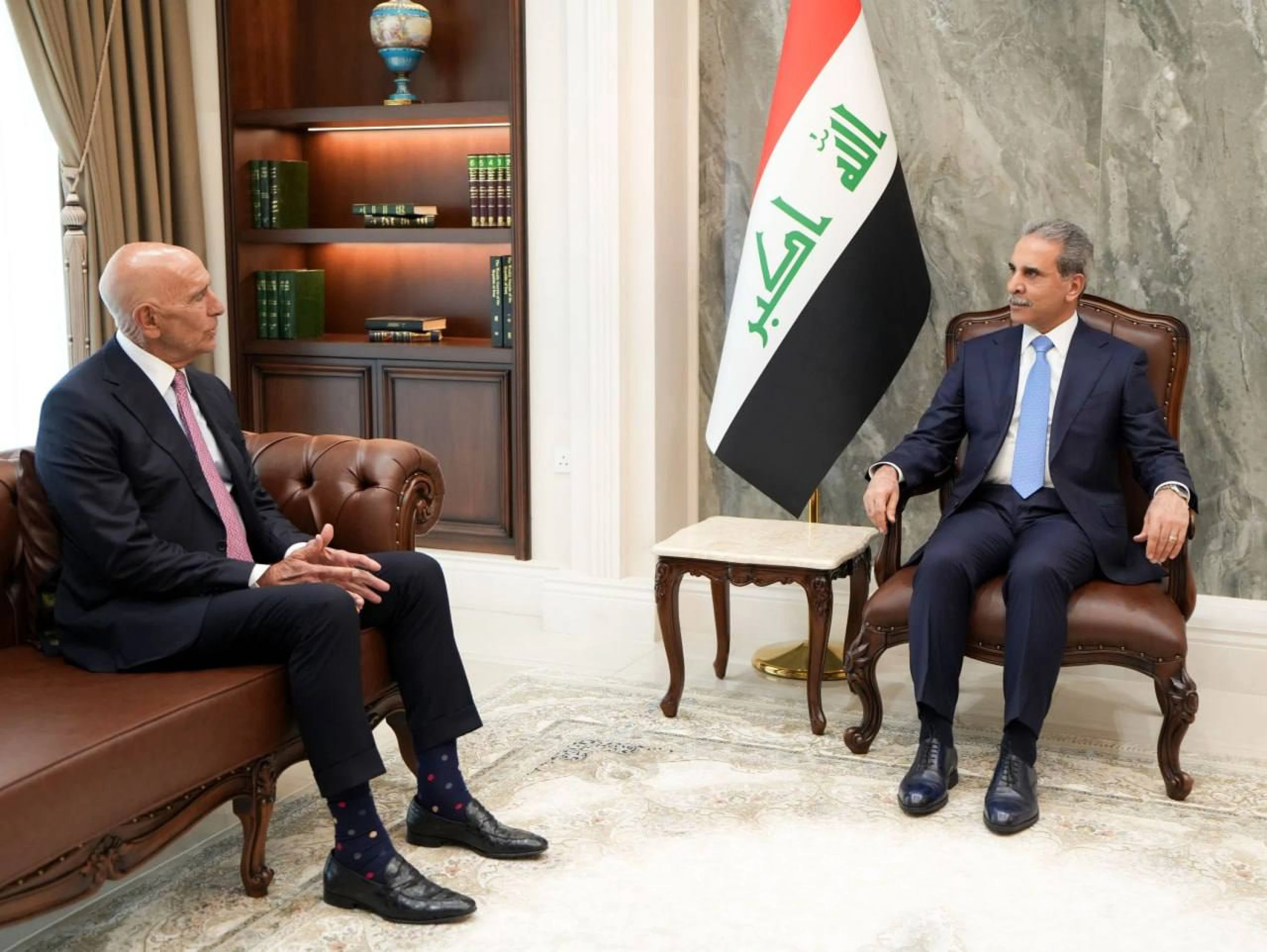
Ambassador Tom Barrack arrived in Iraq this week for meetings with Iraqi leaders in his official capacity as US Special Presidential Envoy for Iraq. This is his first visit since his official appointment in late May, though he has made other visits to the country over the past several months to address issues related to Iraqi and Syrian politics.
Barrack’s appointment has one important advantage for Iraqis: he is not just any envoy. He is an extraordinarily powerful diplomat, in direct personal contact with the President of the United States and other senior figures in Washington. In other words, he can get things done in Washington in a way no other envoy or ambassador to Iraq has.
There is much speculation about what Ambassador Barrack will prioritize in Iraq. Alongside Iraq, he is also running the Syria and Turkey portfolios for Washington. Given the complexities and unique characteristics of each of these countries, grouping the three suggests the emergence of a perspective in Washington—at least in some circles—that favors a strategically interconnected approach to all three. With Iraq, Syria, and Turkey under his belt, Barrack now effectively runs US policy for the northern Middle East.
At the strategic level, the grouping of the three portfolios together should be understood within a broader security and economic integration framework. The security dimension has both state and non-state actor components and should be viewed within the wider US strategic drive toward burden shifting and burden sharing with allies in different regions of the globe, allowing Washington to extricate itself from actual and potential quagmires.
As far as security threats posed by non-state actors are concerned, the US would seek to encourage cooperation among the three countries in confronting challenges such as, chiefly, Sunni jihadist insurgency by groups like the Islamic State (ISIS), and even the Kurdistan Workers’ Party (PKK), which maintains a cross-border presence and activity across all three states and is viewed as a threat in both Ankara and Damascus, though not necessarily in Baghdad.
At an even deeper strategic level, Washington may hope to encourage the three states to act collectively as a bulwark of sorts against the Islamic Republic of Iran. Looking at recent regional developments, however, the results on the security front are likely to be mixed. In particular, Iran’s apparent emergence as a major regional power with global significance—an inadvertent and unintended outcome of the recent war—would make pulling Iraq away from Iran’s orbit increasingly difficult, even if there were actors in Baghdad who until recently wished to achieve that objective. At this point, no one in Iraq would want to challenge Iran and discover the consequences firsthand.
On the economic front, the broader logic of the US approach should be understood within the framework of the Four Seas project advocated by Barrack during a conference in Washington in April. The idea is to economically connect the vast landmass between the Mediterranean, the Black Sea, the Caspian Sea, and the Gulf through energy pipelines and transit-route projects. Interestingly, the idea was also enthusiastically promoted by Turkey in the late 2000s.
With Syria increasingly being reintegrated into the international community following decades of isolation under the Assad family, and with the recent US-Israel-Iran war and the Strait of Hormuz crisis highlighting the vulnerabilities of existing trade and energy routes, the Four Seas project not only has an unprecedented chance of moving from concept to implementation, but also acquires a sense of urgency. It offers a potential alternative to Hormuz while serving as a driver of economic activity and regional interconnectedness.
As the Washington-based New Lines Institute has argued, the project aligns with a broader US vision of increased commercial activity that would both benefit the US and contribute to Middle Eastern stability. It would also help bolster American influence in the region at a time when its long-term prospects may appear less certain amid shifting regional and global dynamics. Iraq would be central to such a project as the critical point of connection between the Gulf and the Black Sea and Mediterranean regions through Turkey and Syria.
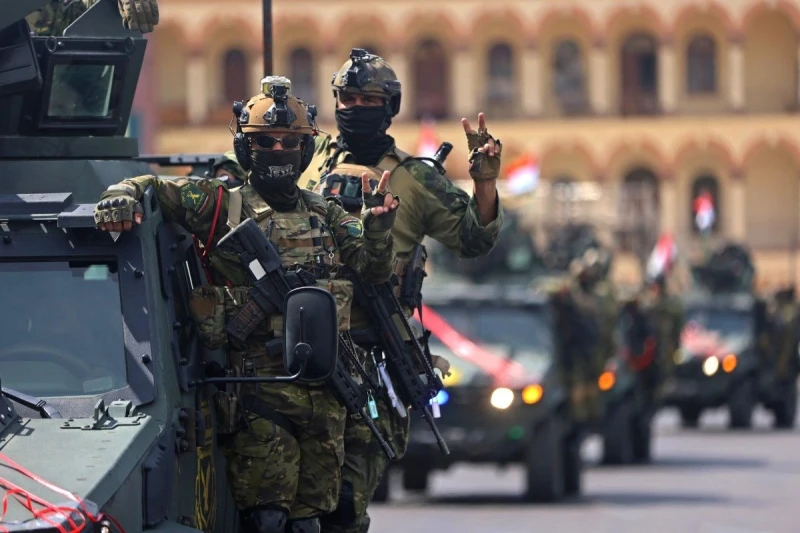
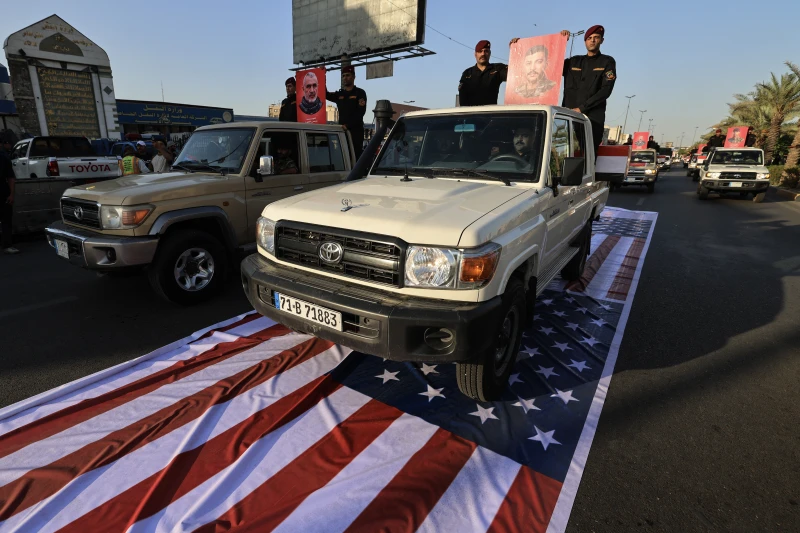
To realize these intertwined security and economic visions, the US would need a stable and, importantly, friendly Iraq. This requires first and foremost addressing the challenge posed by the pro-Iran Shiite militias, which remain the principal structural barrier to both a stable Iraq and a US-friendly Iraq.
It remains to be seen how Washington actually envisions dealing with the militia problem. If the recent buzz in Baghdad about armed factions laying down their weapons is any indication, however, the changes that emerge are likely to be superficial rather than profound or structural. The outcome could instead be the legitimization of some of these groups, six of which have been designated by the US as terrorist organizations, plus a further consolidation of their state-capture project in Iraq on behalf of Iran. Such a development would alter the composition and purpose of the Iraqi state in ways unprecedented since its establishment in the 1920s. This reality requires a realistic and alert approach from the US team in Iraq.
Any economic rejuvenation in Iraq also requires an end to militia attacks, intimidation, and bullying directed at local and Western business operations and interests in the country at Iran’s behest. Without addressing this issue, no meaningful long-term investment environment can emerge.
Additionally, the US should capitalize on the Kurdistan Region’s energy resources, strategic location, economic potential, and security capabilities to advance both its Iraq-focused and broader regional stabilization and development objectives. As one of the few areas in Iraq capable of serving as a bridge between Iraq, Turkey, and Syria, while also providing a relatively secure environment for energy and infrastructure projects, the Kurdistan Region is likely to be indispensable to any serious effort to integrate Iraq into wider regional commercial, transit, and energy networks. Its longstanding ties with regional and international actors further reinforce its importance within any future northern Middle East economic architecture.
In Iraq, furthering this agenda would require the US to promote and support a cross-sectarian bloc of Kurdish, Sunni, and Shiite actors whose vision for Iraq broadly aligns with Washington's objectives for the country and the wider region. Maintaining a US military presence in the Kurdistan Region would also be critical for Washington’s ability to project power in Iraq and, when necessary, into neighboring Syria to confront emerging threats and protect its interests.
As things stand, the US vision of stronger relations with Iraq and of bringing Iraq more firmly into the orbit of US-friendly states in the region would face a significant obstacle in Iran’s strengthened position and emboldened posture following the recent war. Absent a meaningful reset in US-Iran relations, one that would require more than a memorandum of understanding and instead a broader, comprehensive agreement between the two sides, managing Iraq may prove far more challenging than many in Washington initially anticipated.
The views expressed in this article are those of the writer and do not necessarily represent the position of The New Region's editorial team.
 Facebook
 LinkedIn
 Telegram
 X
X