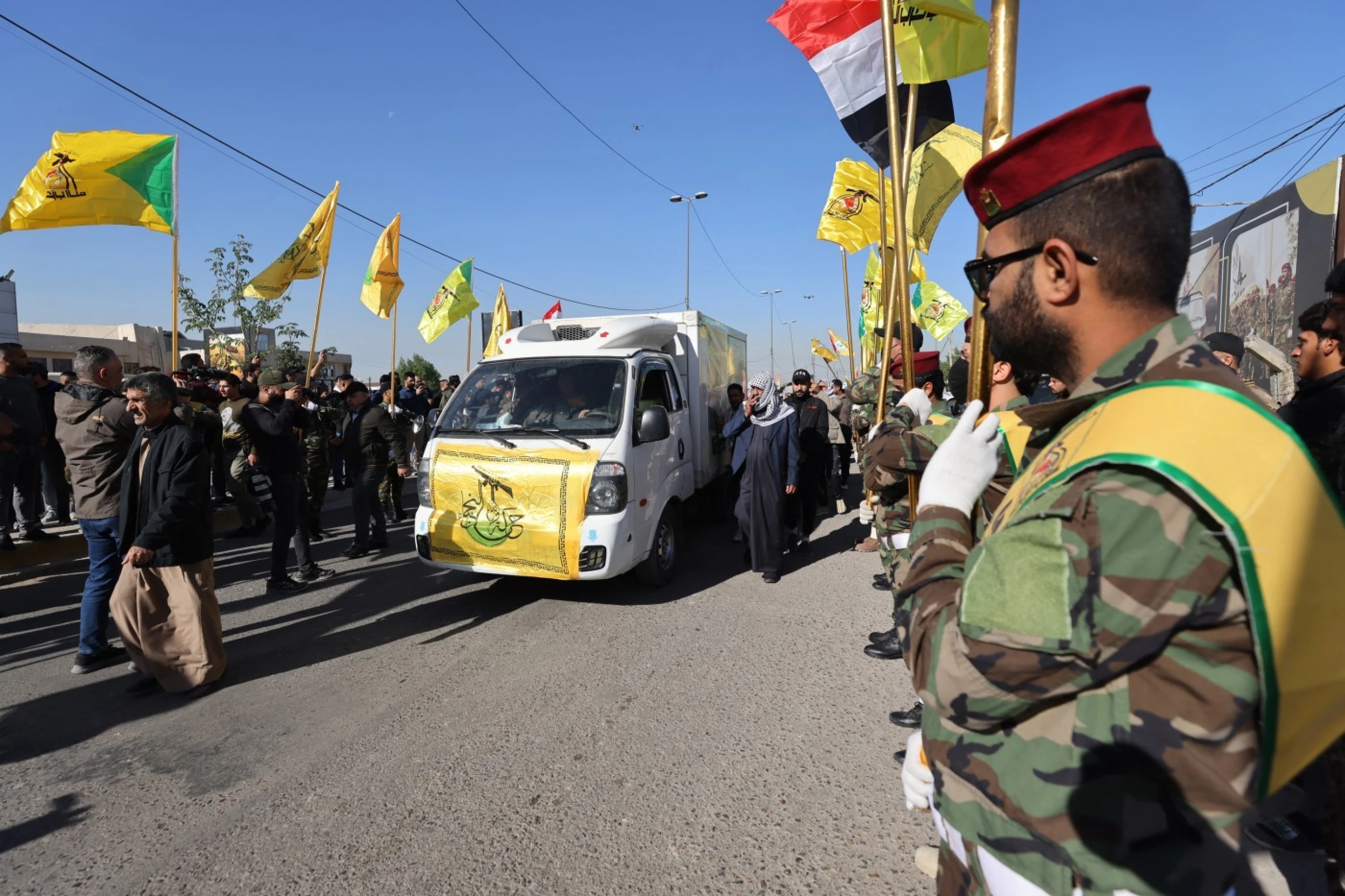
Prime Minister Ali al-Zaidi has set an ambitious objective for himself and Iraq: disarming the Iran-backed Shiite militia groups by the end of September. For anyone watching Iraq over the past couple of decades, this seems a long-overdue measure. Yet none of the previous governments has been able to do much about it, including Mustafa al-Kadhimi’s government, which came to power as an expression of the reform demands of large sections of the Iraqi population.
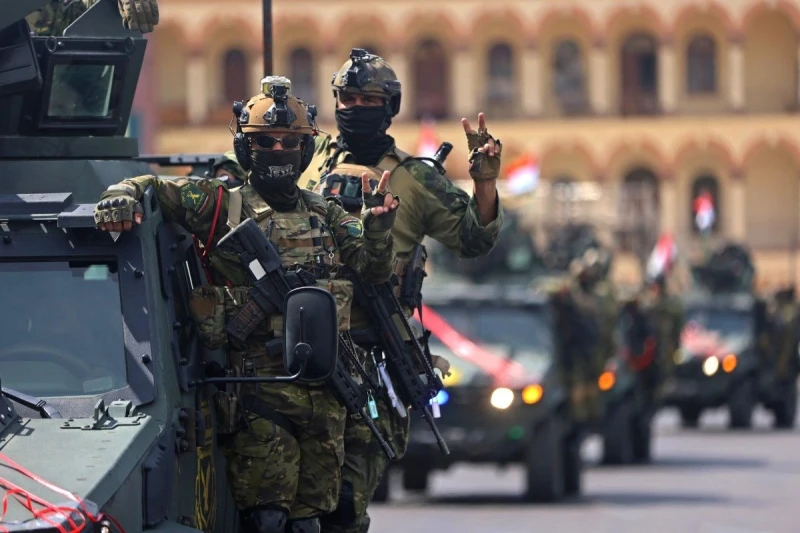
The question on many minds is whether Zaidi’s government can actually disarm the armed factions. If one were to go by the public statements of the militia groups themselves, there would be some reason for hope. In late May, Saraya al-Salam, affiliated with Shiite cleric Muqtada al-Sadr, announced that it would voluntarily “join the state,” organizing a weapons handover ceremony that was publicized with much fanfare in the media and across social media platforms. In the following days, groups such as Asa’ib Ahl al-Haq and Kata’ib Imam Ali also volunteered to “severe connections” with the Popular Mobilization Forces (PMF). The PMF is an umbrella group of mostly pro-Iran armed factions, recognized as an official security institution in Iraq since 2016. Both Asa’ib and Kata’ib are among the six militia formations designated by the US State and/or Treasury Department as terrorist entities. So far, so good—and at least on the surface, there appears to be some cause for celebration that things might indeed be beginning to change for the better in Iraq.
Except that the Arabic-language newspaper Al-Mada reported in early July that the handover ceremonies were little more than media shows in which only dysfunctional and scrap weapons were surrendered to the Iraqi military. Under pressure from both the United States and the Iraqi government to hand over strategic weaponry such as drones and ballistic missiles, the militias have denied possessing such weapons, offering the rhetorical response: “Find them and I’ll show them to you.”
In case there was any skepticism about the militias’ claims, it did not take long for evidence to emerge that they were, in fact, still in possession of such weapons. As Prime Minister Zaidi was in Washington advancing relations between Iraq and the US and reiterating his plan to disarm the militias by the end of September, Iran-backed militias launched a series of drone attacks on the Kurdistan Region’s capital, Erbil, on July 15. The attacks dispelled any lingering doubt that the militias had genuinely changed.
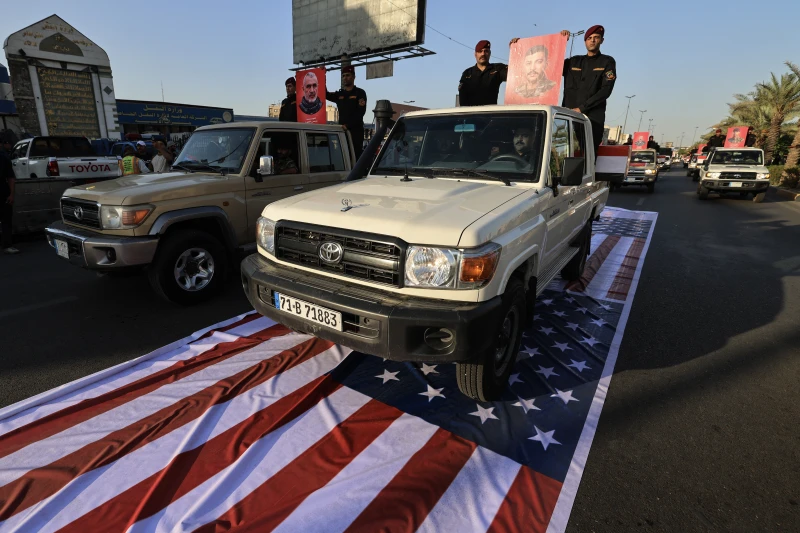
The attacks were a direct message to both Baghdad and Washington that the Iran-backed armed factions are here to stay and retain significant operational capabilities. Several of these groups, including Kata’ib Hezbollah and Harakat al-Nujaba, have publicly refused to lay down their weapons. Prime Minister Zaidi rebuked them by saying “resistance” was a “necessity” not a “profession”, implying that there would be no need for these groups to continue after the deadline as the US military is to pull out of Iraq by then. But the resumption of hostilities in mid-July, as tensions once again escalated between Washington and Tehran over the Strait of Hormuz, was a clear signal that the militias' raison d'être extends beyond the presence of US forces in Iraq. It is primarily about retaining the capacity to join Iran's war effort whenever required.
The key question now is what Zaidi’s government will do if some militia groups refuse to disarm. Equally important is what disarmament actually means in practice. Starting with the latter, the concept of disarmament as currently practiced in Iraq is essentially understood as parent organizations such as Saraya al-Salam, Asa’ib Ahl al-Haq, and others declaring that they have severed their organizational ties with the PMF units known to be affiliated with them. The parent organization—for example, Asa’ib Ahl al-Haq—would then declare its intention to operate solely as a political entity.
This process is supposed to produce three outcomes. First, factions such as Asa’ib would become accepted as legitimate political actors within Iraq’s political system and state institutions, paving the way for their eventual de-designation by the US. Second, the PMF units previously affiliated with them would become “unproblematic” components of Iraq’s security forces. Third, these units would no longer be regarded as part of Iran’s transnational Resistance Axis. All of this would make some sense if there were an independent and credible verification mechanism capable of confirming that these changes had actually taken place. However, there is no such mechanism in Iraq.
In practice, and this is important to emphasize, if these declarations of disarmament are accepted at face value, and if the ceremonies of militias handing over token weapons are treated as genuine disarmament, the likely outcome will be the acceleration and deepening of the process of state capture that these Iran-backed groups have pursued since at least 2018; or, if one traces the phenomenon back to the Badr Organization, since as early as 2004. This process has unfolded simultaneously across both the civilian bureaucracy and the security establishment. Its ultimate consequence would be a transformation of the character of the post-2003 Iraqi state and not restoring the state’s sovereignty in any meaningful sense. It would effectively neutralize Iraq as a hostile state from Tehran’s perspective while opening its territory to a wide range of Iranian strategic activities, particularly sanctions-evasion networks that have become critical to sustaining Iran’s economy under crippling Western sanctions.
Now, detouring back to the first question: what happens if some militia groups refuse to heed Prime Minister Zaidi’s September 30 deadline? What happens on October 1? Will Zaidi order Iraqi military units to forcibly confiscate their weapons and, if necessary, fight them to achieve that objective? There are some indications that he may be preparing to move in that direction. He has recently appointed a new commander of the Counter-Terrorism Service, Iraq’s premier military force trained and equipped by the US. He has also restructured the Office of the Commander-in-Chief in an effort to assert tighter control over the various branches of Iraq’s security forces.
There is, however, a highly important caveat. Zaidi himself is an appointee of the Coordination Framework, Iraq’s ruling Shiite coalition. Several militia leaders sit within the circle of roughly a dozen Shiite leaders who collectively make the country's most consequential political decisions. Is it therefore reasonable to expect Zaidi to militarily confront the very groups that helped bring him to power? Such a confrontation would risk opening the door to severe political divisions and potentially even an intra-Shiite civil war.
On the other hand, if Prime Minister Zaidi’s government fails to rein in the militias, it will fail the most important credibility test of his administration. Allowing these groups to continue operating as they currently do would place Iraq on a path of permanent fragility and instability, given that they prioritize the interests of their Iranian patron over those of Iraq. During the recent 39-day war between the US, Israel, and Iran, these militias pushed Iraq to the brink. If Iran’s interests and survival demand it, they could, and almost certainly will, do so again.
The views expressed in this article are those of the writer and do not necessarily represent the position of The New Region's editorial team.
 Facebook
 LinkedIn
 Telegram
 X
X