
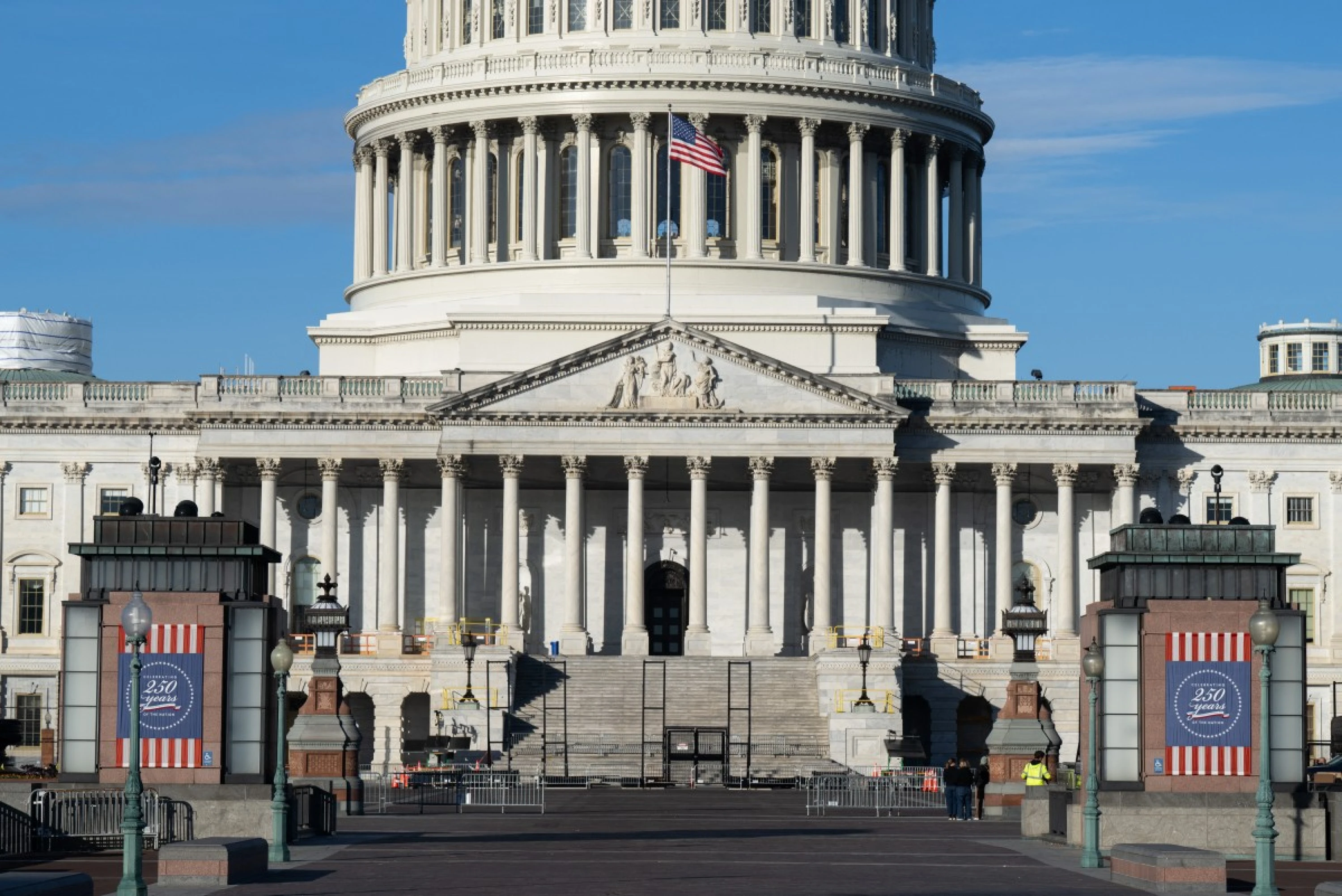
America is again at that time when election fever runs high. Similar to the mid-to-late 2000s elections amid the Iraq and Afghanistan wars, foreign policy appears to figure significantly in the current congressional midterm elections, particularly due to the unfinished war with Iran.
Taking Virginia as an example, the war has pushed up gas prices by around $1 per gallon compared to late February, just before the war. At times during the past eight months the increase has approached closer to $2 per gallon. There was much speculation, and hope in some Iranian circles, that prices would rise considerably more, ensuring a resounding Republican defeat in the midterms.
That has not occurred, either because Iran could not ensure such a dramatic spike by preventing oil shipments through the contested Strait of Hormuz or because it preferred not to go all-out against shipping in the Strait, fearing a heavy response from President Donald Trump's administration.
If Tehran had the option to seriously disrupt oil flows through the Gulf but refrained, it was most likely because it calculated that such a measure would make the Trump administration even more determined to attack Iran alongside Israel, particularly given that Trump is in his second term, when presidents are traditionally less constrained by electoral considerations.
The midterms' impact, however, will mainly be a measure of Democrats' ability to capitalize on existing public grievances with the administration's policies. Whether they can force substantial changes, particularly in foreign policy, is questionable. Even with control of the House, Democrats could at most impeach Trump but would lack the Senate votes needed to convict and remove him. Trump may also seek to demonstrate his consistency and autonomy from institutional pressures by doubling down on policies that make Democrats appear weak or impotent in the face of his choices.
But beyond the Iran war and gas prices, there is a more consequential interaction between domestic US dynamics and foreign policy due to the growing polarization of American politics.
Gone are the days of a broad political center ensuring greater degrees of consensus and continuity between the two major parties on foreign relations. With more radical strains becoming mainstream in both parties, and the particular nature of US party politics, where the two parties increasingly resemble large, internally incoherent coalitions encompassing currents to the right and left of center, the zone of consensus has receded.
This makes the policy pendulum more unpredictable and prone to swing from one extreme to another depending on the individual(s) and segment of the party in power. Volatility in policy choices is a new norm everyone must get used to. China is perhaps the one major foreign policy issue over which some consensus still exists, with both parties increasingly viewing it as a peer competitor, even a threat, that needs to be contained and countered where necessary.
The Middle East continues to interact with and shape US foreign and domestic policy in important ways. Although American engagement with the region is relatively recent compared to that of other Western and global powers, having deepened particularly after the 1956 Suez Crisis, the intensity of this relationship makes it feel like a perennial issue for both sides. Several generations of Middle Easterners and Americans have grown up with the ups and downs and trauma of this relationship, while some on both sides have become accustomed to its “benefits” and “perks.”
The Israel-Palestine issue has particularly entered the US political landscape in a potent way, becoming a key cause and battleground across mainstream politics. Those on the farther left and right of the political spectrum are increasingly critical of Washington's favorable treatment of Israel, while the shrinking center in both parties remains more committed to the traditional “special relationship” between the two countries. While Islam and Islamism are held up as bogeymen on the right, Israel and support for Israel have become a hot potato on both the right and left.
Mainly, as a result of economic woes and fatigue with foreign wars and policies, “America First” is now a common attitude on both the right and left of the US political spectrum, even if the left is less inclined to explicitly invoke the phrase because of its general unease with overtly nationalist sentiments. In the foreign policy arena, this translates into a broader popular desire for greater withdrawal or disengagement from other parts of the world, particularly the Middle East, and for dedicating more resources and attention to domestic issues.
The transformed media and information ecosystem has been critical in bringing forth and mainstreaming such political attitudes and beliefs that, until about a decade or so ago, would have remained on the margins of American society.
The arrival of the internet and social media platforms has broken the relatively firm hold of traditional gatekeepers over what merits attention and discussion in the public sphere. The decline in legacy media's sway over the agenda of public debate, the framing of issues, and ultimately the shaping of public opinion means views once deemed unfit or inappropriate can now reach audiences far and wide instantly. The effects of this stage of mediatization on society have been enormous and continue to shape and reshape societies worldwide in ways difficult to predict.
What is clear is that the Middle East is too strategic to abandon, whether by America or other powers, because of both its resources and geographical position. Hence, engagement, whether by choice or force of circumstances, through war and peaceful means will continue. That engagement contributes to the volatility of US domestic politics through debates over Islam, Islamism, jihadi violence, Israel-Palestine, antisemitism, and the specter of an ideologically driven Iran going nuclear.
And of course, Middle East issues will also continue to affect the pockets of ordinary Americans through gas and diesel price fluctuations and their wider impact on nearly every sector of economic life.
In return, that domestic volatility boomerangs back to the Middle East through military campaigns or support for or opposition to governments with varying degrees of popular legitimacy, feeding further grievances both in the region and in America. One thing one could say with some degree of certainty is that, from here on, it is going to be a rough ride for both sides, one whose direction is increasingly difficult to predict or pin down with any precision.
The views expressed in this article are those of the writer and do not necessarily represent the position of The New Region's editorial team.
 Facebook
 LinkedIn
 Telegram
 X