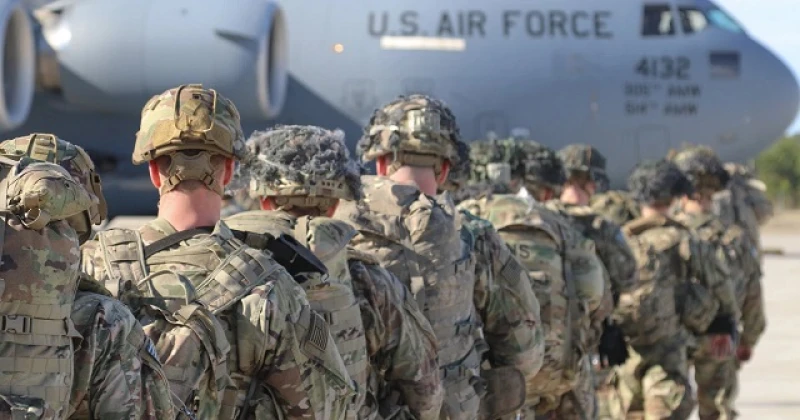
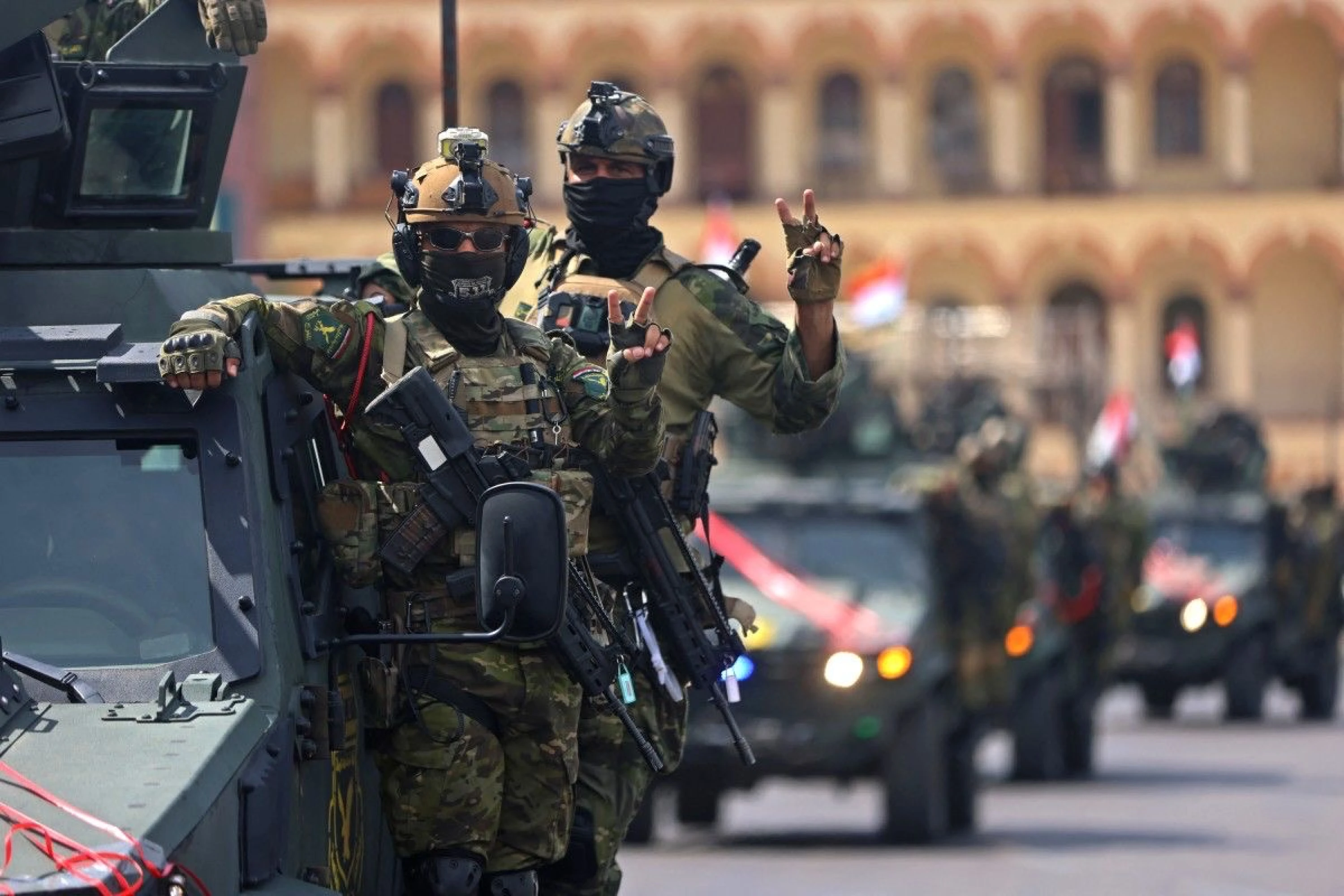
The US military withdrawal from Iraq is likely to have consequences that go well beyond the immediate security vacuum it may create. It is already affecting how Iraq’s different communities understand their interests, vulnerabilities, and opportunities in the new environment.
Iraq’s communal interests diverge at some level, at least as understood by the political elites and leaders of those communities. The departure of US troops creates a perception among some actors that a new field of opportunity has opened. This is particularly evident among parts of the Shiite and Sunni political landscapes. If these perceptions translate into action, they could reopen old fault lines at a moment when Iraq can least afford another round of communal strife.
The Shiite camp itself appears divided over what opportunity the withdrawal presents. Iran-backed militia factions generally appear to see the departure as an opening to expand their political, security, and economic influence and further their capture of the state from within. They can also use the language of extending state authority as a legitimate vehicle for asserting both Baghdad’s and, indirectly, their own power over the Kurdistan Region. The underlying calculation is straightforward: without US troops on the ground, the Kurds are more vulnerable and have fewer means to defend themselves against coercion from Baghdad or attacks by Iran and its Iraqi proxies.
There is, however, another current within Shiite politics. More moderate figures, particularly those with memories of Kurdish-Shiite cooperation during the opposition to Saddam Hussein, appear to recognize that a durable Iraq and Shiite domination requires a working relationship with the Kurds and genuine respect for a meaningful degree of Kurdish autonomy. From this perspective, Kurdistan must have an interest in supporting the Shiite-dominated order if Baghdad expects Kurdish cooperation against domestic and external challenges. A social-media post on October 4 by former Interior Minister Baqir Jabr al-Zubaidi (aka Bayan Jabr Solagh), calling for respect for the Peshmerga institution within the Kurdistan Region and Iraq, reflects this way of thinking.
The Sunni landscape presents a different way of thinking. Some Sunni actors may see the current moment as an open field in which, with support from regional Sunni powers—particularly in Syria and the Gulf—they could begin reversing aspects of the political order that emerged after 2003 and more than two decades of Shiite domination of the state.
But the Sunni camp is hardly unified. Those potentially interested in such a project range from jihadists such as Islamic State (ISIS) to elements with a conservative secular orientation, including remnants and activists associated with the Baathist milieu. These two forces have profoundly different ideological projects and political objectives. Bringing them together around a coherent agenda would be extremely difficult. Yet Iraq’s experience shows that tactical convergence among otherwise incompatible actors can still be destabilizing.
The Kurds, by contrast, have little interest in rocking the boat or overturning the existing order. Their preference is essentially defensive: preserving a post-2003 system that recognizes Kurdistan’s constitutional particularism, does not weaponize budgets and public-sector salaries against it, and protects the Kurds from attacks by Iran and Iran-backed Iraqi factions. The US departure is therefore viewed with considerable anxiety in Kurdistan. The concern is not merely ISIS, although the group remains capable of exploiting security gaps, local grievances, and renewed sectarian tensions. More immediately, the withdrawal could embolden Iran and its allied militias if they conclude that Washington’s commitment to Kurdistan’s security has diminished.
The withdrawal also cannot be separated from the broader question of how Iraqis and other regional actors now view Washington. US policy in the region increasingly appears difficult to predict from the perspective of allies and partners. This problem has surfaced during the recent war with Iran and in US approaches toward Yemen, Syria, and now Iraq.
Washington understandably wants to reconfigure its regional posture, reduce direct burdens, and have partners assume greater responsibility. But the manner in which this transition is executed matters enormously. At present, association with the United States increasingly appears to carry costs for regional actors, whether sovereign or non-sovereign, without necessarily providing dependable protection when those costs materialize.
This is a perception that many in Washington appear either unaware of, unwilling to acknowledge, or inclined to downplay. Worse, the execution of US policy can end up strengthening the arguments of America’s adversaries. Iran and its allies have long warned US partners that Washington will eventually leave them exposed. When US retrenchment is not accompanied by credible diplomatic, economic, and possibly some form of security commitments, those warnings become more persuasive.
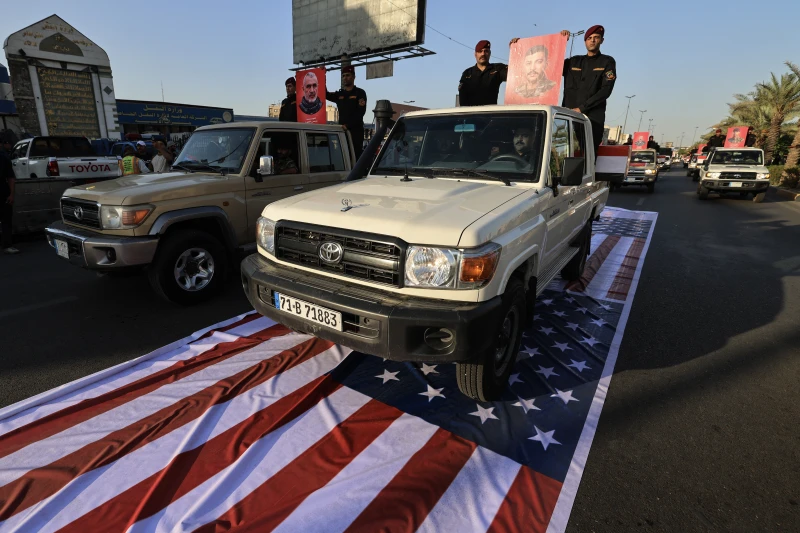
Tied to all this, the symbolism surrounding the Iraq withdrawal has only compounded the problem. Baghdad celebrated the departure in the language of restored sovereignty even though US forces had been operating in Iraq since 2014 at the invitation of the Iraqi government as part of the campaign against ISIS. That framing handed Iran-backed factions an easy narrative: their “resistance” expelled an occupying force. Some militias even trampled US flags during celebrations, generating controversy and prompting Baghdad to resort to that familiar and generally useless Iraqi response: forming an investigative committee.
The more consequential question is what happens to the militias themselves now that the US troops are out. The government’s original September deadline for bringing weapons under state control has now been pushed to June 2027. Whether even that deadline will be enforced remains uncertain. Powerful factions such as Kataib Hezbollah and Harakat Hezbollah al-Nujaba have shown little indication that they intend to surrender the military capabilities that make them valuable instruments of Iranian regional power.
Meanwhile, anxiety is growing among Iraqis over the possibility of punitive US economic measures. The fear is serious enough that even Shiite commentators such as Adil Salam, who is supportive of the so-called muqawama (resistance) factions, have publicly urged hard-line groups to disarm rather than provide Washington with a justification for sanctions. The concern is understandable as many Iraqis still vividly remember the devastating sanctions of the 1990s.
This is precisely why Washington must exercise maximum caution and discrimination in responding to militia behavior. If sanctions become necessary, they should target the factions, their financial networks, and institutional sources of power, not Iraqis collectively. Blanket measures would punish many of the very people who are victims of militia impunity.
The Kurdistan Region in particular should be shielded from Iraq-wide punitive measures. It has been a steadfast US partner for decades while simultaneously absorbing repeated missile and drone attacks from Iran and Iran-backed groups. Washington should not make Kurdistan pay economically for the actions of forces that have themselves targeted the Kurdish region hundreds of times.
The US military departure changes the mechanism of American engagement with Iraq, but it should not become synonymous with abandonment. If Washington wants partners in Iraq and across the region to continue taking risks on its behalf, it must demonstrate that partnership with the United States remains an asset rather than an increasingly expensive liability.
 Facebook
 LinkedIn
 Telegram
 X
X