
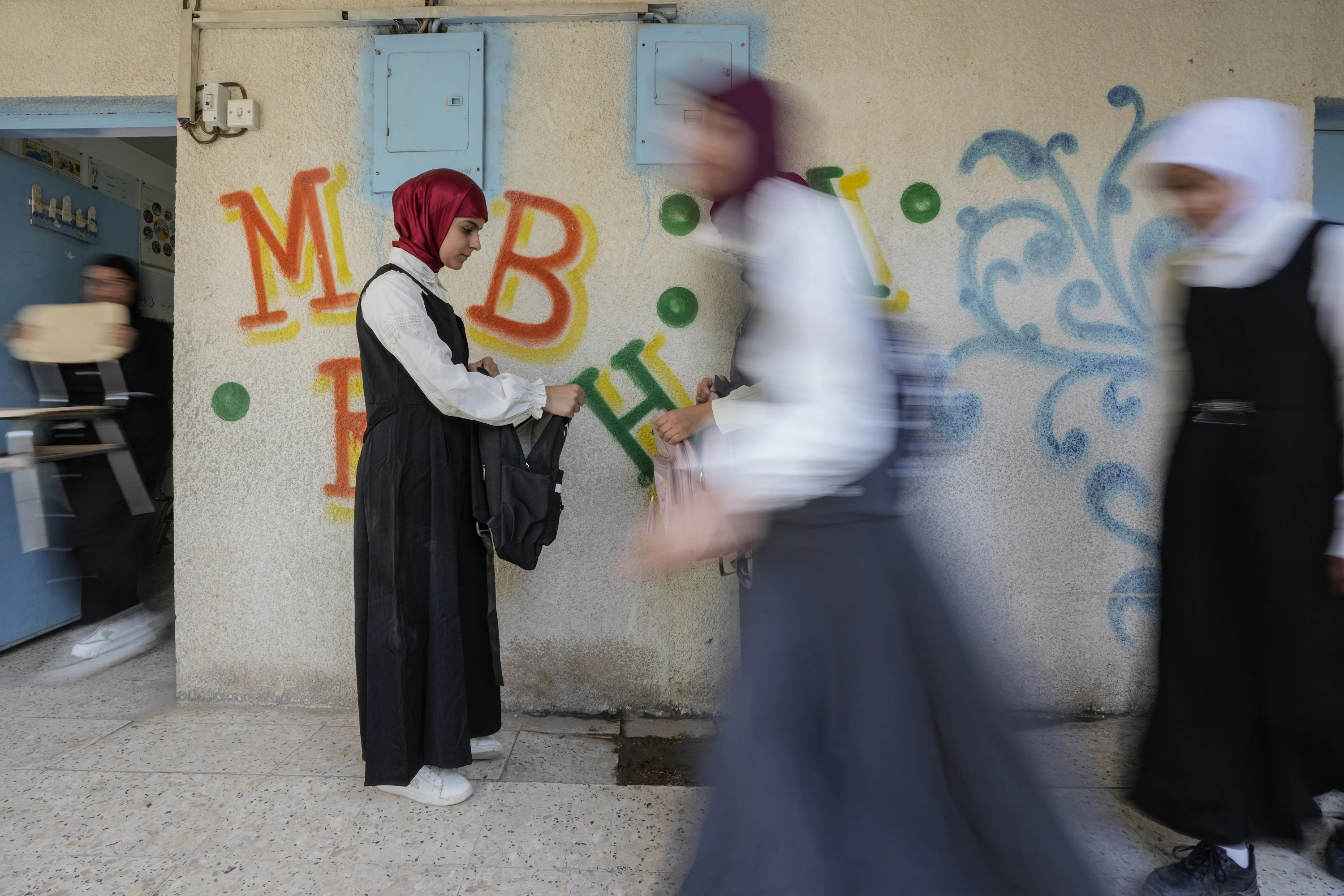
It's become clear the Iraqi government is committed to integrating artificial intelligence into public education. Recently approved plans call for installing AI labs in 100 primary and middle schools in villages and rural areas. Several AI capacity development initiatives have launched at both ministerial and institutional levels. Nationwide, 14 AI college and university-level programs have started in the last two years, while some private schools now actively integrate robotics and AI into their curricula. Of course, many concerned educators and parents see AI as a threat, describing it as a tool for cheating. But those concerned must reckon with a reality: AI has entered Iraqi classrooms from Basrah to Zakho through freely accessible and widely adopted tools like ChatGPT. The uncomfortable truth is that Iraq’s most pressing education challenges are not problems that technology, AI or otherwise, can solve. Iraqi schools need more foundational reforms before AI can achieve its promise.
The long history of instability, war and displacement in Iraq has left little room for the education system to adapt to modern needs and cultivate citizens with the social, cognitive, and human skills needed to succeed in the labor force of today, let alone tomorrow. According to UNESCO, an estimated 80 percent of Iraq's schools had been damaged or destroyed by 2010, and another report found half of Iraq’s schools in need of rehabilitation in 2018.
Situated at the intersection of conflicting regional interests exposes Iraq to complex and volatile geopolitical dynamics. Its education system reflects this environment, with dramatic gaps in equity and access; weak literacy, numeracy, and higher-order cognitive skills like metacognition; inadequate teacher capacity and professional development; outdated curricula and memorization-based pedagogy. The widespread trauma, displacement, and loss experienced by the Iraqi population, coupled with insufficient problem-solving, creativity, and communication skill-building infrastructure, has created a national educational mindset favoring memorization and lagging in competency development. The system, built in the 1980s and devastated by sanctions in the 1990s, hasn’t been able to adapt to keep pace with the labor market. Iraq’s educational challenges, and therefore the solutions, are not technological but rather rooted in addressing the more foundational learning and systemic gaps described as a “learning crisis” by the World Bank.
Any education policy execution, including capacity to integrate AI, will reflect this volatility. Without the necessary resources to build its own AI infrastructure and the human capacity to appropriately govern it, Iraq risks becoming an unregulated market for American-Chinese AI rivalries with its fragile education system and the 13 million school students it serves in danger of harm.
In February 2025, Iraq’s Minister of Education announced the integration of computer and AI content into the curricula for first- and second-year students, with expansion planned for fourth- and fifth-year. Iraq’s national AI strategy also asserts that capability-building should begin at the school level, calls for AI concepts in primary and secondary education, and prioritizes AI literacy.
It is too late to question whether AI should enter Iraqi education; it already has. Instead, the focus should be on the type of education system AI is integrating into. Otherwise, AI could magnify existing structural problems in Iraqi education and harm, rather than help, students.
There is some progress. The Ministry of Education, the EU, UNICEF, and UNESCO launched nationwide programs for curriculum improvement and teacher capacity-building through initiatives like ITALEEM to reach 100,000 teachers, which would benefit 10 million Iraqi students. Such initiatives reflect clear ambitions to improve the education system and prepare graduates for the labor market. Yet, their outcomes remain difficult to assess.
Access to AI-powered tools is expanding much faster than the capacity of institutions to use them critically, ethically and effectively. This dynamic is not unique to Iraq but is indicative of the wider region's approach. AI integration into education without clear governance, instructional frameworks, or sufficient AI literacy and teacher readiness will not translate into better learning outcomes. In fact, it might hinder learning and widen existing inequalities. Knowing what problems we want to solve with AI is crucial. Foundational AI education can and must be designed to strengthen human skills that remain inadequately developed across the system, not threaten them.
Iraq cannot choose between deeper education reform and AI integration. Waiting until every structural problem is solved would be unrealistic and impossible; AI has already entered the system. But adoption must be informed, regulated, scientifically grounded, and pedagogically sound. The problems facing Iraqi education are problems of system coherence: of what we teach, how we teach it, and what our students are assessed for. Weak foundational learning mechanisms, limited teacher capacity, inequity in classrooms, and memorization-focused assessments can’t and won't be solved by adding another layer of technology.
AI is not and cannot be treated as the solution for education’s structural challenges, nor as a marketing tool to prove that Iraq is keeping pace with the rest of the world. Instead, the country must invest in reforming the foundation of its educational system.
The views expressed in this article are those of the writer and do not necessarily represent the position of The New Region's editorial team.
 Facebook
 LinkedIn
 Telegram
 X