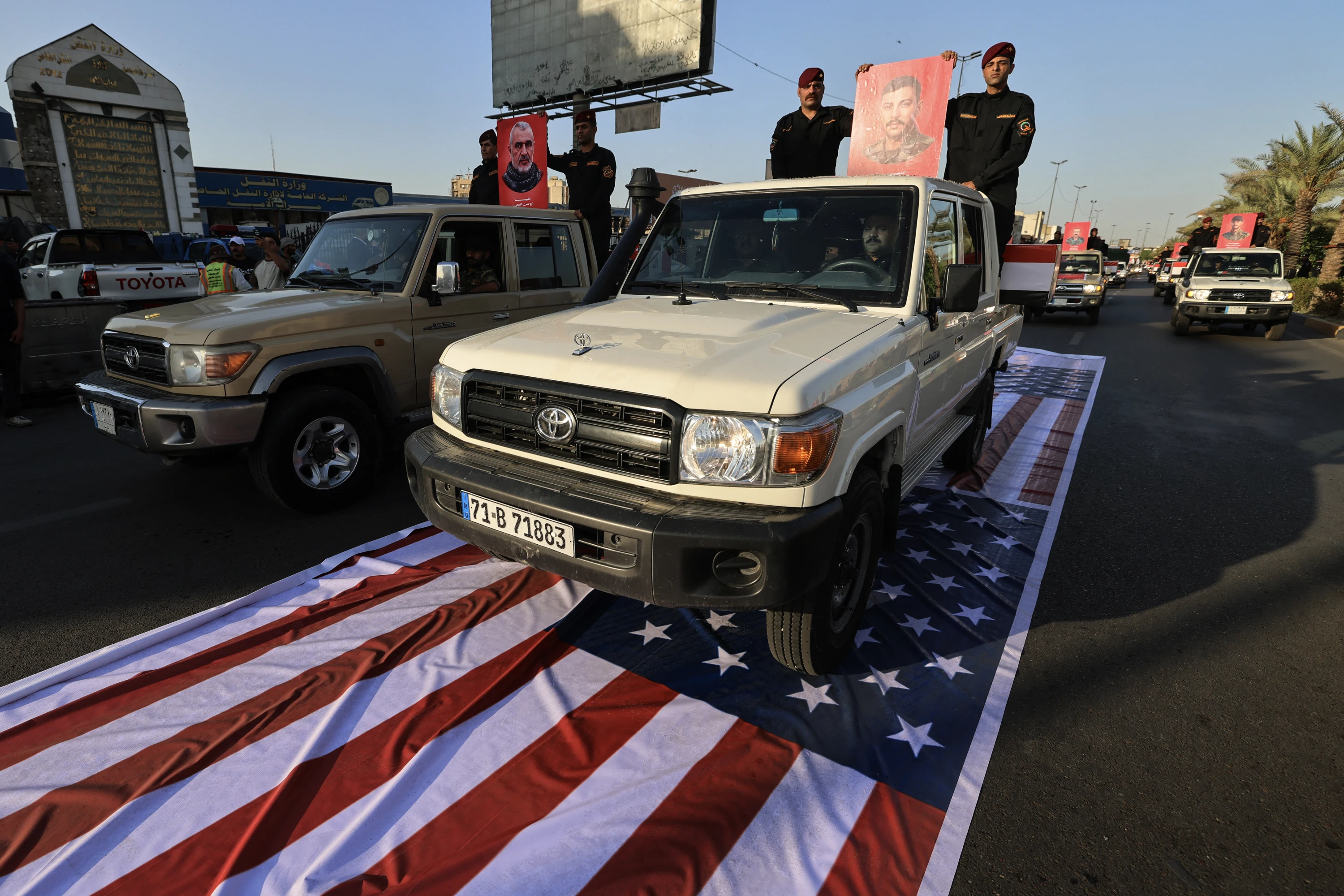
Walking or driving through Baghdad, one sees how far American influence has receded. Anti-American billboards and slogans line the streets, and portraits of Iranian and Lebanese Hezbollah leaders are openly displayed. The imagery is not confined to militia-controlled neighborhoods: it appears along main thoroughfares and near government buildings, making hostility to American presence part of the capital's everyday public landscape. The contrast with the official language of partnership between Baghdad and Washington is hard to miss, and it helps explain why the coalition's departure is being read on the street as a political victory for Iran-aligned factions rather than a neutral milestone.
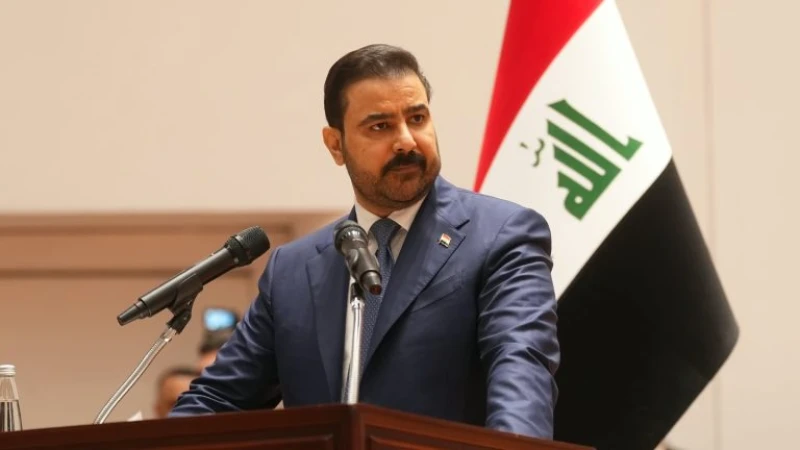
For months, Iraqi officials presented September 30 as the decisive date for completing the US-led coalition's withdrawal and for starting a new phase in which the weapons of Iran-backed militias would be brought under state authority. Prime Minister Ali al-Zaidi's government and the militia groups themselves repeatedly tied the coalition's departure to the surrender of weapons held outside state control. The logic was simple: once foreign forces left, the factions would have no justification for keeping independent military capabilities.
That framing has since been walked back. Iraqi officials and Shiite militia leaders now say September 30 marks only the coalition's departure, not a deadline for disarmament, and describe it as the start of understandings on restricting weapons to state authority.
The distinction may look technical, but it is politically significant. It retreats from the earlier impression that Baghdad had set a firm deadline, and it shows how hard it is to turn a political decision into action against armed groups embedded in Iraq's political, security and economic structures. September 30 was a test of whether the state's claim to a monopoly on the use of force could move from rhetoric to reality. The result has exposed the limits of Baghdad's authority over the militias and of Washington's leverage over Baghdad.
From the battlefield to the state
The core problem is not simply that armed factions hold weapons. Many no longer operate entirely outside the state, and several take direction from another state, Iran.
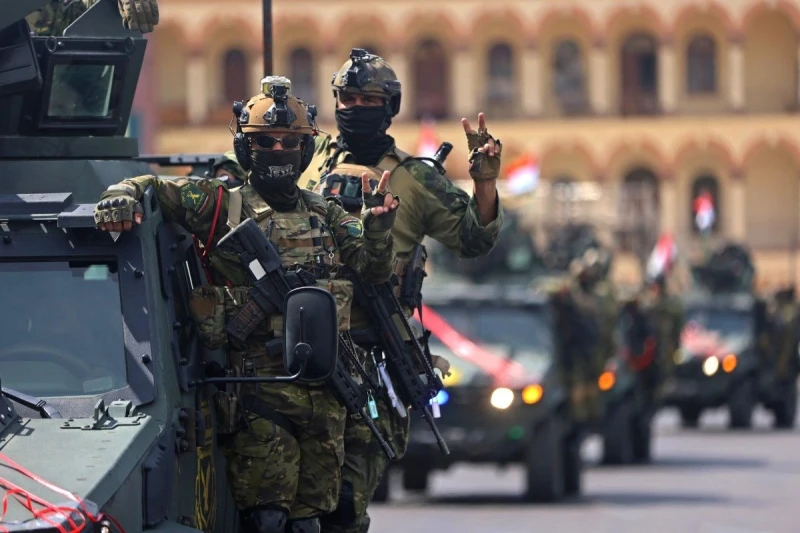
The Popular Mobilization Forces (PMF) were formally integrated into Iraq's security apparatus after the war against the Islamic State (ISIS). Since then, several powerful factions have kept their own command structures, political organizations, economic networks, and ties to Tehran, while benefiting from their formal status within the state, including large budgets and armaments. The result is a hybrid system in which the line between state and militia is increasingly hard to enforce.
The premise that Washington could pressure Baghdad into dismantling these groups therefore underestimated how deeply they are woven into Iraq's political system. The question is no longer whether the government agrees that militias should be disarmed, but whether it has the authority to impose that decision on groups with parliamentary representation, influence inside state institutions, and social and economic networks that could destabilize the entire political order if cornered.
In the weeks before the deadline, the debate shifted to language. Some proposals replaced "disarmament" with "weapons regulation," and some factions reportedly offered to store weapons in their own facilities and freeze military activity rather than hand over arsenals to the state. Washington rejected at least one such proposal; a two-year freeze in place of full disarmament. Yet it has few viable means of forcing compliance beyond economic and financial pressure on a government that can barely find the cash to pay public sector salaries.
This is the central dispute. For Baghdad, the issue is sovereignty: who decides when Iraq goes to war, who controls weapons, and who commands armed forces. For the factions, their weapons are part of a wider "resistance" structure, and they have tied disarmament to the complete removal of foreign forces. The coalition's departure takes away one of their strongest political arguments, but not necessarily their willingness or ability to keep their arsenals.
America leaves with unfinished business
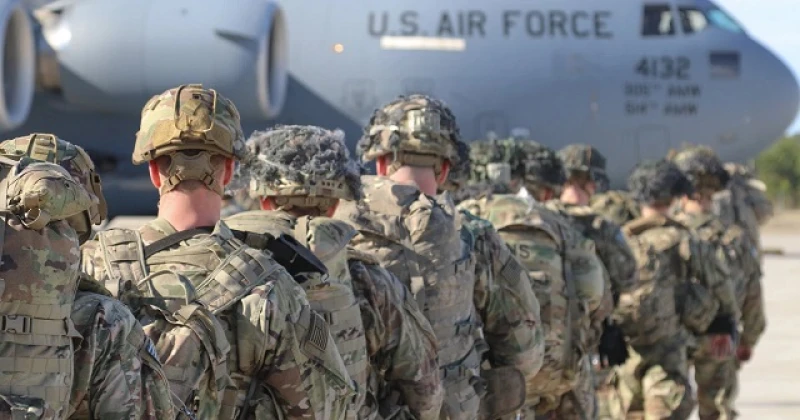
The United States has completed a military withdrawal agreed with Baghdad in 2024. As in 2011, the business is unfinished: Washington is leaving at the very moment it is pursuing one of its most ambitious political goals in Iraq, consolidating the state's monopoly over armed force.
The withdrawal does not end US-Iraqi relations, and diplomatic, economic, and security ties will continue. But it removes one of Washington's most visible instruments of influence and shifts responsibility for managing the armed groups onto Baghdad. If the Iraqi government fails to bring Iran-backed factions under state control, what leverage will Washington realistically retain?
Economic pressure remains its strongest tool. The United States holds substantial influence over Iraq's financial system and dollar access, and Iraqi oil revenues remain tied to an international financial architecture in which Washington carries great weight. Recent US measures against Iraqi financial institutions show a willingness to use that leverage over Baghdad's economic relationship with Iran.
But financial pressure has limits. If sanctions mainly damage Iraq's banks, currency, and wider economy, they can weaken state institutions without dismantling the factional networks operating inside them or erasing their political representation.
The failure of pressure alone
The US approach has relied on sanctions, diplomatic warnings, political engagement with Baghdad and, as a last resort, targeted military action. None of these has resolved the militia problem. Whether through the government's inability or unwillingness to act, the factions have grown militarily stronger, aided by advisers from Iran’s Islamic Revolutionary Guard Corps (IRGC) who work with them on a daily basis.
Targeted strikes can kill commanders or disrupt weapons infrastructure, but they do not eliminate the political constituencies behind the factions or cut off Iranian military support. Diplomatic pressure pushed Baghdad to announce a deadline, but announcing a deadline is very different from enforcing one.
This is the paradox Washington faces in 2026. It wants a sovereign Iraqi state able to control its territory and armed forces, but the more it depends on Baghdad to deliver that outcome, the more it must accept that Baghdad's freedom to act is constrained by the same political system in which the Iran-backed militias are entrenched.
Iran's advantage is structural. It does not need to control the Iraqi government outright; Tehran only needs its partners to hold enough political, military, and economic power that no government can easily dismantle them. That influence now goes well beyond funding and weapons transfers. Iran-backed Iraqi groups have developed sophisticated capabilities, including drones and missiles, while building political and economic positions inside the state that are extremely hard to reverse.
The most important question after September 30 is not whether every militia hands over every weapon. It is whether the Iraqi state can build a credible system in which no armed faction can decide on its own when and how to use force or attack the Kurdistan Region or neighboring countries. Washington should therefore resist measuring success by whether Baghdad announces another deadline, forms another committee, or reaches another agreement with the factions.
The period after September 30 may bring fewer attacks and a quieter military environment, but that should not be read as a decline in militia capabilities or Iranian influence. A lull can be used to consolidate networks, develop technology, recruit political allies, and strengthen institutional positions. This is where past US strategy has repeatedly fallen short: Washington has treated the militia issue as a security problem, while Iran has treated it as a long-term political project.
The views expressed in this article are those of the writer and do not necessarily represent the position of The New Region's editorial team.
 Facebook
 LinkedIn
 Telegram
 X
X