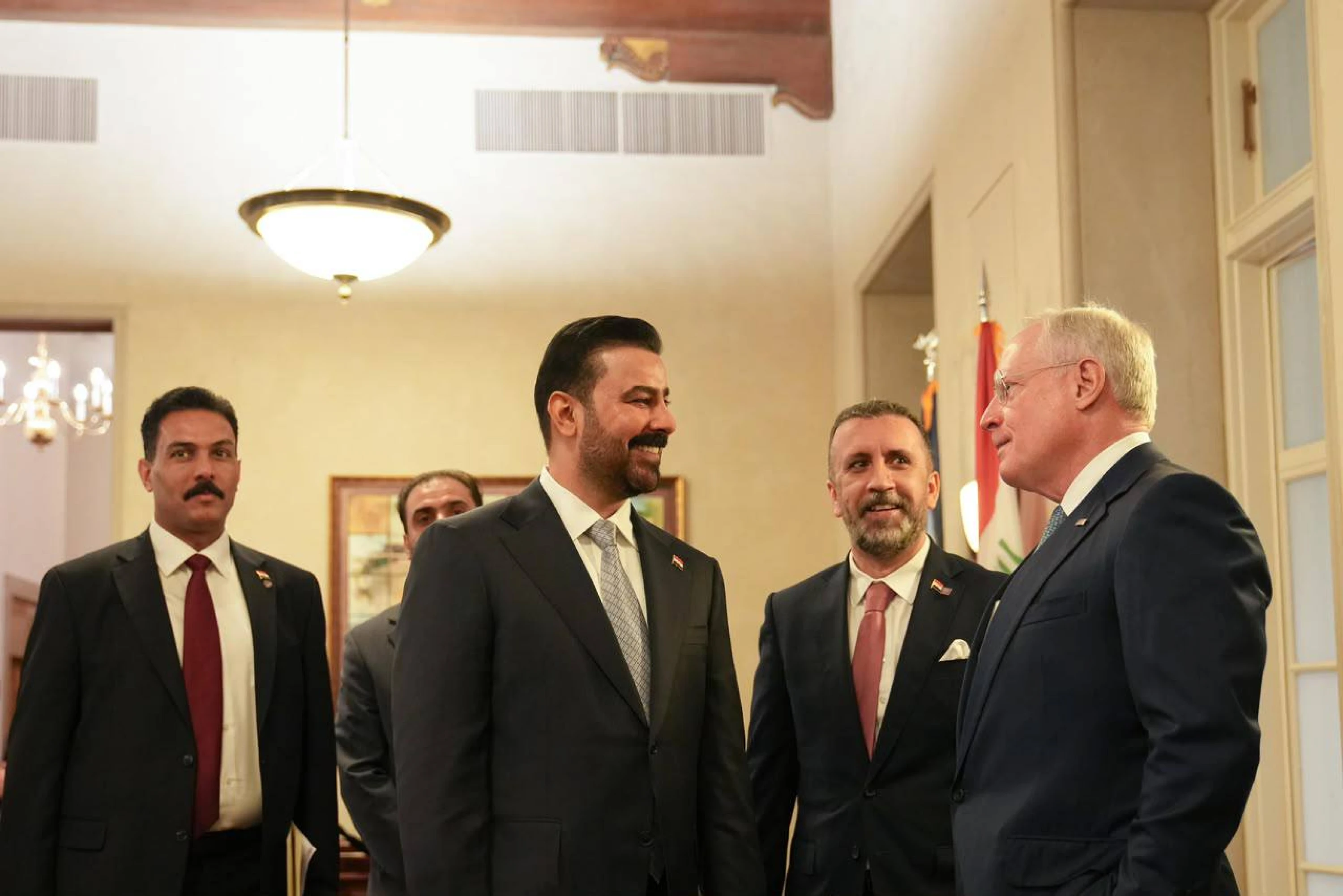
High-level diplomatic visits are often judged by the optics they produce: joint statements, handshakes, and declarations of strategic partnership. Yet their true significance lies not in the symbolism of the moment but in whether they generate lasting political, economic, and institutional gains.
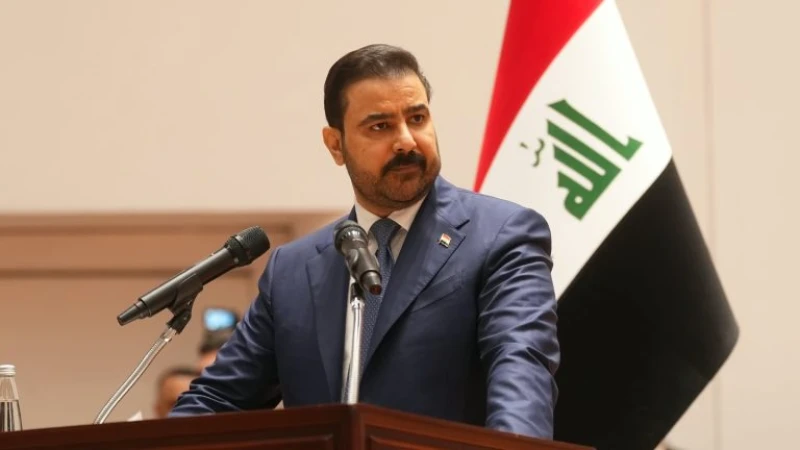
Prime Minister Ali al-Zaidi's recent visit to Washington has created a valuable window of political goodwill between Iraq and the United States. The real test, however, begins after the visit. Success will not be measured by the number of agreements signed or promises made, but by whether Baghdad can translate this momentum into tangible outcomes that strengthen Iraq's economy, modernize its institutions, and build a more mature strategic partnership with Washington.
This requires a shift in perspective. Rather than viewing relations with the US primarily through the lens of security or competition with Iran, Iraq should approach the relationship as an opportunity to advance its own national priorities. The objective is not to choose between Washington and Tehran, but to leverage constructive relations with both to strengthen Iraqi sovereignty, economic development, and regional connectivity. Ultimately, the value of the Washington visit will depend less on what the US is prepared to offer than on whether Iraq has a coherent strategy to capitalize on the opportunity.
Choose your battles wisely: Lessons to learn
Baghdad should prioritize realistic reforms focused on economic recovery, reconstruction, and institutional development – areas that serve its own national interests while also strengthening relations with Washington. The objective should not be to pursue symbolic or confrontational measures designed primarily to satisfy external audiences, but to advance reforms Iraq needs in any case.
That means avoiding impossible promises, resisting abrupt policies that could destabilize the political order, and concentrating on gradual changes that can command domestic support. Recent governments offer important lessons.
Under former Prime Minister Adil Abdul-Mahdi, the government underestimated the importance of maintaining a workable balance between Washington and Tehran. It also placed considerable emphasis on economic cooperation with China without sufficiently managing the wider strategic implications, while failing to establish effective control over armed groups. The result was growing instability, political paralysis, and ultimately the prime minister’s resignation.
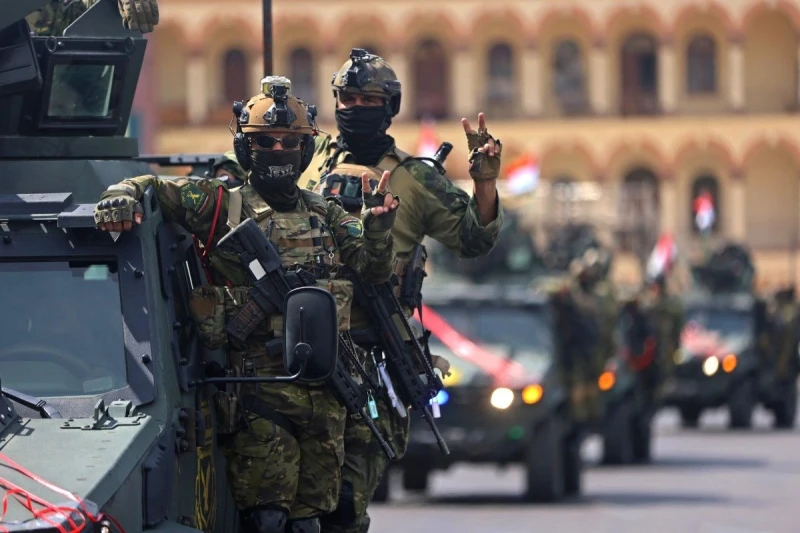
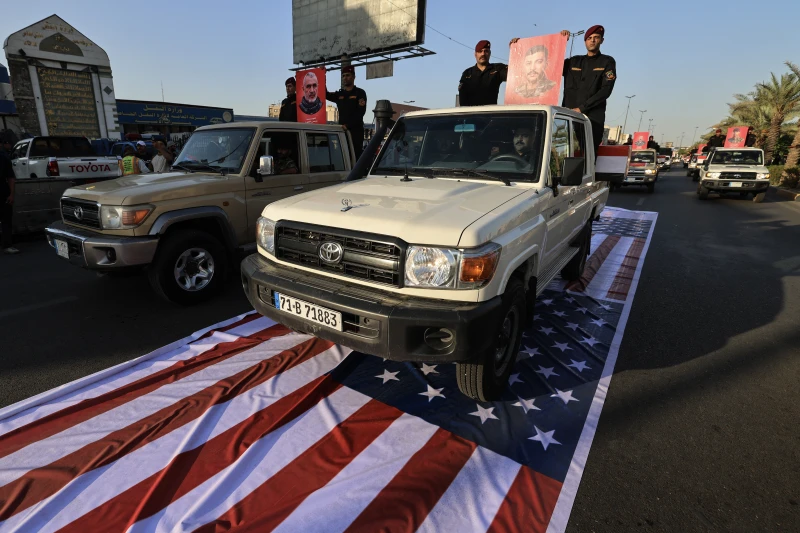
His successor, Mustafa al-Kadhimi, moved in the opposite direction, but with similarly limited results. His government entered into highly visible confrontations with armed factions that were often more symbolic than institutionally sustainable. These efforts did not succeed in integrating the groups into the state. In some cases, they strengthened the factions’ political and coercive power, deepened divisions among Shiite parties, and contributed to armed confrontations that brought the political system close to collapse.
Zaidi appears, so far, to have absorbed some of these lessons. His approach has been more cautious, relying on political consensus, state institutions, and gradual implementation rather than direct confrontation. He has also shown greater awareness of the need to maintain balance domestically, regionally, and internationally.
The challenge now is to preserve that discipline. Zaidi must choose his battles carefully, concentrating on achievable reforms that strengthen the economy and the state without disrupting Iraq’s fragile political equilibrium. Durable change will depend not on dramatic gestures, but on gradual progress supported by national consensus.
Clearing pathways for investment
Speaking to American business leaders during his visit to Washington, Zaidi urged them to "forget the image of yesterday's Iraq," assuring them that they could leave Baghdad with signed contracts in hand. The message was an important signal that Iraq is open for business and eager to attract foreign investment.
Yet anyone familiar with Iraq's administrative system knows that achieving such efficiency will require far-reaching institutional reform. Investors today face multiple layers of obstacles long before reaching the stage of signing a contract. An outdated banking system, limited digital government services, excessive bureaucracy, overlapping legislation, weak regulatory clarity, corruption, and inconsistent implementation all increase the cost and uncertainty of doing business in Iraq.
If Baghdad is serious about attracting large-scale American investment, removing these structural barriers should become its highest priority. Legislative reform to simplify investment procedures, reducing unnecessary bureaucracy, expanding e-government and digital public services, strengthening judicial certainty, improving transparency in procurement and licensing, and ensuring continuity in anti-corruption efforts are all essential components of a more competitive investment environment.
Equally important is continuing the gradual integration of armed groups into state institutions through negotiation and broad political consensus. While Iraq is significantly more secure than it was a decade ago, investors still look for predictability, the rule of law, and a state that exercises effective authority across its territory. These objectives cannot be achieved through confrontation alone, but through patient institution-building.
Just as importantly, Iraq must provide policy continuity beyond changes of government. Investors make decisions measured in decades, not electoral cycles. They need confidence that contracts, regulations, and economic priorities will remain stable regardless of political transitions.
The greatest obstacle to investment in Iraq today is no longer security. It is governance. The countries that attract sustained foreign investment are not necessarily those with the greatest natural resources, but those with institutions capable of reducing uncertainty. For Iraq, strengthening those institutions is the most important investment it can make in its own future.
Investment in strategic infrastructure
One of the biggest lessons from recent governments is that not all infrastructure spending produces the same strategic value. The previous government under Mohammed Shia’ al-Sudani inherited an unprecedented financial surplus, largely driven by high oil prices. While many visible projects were completed – bridges, roads, flyovers, parks, and urban beautification schemes – much of the spending focused on projects with immediate political returns rather than long-term strategic impact. Although these projects improved public services in many cities, they did little to transform Iraq's economic foundations.
Prime Minister Zaidi has an opportunity to take a different approach. Rather than measuring success by the number of projects completed, his government should prioritize infrastructure capable of reshaping Iraq's economy for decades to come. Four sectors deserve particular attention.
1. Energy
Energy security should begin with diversification. Iraq must expand electricity generation by investing simultaneously in oil, natural gas, solar power, and other renewable sources instead of relying heavily on imported Iranian gas. Smaller, geographically distributed power stations can be delivered more quickly, reduce transmission losses, and improve resilience across the country.
Gas should become another national priority. For decades, Iraq has wasted billions of dollars by flaring associated gas while importing fuel from abroad. Capturing that gas, alongside developing recently discovered natural gas reserves, would not only reduce dependence on imports but also create an entirely new source of national wealth.
Renewable energy – particularly solar – offers another strategic advantage. With some of the world's highest levels of solar radiation, Iraq is exceptionally well positioned to develop large-scale solar generation, reducing pressure on the national grid while supporting industrial growth.
2. Technology
Modern economies are built on digital infrastructure as much as physical infrastructure. Iraq's modernization therefore requires accelerating e-government, automating public services, upgrading telecommunications and internet infrastructure, and expanding financial technology, electronic payments, and digital commerce. These reforms would reduce bureaucracy, improve transparency, and significantly lower the cost of doing business.
Technology should also transform agriculture. Despite its rich agricultural history, much of Iraq still relies on outdated irrigation and farming methods that consume excessive amounts of water, degrade soil quality, and produce goods that struggle to compete with imports from neighbouring countries. Precision irrigation, smart farming technologies, mechanization, and digital water management could improve productivity while addressing Iraq's growing water crisis.
3. Education and human resources
Economic diversification will ultimately depend on people rather than infrastructure alone. Iraq's education system must therefore become more closely aligned with labor market needs. Beyond expanding universities, greater emphasis should be placed on technical education, vocational training, short professional courses, research partnerships, and student exchange programs that equip young Iraqis with practical skills demanded by a modern private sector.
The objective is not simply to produce more graduates, but to produce graduates capable of driving innovation, entrepreneurship, and industrial growth.
4. Transit and regional partnership
Finally, Iraq should fully embrace its greatest comparative advantage: its geography. Positioned between the Gulf, Iran, Turkey, and the wider Arab world, Iraq has the potential to become the region's principal logistics and transit hub.
That requires accelerating the Development Road project, expanding the national rail network, and connecting Iraq by rail to Iran, Jordan, Saudi Arabia, and Turkey. The Grand Faw Port should become the centrepiece of a multimodal transport system supported by modern highways, freight rail, logistics centres, and industrial zones, while Umm Qasr should be developed as a complementary commercial port.
Energy connectivity is equally important. Expanding oil export pipelines through Ceyhan, rehabilitating the pipeline to Baniyas, and restoring the pipeline linking Iraq to Saudi Arabia and the Red Sea would diversify export routes and reduce Iraq's vulnerability to disruptions in the Strait of Hormuz. Regional electricity interconnections would further strengthen Iraq's energy security while deepening economic integration with its neighbours.
Ultimately, these projects are about far more than infrastructure. They represent a different vision of Iraq's future – one in which the country's location is no longer defined by conflict but by connectivity.
Iraq's geography should become its greatest economic asset rather than its greatest security vulnerability.
Bottom line
Prime Minister Zaidi's visit to Washington should not be judged by the number of memoranda signed, investment announcements made, or photographs taken with American officials. Its real success will be determined in the months and years ahead by whether Iraq can transform diplomatic goodwill into lasting national gains.
That means building stronger institutions before seeking greater investment, pursuing strategic infrastructure rather than short-term projects, modernizing the economy through technology and education, and strengthening state authority through gradual but irreversible reform. None of these objectives requires Iraq to choose between Washington and Tehran. On the contrary, they serve Iraq's own national interests while making it a more reliable partner for both.
Ultimately, the greatest opportunity created by the Washington visit is not a new alliance but a new mindset. Iraq should approach its relationship with the US not as a source of short-term financial assistance or security guarantees, but as a partnership that helps build a stronger, more sovereign, and economically resilient state.
If Baghdad succeeds in doing so, the Washington visit will be remembered not as another diplomatic event, but as the beginning of Iraq's transition from managing crises to building a modern state.
The views expressed in this article are those of the writer and do not necessarily represent the position of The New Region's editorial team.
 Facebook
 LinkedIn
 Telegram
 X
X