SULAIMANI, Kurdistan Region of Iraq - A routine public appearance at a church in Sulaimani has sparked a broader debate about press freedom, political accountability, and the treatment of journalists in the Kurdistan Region.
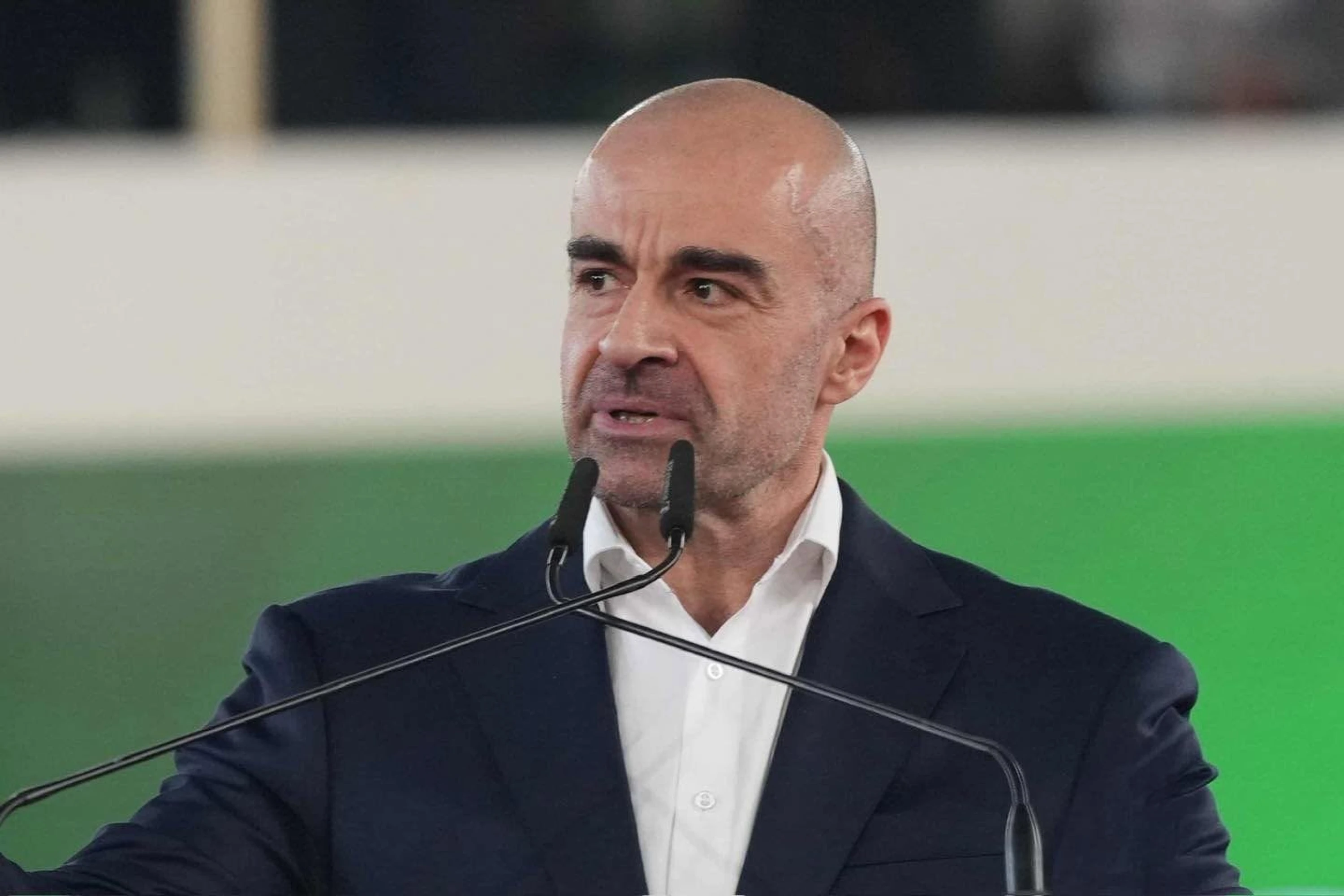
Earlier this week, Bafel Jalal Talabani, leader of the Patriotic Union of Kurdistan (PUK), publicly insulted two journalists during separate political events after they posed questions on sensitive political issues. These incidents have prompted criticism from media rights advocates and civil society organisations, who contend that such actions indicate an increasing culture of hostility toward the media.
The controversy has renewed concerns regarding the diminishing space for press freedom in Sulaimani, a city historically recognized as a center of political pluralism and media activity within the Kurdistan Region.
On Monday, Talabani visited St. Joseph Church in Sulaimani, where he was received by His Beatitude Patriarch Mar Paul III Nona, head of the Chaldean Catholic Church in Iraq and worldwide, alongside Bishop Dr Yousif Thomas, Archbishop of Kirkuk and Sulaimani.
The visit aimed to emphasise coexistence and dialogue between communities. However, attention shifted from the event when a journalist questioned Talabani about ongoing negotiations between the PUK and the New Generation Movement (NGM) concerning a potential political alliance.
Instead of addressing the question, Talabani insulted the reporter in the presence of clergy, officials, and members of the media.
"Is this the time to ask about the NGM, you camel?" he said, using a term widely considered derogatory in local culture.
The exchange, recorded on camera and widely circulated on social media, prompted immediate criticism from journalists and rights advocates, asserting that political leaders have a responsibility to address legitimate questions from reporters rather than respond with personal attacks.
Rights watchdog condemns remarks
One of the strongest reactions came from the Metro Center for Journalists’ Rights and Advocacy, one of the Kurdistan Region’s leading media watchdogs.
In a strongly-worded press release, Metro’s coordinator Rahman Gharib described Talabani’s remarks as “shameful” and criticised what he characterised as widespread silence within political and media circles.
“The insult of the PUK leader towards journalists is shameful, and the silence of the journalist’s colleagues is another shame. I expected a voice from within the PUK, or an institution to apologize, but they have been silenced,” the statement read.
Gharib further questioned whether the response would have differed if a senior figure from another political party had insulted a journalist affiliated with the PUK.
He further criticized the Sulaimani branch of the Kurdistan Journalists Syndicate (KJS), accusing it of failing to defend journalists against abuses by powerful political actors.
Speaking exclusively to The New Region on Wednesday evening, Gharib expanded on his concerns, describing Talabani’s comments as harassment.
“These insults amount to a form of harassment,” he said. “Regrettably, many journalists feel too intimidated to respond. As for whether his advisors have cautioned Mr Talabani about the damage such outbursts inflict on his own reputation and that of the PUK, I doubt he is listening to any counsel at all.”
He warned that repeated verbal attacks by senior politicians risk fostering a culture of intimidation and self-censorship among journalists.
Legal protections and political reality
The incident has drawn renewed attention to the disparity between the legal protections afforded to journalists and the practical challenges many reporters face.
Under Kurdistan’s Press Law No. 35 of 2007, journalists are guaranteed the right to perform their duties without interference. Insults directed at journalists while carrying out their work can be treated as offenses against public servants and may carry legal consequences.
However, media advocates argue that enforcement of these protections remains inconsistent, especially when influential political figures are implicated.
Efforts by The New Region to obtain comments from PUK spokesperson Karwan Gaznayi and Karwan Anwar, head of the Sulaimani branch of the KJS, were unsuccessful. Neither responded to requests for comment.
A second incident
The church confrontation was not an isolated episode.
Just two days later, Talabani again clashed with a journalist during a visit to the headquarters of the Change Movement (Gorran) in Sulaimani.
The reporter inquired whether the PUK would cooperate with authorities in executing an arrest warrant issued against a journalist closely affiliated with the party. Instead of providing a direct response, Talabani questioned the journalist’s sanity in front of colleagues and officials.
The journalist later spoke to The New Region on condition of anonymity, citing fears of repercussions from party officials and security agencies.
“It was deeply distressing to be spoken to in that manner,” he said. “I felt it was a coded message to KRG [Kurdistan Regional Government] officials and those who issued the arrest warrant, so I held my tongue. Besides, how could I possibly respond with so many of his guards surrounding him?”
The journalist also recounted a previous arrest by PUK security forces while working for a broadcaster that was later shut down by the party.
Rather than pursuing a formal complaint through official channels, the journalist stated his intention to notify Metro Center so the incident could be documented as a press freedom violation in its annual report.
He also criticised the Sulaimani branch of the KSJ, accusing them of defending politicians rather than their own members.
“Press freedom in Sulaimani is more restricted than ever,” the journalist said. “Journalists are routinely arrested, their rights trampled, and media outlets closed with little warning or justification.”
The Sulaimani branch of the Kurdistan Journalists Syndicate defended its silence over recent incidents involving journalists, stating in a clarification that its role is to address violations through legal channels rather than public statements. It stressed that its work is governed by the Kurdistan Journalism Law and internal regulations.
The syndicate said journalists who face insults or rights violations should file complaints with the police, after which it will provide legal support and follow their cases through the courts. It added that it is currently handling hundreds of such cases in Sulaimani.
Growing pressure on independent media
The controversy arises amid broader concerns regarding the state of media freedom in the Kurdistan Region.
Journalists and rights organizations have repeatedly documented cases involving arrests, lawsuits, media outlet closures, and restrictions on reporting. Critics maintain that political parties continue to exert significant influence over the media landscape, thereby creating an environment in which independent journalism faces escalating challenges.
The debate has intensified following recent arrest warrants issued by the KRG’s Ministry of Interior against the chairman and a prominent presenter of a television station based in Sulaimani and funded by the PUK.
The ministry’s directive, issued under Article 2 of the Law on Misuse of Telecommunication Devices, instructed security authorities across the Kurdistan Region to enforce the warrants without exception.
Critics contend that the issue extends beyond legal proceedings. They argue that the willingness of political leaders to shield allies while publicly humiliating other journalists demonstrates a broader pattern of selective accountability.
A test for press freedom
The controversy involving Talabani underscores a broader challenge for the Kurdistan Region’s political system: whether senior officials are willing to tolerate scrutiny and criticism from the press.
International media watchdogs, including the Committee to Protect Journalists and Reporters Without Borders, have repeatedly warned that verbal attacks by political leaders may have consequences extending beyond the immediate incident. Such rhetoric can legitimize hostility toward journalists, discourage critical reporting, and contribute to a climate of self-censorship.
Many Kurdish journalists assert that the issue extends beyond the actions of a single politician or a single insult. They argue that it reflects a broader environment in which posing challenging questions increasingly entails professional and personal risks.
As debate over the incidents continues, the episode serves as a test of whether political leaders, media institutions, and professional organizations are committed to defending the principles of accountability and press freedom that they frequently claim to uphold.
 Facebook
 LinkedIn
 Telegram
 X
X