ERBIL, Kurdistan Region of Iraq - Iran is reportedly putting more pressure on Baghdad to tackle the presence of Iranian Kurdish opposition groups in the Kurdistan Region after the US-Iran Memorandum of Understanding was signed on June 17, placing Iraqi and Kurdish authorities in a complex strategic paradigm amid shifting regional developments.
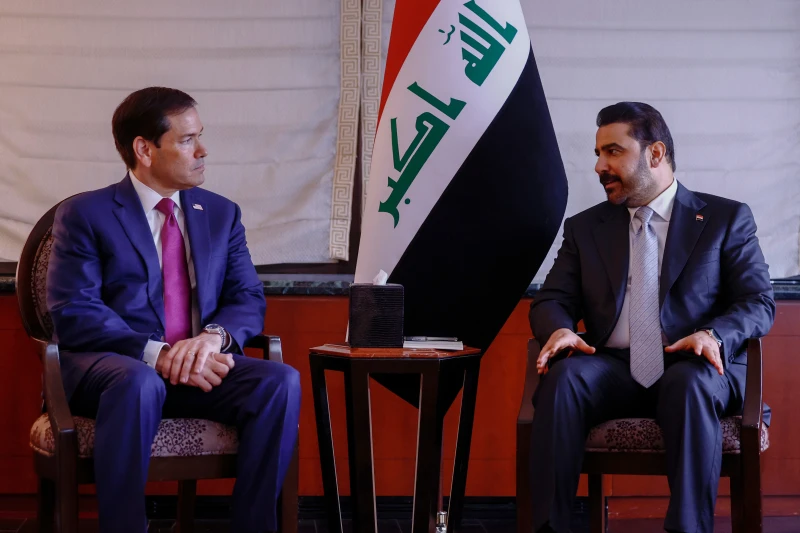
On Monday, Iranian Foreign Minister Abbas Araghchi visited Baghdad and met with the newly appointed Iraqi National Security Advisor Qasim al-Aboudi, who underlined that Prime Minister Ali Al-Zaidi’s government will not allow Iraqi territory to be used as a launchpad for any aggression targeting neighboring countries.
Media outlets in the Kurdistan Region on Wednesday that Iran’s foreign ministry requested Iraq either transfer the leaders, Peshmerga members, and families of Iranian Kurdish opposition parties back to Iran or expel them from the country.
Some days later, Iranian state-owned TV Press TV on Friday reported that Iran delivered a message through Iraqi Ambassador in Tehran Yasser al-Hajjaj, reportedly gives Baghdad and Erbil two options: detain and extradite the Iranian Kurdish opposition groups' leaders and operatives to Tehran to face legal proceeding, or facilitate their relocation to a third country within a specified timeframe.
An Iraqi foreign ministry source who spoke to The New Region denied that there was such a message given by the Iraqi ambassador to Tehran, though the Iranian government's longstanding desire to clamp down on dissidents based across the border clearly continues to play a salient role in relations with its neighbor.
The New Region contacted Kurdistan Regional Government (KRG) spokesperson Peshawa Hawramani for comment on if the KRG received any similar dictate from Iran, but he did not immediately respond.
“This has long been an Iranian request, but the KRG has managed to resist it by assuring Tehran that Iranian Kurdish groups would not pose a national security threat. That calculation has changed since the US-Israel war with Iran, amid reports that Washington and Tel Aviv armed Kurdish groups against the regime,” Yerevan Saeed, Director of the Global Kurdish for Peace at American University, told The New Region.
“Although the KRG was very strategic in restraining these groups from launching attacks on Iran, it would now face greater difficulty in arguing that they do not pose a threat to Tehran,” Saeed added.
Hawramani, during the war in March, denied media reports on X that alleged that the KRG was an accessory to a US-Israeli plan to arm and send Kurdish opposition parties into Iranian territory. “We categorically deny them and affirm that they are being published deliberately and maliciously,” he said.
Read More: KRG denies role in alleged Kurdish ground operation in Iran
It seems Iran now wants the Iranian Kurdish opposition parties living in exile in Iraqi Kurdistan since the 1980s to face the same fate as the Mujahedin-e Khalq (MEK), whose last members left Iraq in 2016 under a US and UN-brokered agreement with Albania.
The MEK in the past was allied to the Baath regime and helped Saddam Hussein to suppress internal Shiite and Kurdish uprisings in 1991. As a result, the group was not very popular with the new Shiite-dominated Iraqi government, nor the leaders in the Kurdistan Region, which was enjoying its newfound status as a constitutional entity.
But the Iranian Kurdish opposition parties, most of whom were exiled in the 1980s, have a better relationship with the Kurdish political parties in the Kurdistan Region, and some of them have also helped the Iraqi Kurds in the fight against the Islamic State (ISIS).
Kurdistan Region President Nechirvan Barzani in 2023 at the MERI Forum in Erbil praised the Iranian Kurdish parties. “I have met with them several times and they are all very concerned about the Kurdistan Region and don’t want the Kurdistan Region to face any problems."
Voices from the opposition
A source within the Kurdistan Freedom Party (PAK) told The New Region that so far “no official source within the Kurdistan Regional Government has discussed this matter with the Kurdistan Freedom Party.”
“Iran’s demands and efforts are inhumane. Therefore, although we cannot speak on behalf of the KRG, we are confident that the Kurdistan Regional Government will reject this inhumane demand and attempt.”
Other Iranian Kurdish parties also said they have not received any communication from the KRG related to this matter.
“The possibility of hostile action by the Islamic Republic of Iran against Iranian Kurdish political parties in the Kurdistan Region of Iraq should not be dismissed, as such threats have existed for many years,” Salah Bayaziddi, the representative of the Komala of the Toilers of Kurdistan to the United States, told The New Region.
“However, the information currently circulating appears to originate largely from social media and has not yet been independently or officially verified. Until credible evidence or official confirmation becomes available, these reports should be approached with caution. At the same time, they should be taken seriously given the Islamic Republic’s longstanding pattern of threats and attacks against Kurdish political groups. It is important to remain vigilant while avoiding definitive conclusions based on unverified information.”
The regional paradigm
In March 2023, Iraq and Iran signed a security agreement under which Baghdad pledged to disarm Kurdish opposition groups and tighten control along the shared border, with Tehran warning of military action should the agreement not be effectively implemented. As part of the agreement last year, Iranian Kurdish opposition groups relocated to new camps in Sulaimani.
Iraqi National Security Advisor Qasim al-Araji (now replaced by Qasim al-Aboudi) traveled to Sulaimani in the Kurdistan Region on June 18, 2026, leading a high-level security delegation to discuss the implementation of the agreement.
Iranian Kurdish opposition groups during the recent US-Israeli war on Iran last February faced hundreds of drone and rocket attacks that left nine of their members dead. Also on June 28, a senior member of the Iranian Kurdish opposition group PAK was found dead in an Erbil hotel on Saturday, with the group alleging he was assassinated by Tehran.
The former US Deputy Assistant Secretary for Iraq and Iran affairs and current Director of the Iraq Initiative at the Atlantic Council, Victoria Taylor, also told The New Region that the news reports and later statements by President Donald Trump about the arming of Iranian Kurds further fueled Iranian suspicions about Israeli and US efforts to use the groups to foment an uprising.
“The war disrupted the previous status quo between Iraq and Iran over the groups, whereby the Iraqi government had moved the groups from the border and pledged to prevent the groups from launching attacks on Iran. We can expect additional diplomatic pressure on Baghdad and Erbil as well as continued kinetic attacks on the Iranian Kurdish groups until the groups either depart Iraq or Tehran is satisfied that the groups have been sufficiently restrained.“
Kamaran Palani, a Research Fellow and Head of the UK and EU Policy Unit at the Middle East Peace and Security Forum (MEPS), told The New Region Iran is now dealing with many internal and regional problems, and its current agreement with the US remains fragile and requires time to stabilize.
“However, once Tehran has addressed these regional issues and regained clarity, it will most likely pressure the Iraqi government and Kurdistan Regional Government to take firmer positions on Iranian Kurdish groups. The coming months will be critical on this front. Iran continues to view the Kurdistan Region and broader Iraq as significant security concerns.”
However, Palani said that it would be better for Iran to find a consensus with Iranian Kurdish opposition groups since the Kurdish issue in Iran is independent from geopolitical dynamics, such as the recent US war with Iran.
In the last few days, there were also reports of clashes between Kurdistan Free Life Party (PJAK) and the Islamic Revolutionary Guard Corps (IRGC), including near Mahabad and Baneh. Iran's semi-official Fars News Agency on June 27 also reported that two Iranian security personnel were killed and five others injured in an armed attack near Baneh.
“I think the way forward is a pragmatic, realistic approach of all sides, including the Kurds, to reach a political kind of consensus that armed confrontation should be excluded, for now, and Tehran needs to have a pragmatic approach towards the Kurds in general to accommodate them.”
 Facebook
 LinkedIn
 Telegram
 X
X