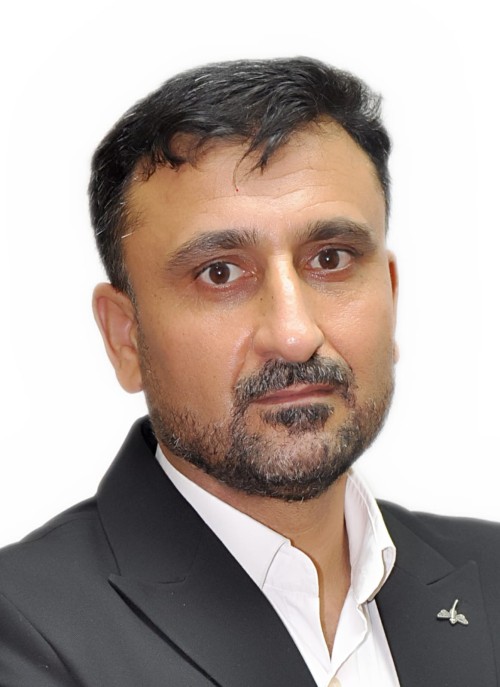
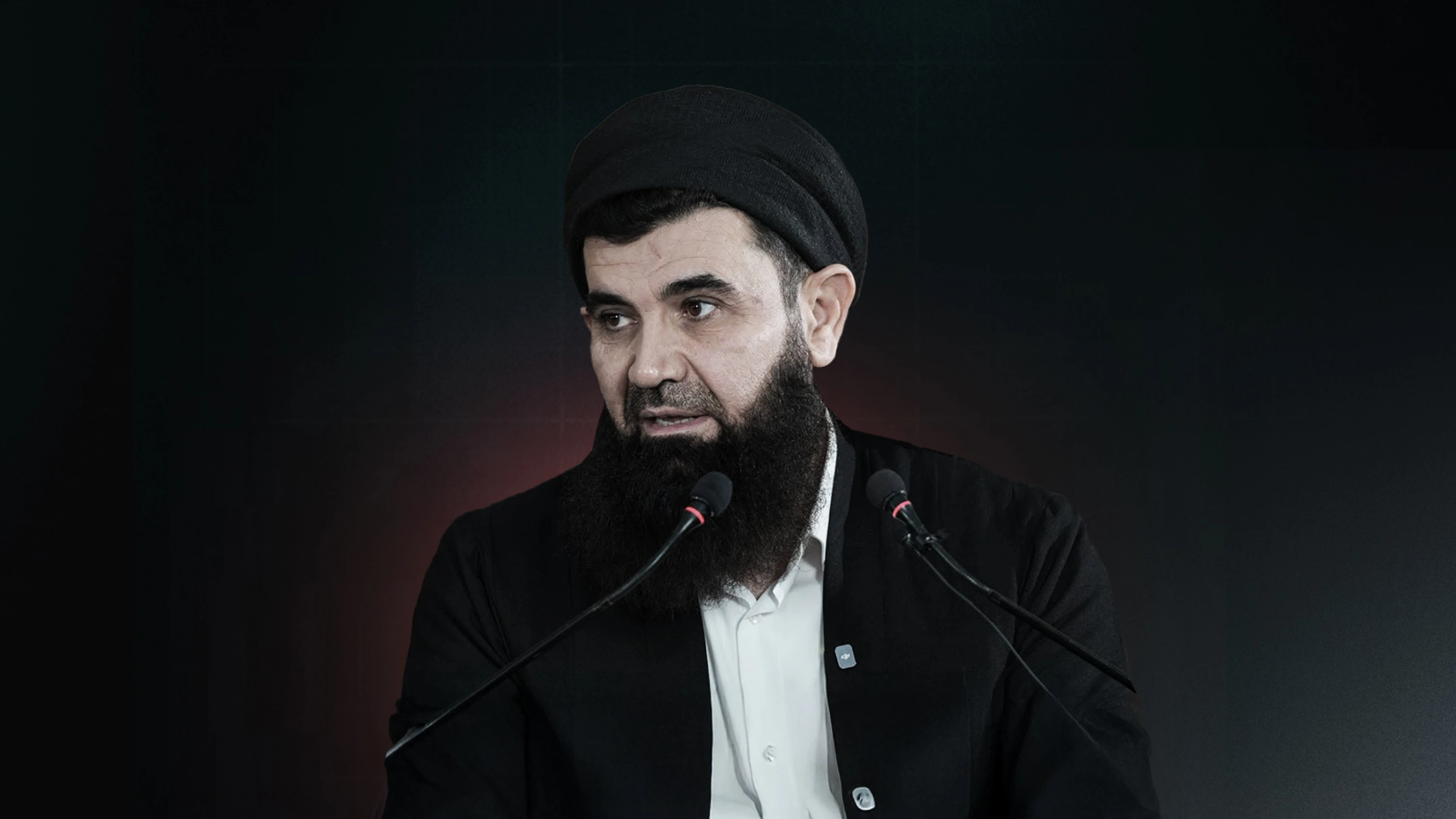
SULAIMANI, Kurdistan Region of Iraq – Once celebrated as a leading conservative religious scholar and university lecturer, Abdul Latif Ahmed Mustafa, or Abdul Latif Salafi, now finds himself at the heart of a scandal shaking the foundations of the Kurdistan Region's academic and religious institutions.
Explosive leaked messages and audio recordings, allegedly capturing Abdul Latif sexually harassing female university students, have ignited public fury and triggered a government probe that ended with his permanent removal from public office.
An official document obtained by The New Region confirms that the Kurdistan Regional Government's (KRG) Ministry of Higher Education, dated July 1, decided to permanently remove Abdul Latif from his academic position, stripping him of pension rights and barring him from future public employment.
The decision follows a formal investigation by the ministry and the University of Sulaimani after alleged conversations and audio recordings circulated widely on Kurdish social media in June.
A senior KRG official, speaking on condition of anonymity as they were not authorized to discuss the matter publicly, confirmed the document's authenticity to The New Region.
Abdul Latif denies the allegations, claiming the chats and recordings were fabricated using artificial intelligence. The New Region requested his response before the ministry's decision, but received no reply.
The Salafi cleric said in a statement later on Wednesday that he will appeal the decision in court, claiming that it was reached “under a lot of pressure.” The decision “holds no value to me and will not affect me,” he said, slamming it as “unjust”.
From preacher to scandal
Abdul Latif is one of the Kurdistan Region's most prominent Salafi figures. He lectures at the College of Islamic Sciences at the University of Sulaimani, founded the Kurdish-language Salafi television channel Amozhgari, and serves as chief imam of Bahasht Mosque.
Throughout his career, he has promoted conservative Islamic values and frequently warned against extramarital relationships and moral misconduct.
These allegations stand in stark opposition to the upright persona he has long projected.
Kurdish activist Bilal Hama, known online as Yakhi (meaning “rebellious” in Kurdish), first published the recordings, releasing edited versions with the female student's voice removed to protect her identity.
In one recording, allegedly made by a female student, Abdul Latif is heard asking her to remove her hijab in his car and perform oral sex. She refuses and says they can meet again after he returns from Hajj.
Other leaked material alleges Abdul Latif offered examination papers to female students in exchange for sexual favours or promises of marriage. He is also accused of asking one student to send explicit photographs after she returned home.
Despite the activist’s efforts to shield the student’s identity, several Kurdish social media pages later released the full recording, sparking fears for the alleged victim’s safety in a society where honor-based violence still casts a long shadow.
Permanent dismissal
According to the ministry's decision, signed by Higher Education Minister Aram Mohammed Qadir, Abdul Latif has been dismissed under Article 4 of Law No. 14 of 1991 governing public employees.
The decision permanently bars him from government employment and removes his entitlement to a state pension.
Abdul Latif's lawyers have rejected the decision, calling it unlawful and stating they will challenge it in court. Under Kurdish law, he has one month to appeal.
The Salafi scholar “will never plead guilty to the accusations fabricated against him,” and “will not forego of his right to resort to court” to settle the case, said the lawyers in a statement.
Questions of power and influence
The case has exposed the deep-rooted political and institutional networks surrounding Abdul Latif. His family holds significant positions: one brother, Khalid Ahmed, is the dean of the College of Islamic Sciences at the University of Sulaimani, and another, Gharib Ahmed, is a former Iraqi parliament member for the Patriotic Union of Kurdistan (PUK). Abdul Latif himself has long maintained close ties with the Sulaimani ruling party, urging his followers to support it and benefiting from their backing—most visibly with the renovation of Bahasht Mosque, where he still delivers sermons.
This is not the first reported incident involving Abdul Latif and extra-marital relationships. In 2016, he reportedly dated a married woman, pressured her husband to divorce her, and subsequently married her.
Public outrage over the cleric’s alleged misconduct continues, with Muslim scholars demanding Abdul Latif’s removal from preaching at Bahasht Mosque. An anonymous Muslim Imam told The New Region that they have requested the KRG Ministry of Endowment and Religious Affairs to ban him from delivering Friday Prayer speeches.
Hawjin Rauf, Director General of Endowment in Sulaimani, told The New Region that Abdul Latif is not a permanent preacher at the ministry and delivers Friday speeches at Bahasht Mosque voluntarily.
Rauf was unavailable for comment when contacted by The New Region on Wednesday after Abdul Latif’s removal.
The Sulaimani endowment office is reportedly set to hold a meeting on Thursday to decide whether Abdul Latif should be allowed to continue delivering Friday speeches moving forward.
A fractured religious community
The scandal has left Kurdish religious circles in a state of turmoil. Some Salafi clerics call for silence until the courts issue a verdict, citing Islamic teachings on concealing fellow Muslims’ faults. Others insist that such protection cannot extend to abuses of power and exploitation under the guise of religious authority.
Islamic scholar Dr. Murshid Mashouq al-Khaznawi explained to The New Region that while Islamic law encourages discretion in cases of personal shortcomings, it rejects concealment when it permits injustice or endangers others. He emphasised that offenses like sexual harassment or abuse of authority are not private sins but crimes that endanger moral and social security. In such cases, reporting to the authorities is not only permissible but required to protect society.
Dr. Khaznawi also emphasised that high status does not shield individuals from accountability—in fact, it heightens their responsibility, as their actions significantly impact public trust. He refrained from commenting directly on Abdul Latif’s case, noting that only the courts can determine the truth and pass judgment.
Abdul Latif’s case stands as a watershed moment for accountability among religious leaders in the Kurdistan Region. Regardless of how the courts ultimately rule, the scandal has already forced a reckoning with the entanglement of religious authority, political influence, and institutional responsibility. It has sparked calls for greater transparency and oversight, signaling a shift in public expectations of those in positions of trust.
 Facebook
 LinkedIn
 Telegram
 X
X