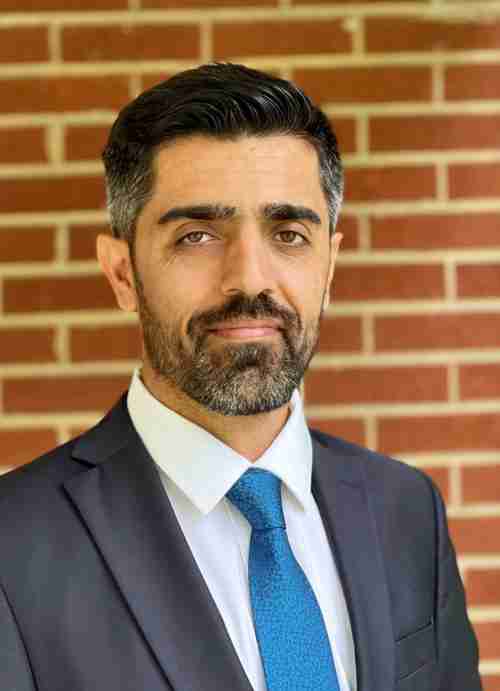
In the latest episode of The New Region's GeoSpace podcast, host Mohammed A. Salih sits down with Dr. Dania Arayssi, program head and senior analyst at New Lines Institute in Washington, to discuss the Four Seas Initiative, a proposed connectivity project linking the Persian Gulf, the Caspian Sea, the Mediterranean, and the Black Sea through Syria and Turkey, and what it could mean for the region's economic and geopolitical future.
Arayssi described the initiative as a direct response to the vulnerabilities exposed by Iran's leverage over the Strait of Hormuz. “This project is really an alternative trade corridor to what the Iranians have done,” she said, adding that it aims to transform Syria “from a major conflict zone to an energy hub, connecting it to Europe and Turkey.”
The fall of the Assad regime in December 2024, she argued, created “the perfect opportunity to revive these concepts,” with US energy companies, Gulf states, and Turkey all moving to establish a foothold in Syria. She pointed to MOUs signed by Chevron and ConocoPhillips, Gulf investment in Syrian infrastructure, and a recent Saudi-Turkish agreement on commercial and transit corridors as early signs of momentum.
Arayssi noted that the most immediate obstacle is Syria's banking system. “The number one problem Syria is facing right now is they need a banking system,” she said, citing a conversation with the head of the Syria file at the International Monetary Fund (IMF).
Remaining sanctions on Syria, she added, make it “very hard for big companies to actually move their money and invest.” Security gaps, the lack of formal institutional architecture for the initiative, and ongoing tensions between Saudi Arabia and the UAE were also flagged as significant hurdles.
On timeline, Arayssi outlined a phased approach: establishing a Four Seas Infrastructure Consortium and a Syrian Energy Technical Assistance Program in 2026, beginning construction of Gulf-Mediterranean and Iraq-Syria corridors in 2027-2028, and reaching full operational capacity between 2029 and 2035.
“This project is 100% a counterweight to China's Belt and Road Initiative,” Arayssi said. “It's a Western counter-architecture in the region.” On Iran's potential inclusion, she asserted: “The only time I see that happening is if we have a regime change in Iran,” noting that the war has destroyed whatever trust existed between Tehran and its Gulf neighbors.
Looking further ahead, Arayssi suggested the initiative could amount to more than infrastructure. “We are witnessing the foundations for a future connectivity project that starts with the Middle East but connects to the rest of the region,” she said, adding that the project could eventually link Turkey, Syria, Lebanon, the South Caucasus, and Europe into a single integrated corridor.
 Facebook
 LinkedIn
 Telegram
 X
X