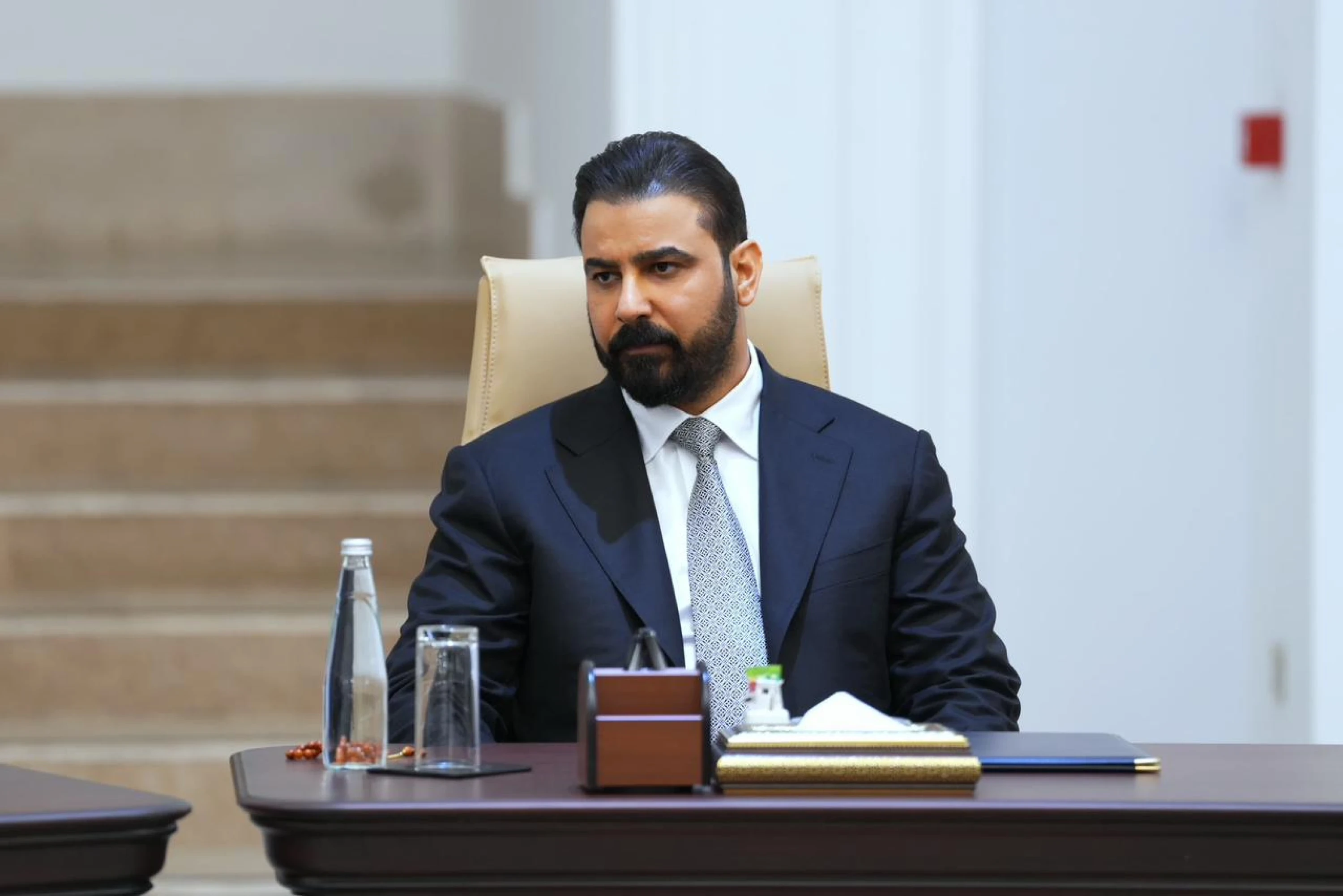
BAGHDAD, Iraq – It was supposed to be a routine briefing. On May 30, just over two weeks after taking office, Iraqi Prime Minister Ali al-Zaidi met with a group of journalists, political analysts, and economic experts. He spent much of the meeting outlining the challenges facing his government, speaking at length about Iraq’s financial crisis, corruption, and the long-standing challenge of bringing weapons under state control. Those in attendance said there was little in his remarks that they had not heard before.
Then, almost in passing, Zaidi mentioned something that would later overshadow the rest of the meeting.
An intermediary, he said, had approached him with an offer of up to $200 million on behalf of a “corrupt” senior official in exchange for closing an ongoing graft investigation.
Zaidi did not dwell on the allegation. He neither elaborated on it nor returned to it. Instead, he simply continued with the rest of his remarks before opening the floor for questions, one of the attendees told The New Region.
No one asked about the alleged bribery attempt.
The discussion moved in other directions, with those attending raising questions about the government’s priorities and the challenges facing their own work. According to the attendee, nobody pressed Zaidi to identify the official, explain how the offer had been delivered, or describe what happened afterward.
“He mentioned it as if it were just another point in his speech,” the attendee told The New Region.
“He didn’t stop at it, and neither did anyone else.”
Only later did the significance of the remark begin to emerge. The meeting had taken place less than 24 hours after Iraqi authorities arrested Deputy Oil Minister for Refining Affairs and former Director General of the state-owned North Refineries Company Adnan Mohammed al-Jumaili.
Although Zaidi never identified the official by name, several people who attended the meeting concluded that he had been referring to Jumaili.
Whether Zaidi intended to refer to Jumaili or someone else, his disclosure quickly became the focus of political and media discussions. Some remarked on the audacity of offering a bribe to a sitting prime minister. Others believed the disclosure was more than an anecdote, interpreting it as a signal that developments were about to follow.
At the time, however, few anticipated that the alleged bribery attempt would set in motion a series of developments that would shake Iraq’s political circles.
Operation Dawn Sweep
In late April, US authorities suspended the release of Iraq’s US dollar cash shipments from the country’s account at the Federal Reserve, sharply increasing financial pressure on Baghdad at a particularly difficult moment.
The move came as the Iraqi government was grappling with mounting financial obligations while the regional conflict and the closure of the Strait of Hormuz disrupted oil exports and threatened one of the government’s main sources of revenue.
US officials linked the suspension to Iraq’s failure to curb dollar smuggling, oil smuggling, and illicit financial networks that Washington said had helped Iran circumvent US sanctions.
The pressure intensified further in early May, when the US Treasury expanded its measures beyond financial restrictions by imposing sanctions on Deputy Oil Minister Ali Maarij al-Bahadly.
Treasury accused Bahadly of abusing his official position to facilitate the diversion of Iraqi oil for the benefit of Iran and Iran-backed armed factions, signaling that Washington was prepared to hold senior Iraqi officials - not only illicit financial networks - directly accountable.
The same sanctions package also targeted Mustafa Hashim Lazem al-Bahadli, better known as “Sayyad Aoun,” a senior Asaib Ahl al-Haq figure whom the Treasury accused of controlling oil-smuggling financing and using businesses and government contracts to finance the group’s activities.
Both men maintained longstanding ties to the North Refineries Company and the Baiji Refinery complex, where their activities and networks intersected, oil sector officials told the New Region.
Together, the designations portrayed what US authorities described as an interconnected network linking senior government officials, Iraq’s oil sector, and Iran-aligned armed factions.
The new Iraqi government soon found itself facing one of its first major tests. Beyond its domestic agenda, Zaidi’s government needed to convince Washington that Baghdad was prepared to take meaningful action against the networks involved in oil smuggling, dollar smuggling, and illicit financial activities that had become a persistent source of tension between the two countries.
Whether driven by financial necessity, political calculation, or both, the pressure left the new government with little room for delay.
“Things have reached a dangerous point,” a leader from the ruling Coordination Framework coalition told The New Region on condition of anonymity.
“The United States has begun imposing financial sanctions on Iraqi officials and is threatening to designate the Iraqi government as a state sponsor of terrorism.”
Within weeks, Iraq’s oil sector became the focus of the new government’s first major response. An investigation led by Iraq’s Central Anti-Corruption Criminal Court, in coordination with the Integrity Commission, quickly centered on the North Refineries Company.
Among the senior officials whose names repeatedly surfaced during the initial stages of the investigation was Adnan Mohammed al-Jumaili, then deputy oil minister for refining and director general of the North Refineries Company.
Iraqi investigators concluded that Jumaili had played a pivotal role in financing election campaigns of political leaders and members of parliament, directly or indirectly, by awarding inflated contracts or fictitious projects to individuals linked to political parties and armed factions, officials involved in the investigation said.
Two senior security officials told The New Region that the investigation drew on intelligence shared by an FBI team with Iraqi authorities, alongside evidence gathered unilaterally by Iraqi investigators.
“An FBI team arrived in Baghdad aboard two helicopters and immediately began exchanging information with the Iraqi authorities,” said one of Zaidi’s advisors familiar with the investigation.
“Their presence was coordinated with the Supreme Judicial Council and the Iraqi government.”
Jumaili’s arrest marked a turning point. The investigation quickly widened. Several senior officials whose names had emerged during the inquiry were arrested. Successive statements issued by Iraq’s Supreme Judicial Council documented the seizure of millions of dollars in cash, tens of billions of Iraqi dinars, dozens of residential and commercial properties, gold, weapons, and vehicles.
The investigation soon extended beyond the North Refineries Company to encompass a broader network of government officials, lawmakers, and businessmen.
As the investigation reached sitting members of parliament, judicial procedures alone were no longer sufficient. Under Iraqi law, lawmakers enjoy parliamentary immunity, requiring parliamentary approval before criminal proceedings can move forward.
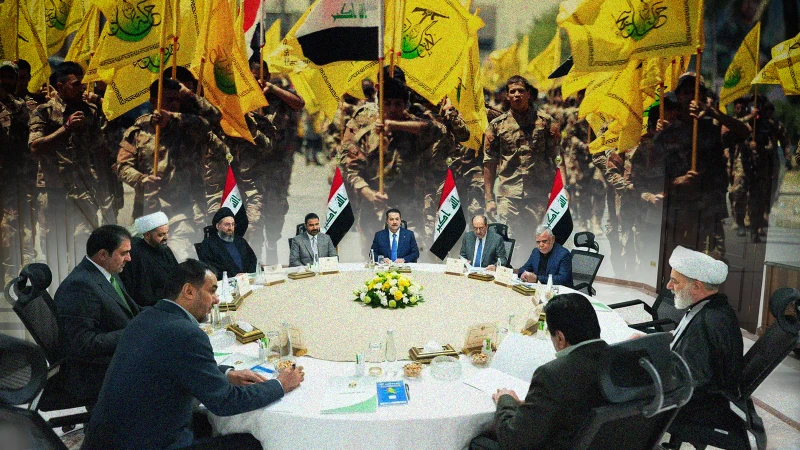
The findings of the investigation were subsequently presented during a meeting attended by the prime minister, the president, the speaker of parliament, and the president of the Supreme Judicial Council on June 10, Parliament Speaker Haibat al-Halbousi later said in a televised interview.
"The Prime Minister spoke about accusations against a number of MPs. He requested that their immunity be lifted [to investigate them]," Halbousi said.
"An agreement was reached to lift the immunity [of the MPs in question]."
The four leaders agreed on “no immunity for the corrupt" and that no suspect would be shielded because of their political position or affiliation. The identities of those targeted remained known only to a small circle of officials as preparations for the operation continued.
Before dawn on June 28, the Counter-Terrorism Service (CTS), backed by army units equipped with tanks, launched coordinated raids across several provinces, arresting dozens of senior officials and current and former lawmakers. Officials internally referred to the operation as Operation Dawn Sweep, one of the largest and most coordinated anti-corruption operations undertaken by Iraqi authorities since 2003.
In the aftermath, Zaidi signaled that the campaign was far from over.
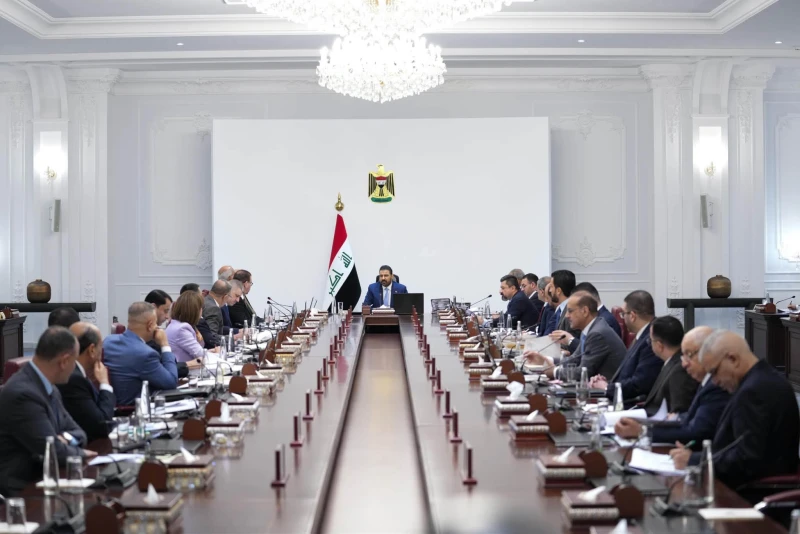
“The recent crackdown on corruption is just the first phase, and the government will continue to fight corruption and recover public funds,” he said during a cabinet meeting on June 29, according to a statement issued by his media office.
“The situation has become untenable, and our concern for the Iraqi people compels us to assure them that there are strong guardians of public funds.
“The government is tasked with protecting the interests of the Iraqi people, and there will be no leniency in this responsibility.”
Who was arrested
The operation’s true significance only became clearer when the identities of those arrested and wanted were viewed together.
A review by The New Region of the confirmed arrests, detention warrants, and requests to lift parliamentary immunity reveals three recurring patterns.
The first pattern emerged in the political affiliations of those arrested so far, those that remain wanted, and those placed under investigation. Many belonged to parties and blocs within the Coordination Framework, particularly former Prime Minister Mohammed Shia’ al-Sudani’s coalition and Asaib Ahl al-Haq. Others were affiliated with the Azm Alliance led by Muthanna al-Samarrai, the Taqadum Alliance led by former Parliament Speaker Mohammed al-Halbousi, and the Siyada Alliance led by businessman Khamis al-Khanjar, among other parliamentary blocs. A smaller number were linked to the Iran-backed Kataib Hezbollah and Kataib Sayyid al-Shuhada.
A second pattern emerged inside parliament itself. A significant number of the current and former lawmakers who were implicated and faced requests to lift their parliamentary immunity had served on the Oil and Gas Committee, the Finance Committee, or the Integrity Committee.
The breadth of the operation was also reflected in the range of positions held by those targeted. They included former ministers, deputy ministers, general directors, senior leaders of armed factions, current and former lawmakers, and senior government officials affiliated with influential political parties and armed factions, businessmen, and relatives of prominent political figures.
The concentration of names from those committees and institutions suggests investigators were not simply pursuing individual corruption allegations but were increasingly focusing on the institutions responsible for overseeing public spending, state contracts, and Iraq’s oil sector.
“The campaign targets the economic offices of political parties and the financing networks of armed factions,” Zaidi’s advisor told The New Region.
The third pattern lay in the financial relationships uncovered during the investigation. According to Iraqi officials involved in the investigation, many of those whose names surfaced had either benefited from contracts awarded through the North Refineries Company, received financial support for electoral campaigns, or maintained direct or indirect ties to Adnan Mohammed al-Jumaili and individuals linked to him.
Viewed together, these recurring political, institutional, and financial links suggest that the operation was shaped by identifiable networks rather than a collection of isolated corruption cases.
"The level of corruption within the company is enormous, and there's a wealth of information available. One case leads to another, and one suspect leads to a group of suspects," a senior security official familiar with the investigation told The New Region.
"Jumaili's confessions remain the primary guide [of the investigation] so far."
The fruits of the campaign
The campaign produced its first tangible political outcome within days. On July 2, US authorities resumed the release of Iraq’s US dollar cash shipments from the Federal Reserve, easing financial pressure on Baghdad after months of restrictions.
By then, however, the arrests had not stopped. Although the pace of the operation slowed after the initial wave of raids, Iraqi authorities continued to pursue additional officials whose names emerged during the investigation.
As the campaign gathered momentum, political resistance intensified. In public statements and private discussions, political leaders, lawmakers, and commanders of armed factions increasingly questioned the campaign’s scope, its underlying objectives, and the tactics used to carry it out.
The operation was interpreted in different ways across Iraq’s political landscape. Some saw it as an attempt by Zaidi to consolidate power with the backing of Supreme Judicial Council President Faiq Zaidan. Others viewed it as an effort to weaken rival political forces by portraying them as corrupt or as protectors of corruption.
Iranian-backed armed factions, meanwhile, interpreted the campaign as a warning that Zaidi was prepared to use the full authority of the state against them if they challenged his government.
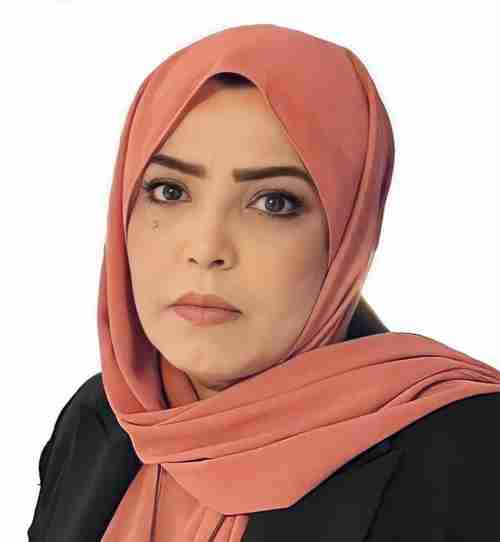
“What’s the point of using tanks and counterterrorism forces? Does Zaidi need a tank to confront Alia Nassif?” a commander of an Iran-backed armed faction told The New Region, referring to one of the detained lawmakers.
“We know that the real target is the armed factions, and presenting it as an anti-corruption campaign is simply a cover for the real objective.”
 Facebook
 LinkedIn
 Telegram
 X
X