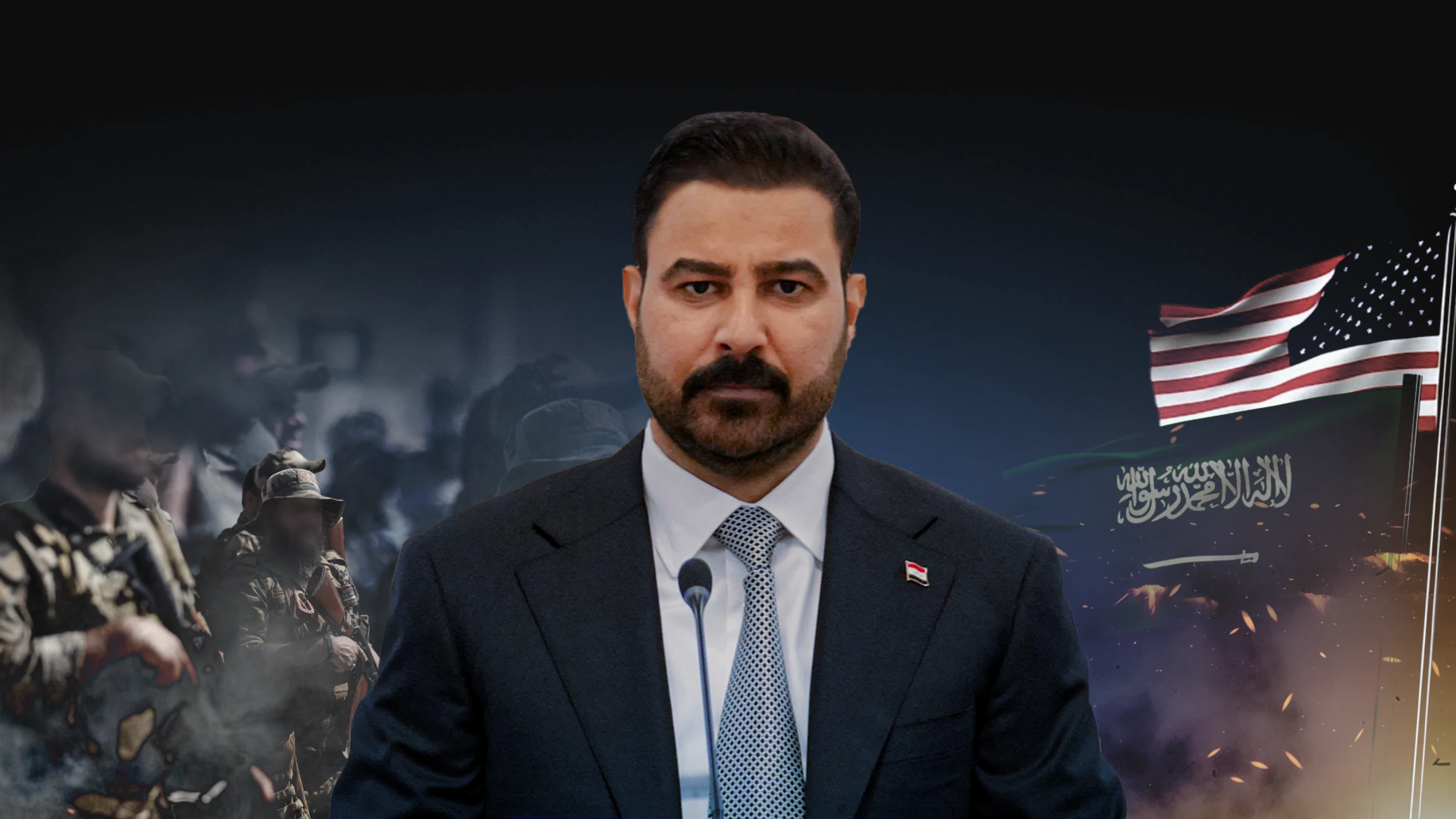
BAGHDAD, Iraq - The drone attacks on Saudi oil facilities were a “calculated message” intended to test Iraqi Prime Minister Ali al-Zaidi’s resolve to confront Iranian-backed armed factions and determine whether Washington’s support for his government would endure following a public demonstration of the groups’ ability to operate beyond state control, three pro-Iran commanders told The New Region.
At least 20 fighters were killed and more than 30 others were wounded in strikes carried out by Saudi and US warplanes targeting Popular Mobilization Forces (PMF) bases in several Iraqi provinces on Wednesday.
A statement issued by the Saudi foreign ministry said the strikes, carried out in coordination with US Central Command (CENTCOM), were in response to the targeting of Saudi oil facilities and were conducted in accordance with the country’s “right to self-defense.”
Earlier, the Saudi Ministry of Defense had announced that its air defenses had intercepted drone attacks launched from Iraqi territory by pro-Iran armed groups targeting oil facilities in the Eastern Province and Riyadh on Monday and Tuesday.
The Saudi-led airstrikes came just one day before a scheduled visit by the Iraqi prime minister to Riyadh to discuss issues of mutual concern. Zaidi postponed the visit without an official announcement, government sources said.
“The timing is deliberate and intended to test Zaidi. All of this [attacks on Saudi oil facilities] was a test for him,” one of the commanders told The New Region.
“We wanted to know if he would still go to Saudi Arabia after what happened, and whether American support for him would hold.”
Zaidi, who took office in mid-May, faces mounting internal and external pressures. At home, he is grappling with a severe financial crisis triggered by the recent war, the closure of the Strait of Hormuz, and a sharp decline in oil exports, while struggling to complete more than 10 ministerial posts in his cabinet which remain vacant, including the defense and interior portfolios.
From the outside, he faces US pressure to disarm Iran-aligned armed factions and exclude groups that refuse to submit to state authority, despite their electoral entitlement.
From the first day of his government, Zaidi pledged to place all weapons under state control and end the duality of security decision-making between the Iraqi state and Iranian-backed armed factions. At the end of June, he launched a campaign targeting dozens of senior government officials, current and former lawmakers, and figures close to influential political forces under the banner of combating corruption.
The nature of the campaign, the identities of those targeted, and their political affiliations suggested that it was, in effect, aimed at dismantling the financial networks financing political forces and armed groups, particularly those linked to Iran - a move these factions viewed as a direct attack on their interests.
The attacks carried out by the “Islamic Resistance in Iraq”, the new umbrella group of four Iran-backed Iraqi factions that emerged last month after the dissolution of the Iraqi Resistance Coordination Committee, were “deliberate and calculated” and aimed at testing Zaidi, whom the groups accuse of implementing an American agenda to besiege them and sever Iraq’s ties with Iran, the commanders told The New Region.
“We don’t expect to bring him [Zaidi] back on track. He has a roadmap he’s working to implement,” one of the commanders said. “Our job is to sabotage it. We can’t just stand by and watch.”
Unexpected response
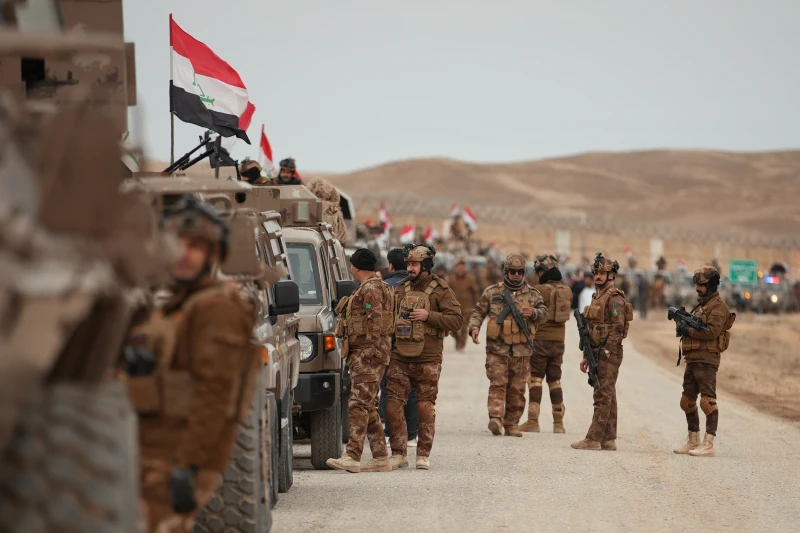
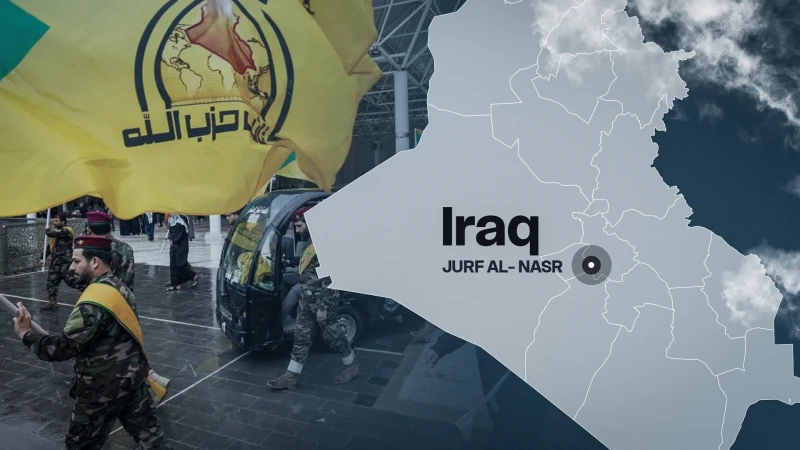
Wednesday’s airstrikes targeted seven PMF headquarters in Baghdad, Karbala, Diyala, Kirkuk, Wasit, Nineveh, and Basra. Images published by PMF-affiliated outlets showed significant damage at some of the targeted sites.
Five Iranian advisors accompanying PMF units were also killed in the attacks. Iraqi and Iranian media outlets affiliated with the Islamic Revolutionary Guard Corps (IRGC) circulated photos and identified them.
One of the videos posted on Telegram channels linked to the IRGC showed the five coffins draped in Iranian flags and carried on the shoulders of PMF fighters, surrounded by dozens of civilian and military mourners waving Iraqi and Iranian flags. The mourners had gathered near a PMF headquarters in Baghdad on Wednesday evening.
The Iranian Consulate in Najaf acknowledged the killing of the advisors by posting photos of the coffins accompanied by the caption: “Iranian blood has mingled with Iraqi blood once again.”
The Islamic Resistance in Iraq’s denial of involvement in the attacks and their subsequent rage at the US-Saudi strikes suggested that the scale of the Saudi response was unexpected and that the groups had been betting that the limited damage caused by the drone strikes would not provoke a retaliation of this magnitude.
“The attacks [on Saudi oil facilities] were conventional and were not intended to cause actual damage, nor were they launched from the areas targeted by the Saudi and US airstrikes,” a commander told The New Region.
“All of these areas are relatively far from the targeted Saudi territory. It is clear that the target list is American and predetermined, and has no connection to the recent operations.”
The Test
Zaidi, who concluded a visit to Washington last week, received an unprecedented welcome from US President Donald Trump at the White House and signed dozens of agreements with major US companies to invest in Iraq’s energy, oil, and gas sectors.
Pro-Iran armed factions - which have repeatedly rejected his efforts to monopolize weapons under state control - view him as part of a broader US effort to tighten the noose around Iran and diminish its influence in Iraq.
“The Iraqi state is not governed by the logic of commercial deals or economic interests when it comes to the sovereignty of the homeland and the dignity of its people,” read a Wednesday statement from Saraya Awliya al-Dam, one of the formations operating under the Islamic Resistance in Iraq.
“The sovereignty of Iraq and the blood of its sons are not subject to negotiation or compromise.”
The Islamic Resistance in Iraq, which includes Kataib Hezbollah, Harakat Hezbollah al-Nujaba, Kataib Sayyid al-Shuhada, and several smaller groups, has given Zaidi less than 10 days to announce his position on the recent developments.
While statements issued by Saraya Awliya al-Dam and Harakat Hezbollah al-Nujaba outlined specific demands, including ending the US military presence in Iraq, reconsidering agreements signed with US companies, canceling the prime minister’s visit to Riyadh, expelling the Saudi ambassador, and severing diplomatic and economic ties with the Kingdom, the umbrella group’s statement stopped short of making explicit demands.
“We give the government entities that demanded the resistance be disarmed a deadline until the 23rd of Safar [August 6] to see what they will do…Our response to the American aggression is inevitable, and it may target its tools in Saudi Arabia whenever necessary,” the statement said.
“It’s unclear what the outcome will be. We gave him [Zaidi] a deadline to see his reaction,” one of the commanders told the New Region.
“Actually, the deadline is for him and for us. We also need time to study the options the Americans will give him.”
“So far, he hasn’t taken any clear stance, so we all have to wait until the end of next week to find out what will happen.”
 Facebook
 LinkedIn
 Telegram
 X
X