BAGHDAD, Iraq - Iraq’s ruling Shiite Coordination Framework will take over for Iran-backed armed factions in negotiations with the government amid growing tensions between the government and the factions over Baghdad’s plan to bring their weapons under state control, commanders of pro-Iran factions told The New Region.
Since assuming office in mid-May, Iraqi Prime Minister Ali al-Zaidi has faced mounting international and regional pressure to curb Iran-affiliated armed factions. He has set the end of September as the deadline for bringing all weapons under state control.
The process began in June. Three armed factions, including Asaib Ahl al-Haq, one of the most influential Iran-backed Shiite factions, and Saraya al-Salam, the largest Shiite armed faction not affiliated with Iran, have voluntarily engaged in the weapons inventory process which has made significant progress, Iraqi officials said.
Four of the seven key Iran-backed Shiite factions, collectively known as the Islamic Resistance in Iraq, including Kataib Hezbollah and Harakat Hezbollah al-Nujaba, have rejected the process, saying they will not discuss the status of their weapons until the US forces’ withdrawal, scheduled for September 30, is completed.
On Monday, a special unit from Iraq’s Counter-Terrorism Service arrested Abbas Hussein al-Yaqoubi, a Popular Mobilization Forces (PMF) commander, at his home in Dhi Qar province. Yaqoubi heads the intelligence unit of the Baghdad Belt Operations Command and the reconnaissance unit of Harakat Hezbollah al-Nujaba. PMF commanders told The New Region that he is accused of involvement in recent attacks targeting the Kurdistan Region.
Iraqi government spokesperson Haider al-Aboudi said Yaqubi’s arrest was carried out under judicial warrants.
The arrest prompted a sharp response from Kataib Hezbollah. In a statement issued late on Monday, the group said: “Our patience is running out regarding the provocative and irresponsible actions of the young Zaidi,” and warned that it may begin to act according to the principle of “an eye for an eye.”
“We remind Zaidi that you were engaged in trade, enjoying security and luxury, and filling your coffers with billions, while our blood was being shed to preserve the sovereignty of the country and protect the holy sites.”
“Do not forget yourself. You are facing men who do not fear the blame of any critic in the cause of God,” the statement read.
“He [Zaidi] started this. He arrested Yaqubi without evidence. Is this a test of strength? Or stubbornness? Or an imposition of will?” one of the leaders of the Islamic Resistance factions in Iraq told The New Region.
“He wanted escalation, so be it, even though we warned him against escalation. The decision is his, and he has to choose. If he chooses confrontation, we are ready, and if he chooses negotiation, we are also ready, and he has to sit down with our political representative,” the leader said.
The battle moves to politics
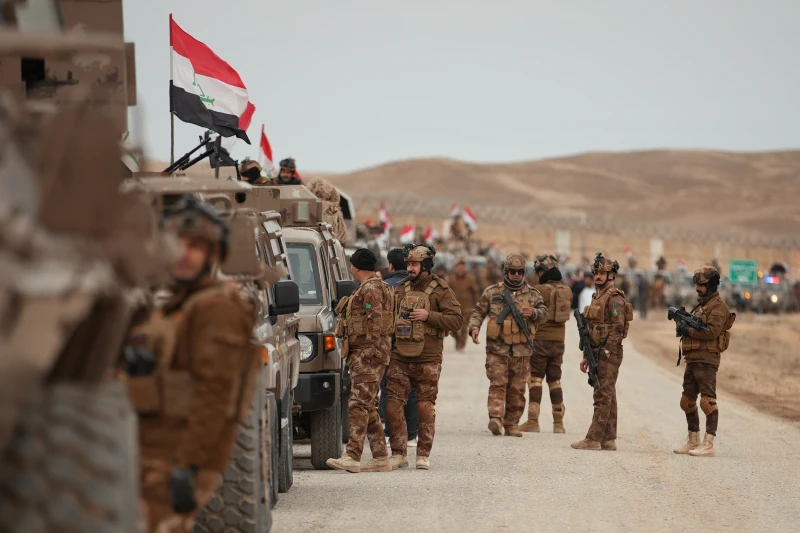
The latest escalation extended a crisis between the government and the factions that reached a peak in late July, when the factions threatened to attack Saudi Arabia in retaliation for airstrikes Riyadh carried out, in coordination with US forces, targeting headquarters and positions of the PMF in seven provinces. The strikes killed 20 fighters and wounded 32 others. The four factions set August 7 as their deadline for retaliation.
The standoff became the first real test of whether Zaidi was serious about confronting the Iran-backed factions and enforcing his weapons-control plan or would ultimately back down.
Twenty-four hours before the deadline, Zaidi raised the readiness level of the Iraqi armed forces and deployed armored units in Baghdad and near border areas that could be used to launch attacks on Saudi targets. He had also sent “clear and explicit” messages through intermediaries to the factions commanders, signaling that he was prepared to go beyond verbal threats and confront them if they carried out their threats, commanders and military officials familiar with the developments told The New Region.
The factions of the Islamic Resistance in Iraq maintained their position and an armed confrontation between the two sides appeared imminent.
Hours before the deadline expired, Hadi al-Amiri, a key Coordination Framework leader and head of the Badr Organization, the oldest and largest Iran-backed Shiite armed factions, intervened to ease tension and prevent a military clash between the factions and the Iraqi security forces.
In a short video released by his office early on August 7, Amiri urged the factions of the Islamic Resistance in Iraq to “postpone any [military] response to the Saudi-American aggression targeting Iraq for the sake of Iraq’s higher interests.”
The factions accepted Amiri’s appeal, averting an immediate confrontation, but the government’s weapons-control plan remained unresolved.
Days later, Brig. Gen. Esmail Qaani, commander of Iran’s Quds Force and the official overseeing the Iraqi file, arrived in Iraq for a four-day visit aimed at “defusing the crisis and finding a way out for all the involved parties,” commanders familiar with the talks told The New Region.
During his visit, Qaani met with PMF commanders, commanders of the Islamic Resistance factions and several Coordination Framework leaders, to prevent further escalation and avert a confrontation that could trigger intra-Shiite fighting, commanders said.
“He [Qaani] said that the Coordination Framework is a trusted Shiite entity and that it is the one that will decide the course of action on this issue,” a commander of the Islamic Resistance in Iraq told The New Region.
“He asked us to calm down, not to use weapons, and not to clash with the government.”
“The leaders of the Coordination Framework will handle the matter from now on,” the commander said.
A win-win situation
The ruling Shiite Coordination Framework is Iraq’s largest parliamentary bloc that nominated the prime minister and formed the government. Under the political system that has developed since 2005, the largest parliamentary bloc has traditionally held considerable sway over the government and the prime minister’s policies and decisions.
That relationship has significantly changed under Zaidi. For the first time in more than two decades, the Shiite rulling alliance’ leaders have found themselves struggling to influence a government they are accustomed to controlling. Instead, some now fear Zaidi and are trying to appease him, particularly after the anti-corruption campaign he launched in late June with the backing of Faiq Zidan, the head of Iraq’s Supreme Judicial Council.
The campaign has so far led to the arrest of dozens of current and former members of parliament, officials, and influential political figures who had long been protected by political connections. Launching such a campaign without the knowledge or approval of the Coordination Framework, has deepened concerns among its leaders that they themselves could become targets, Shiite political leaders told The New Region .
“The Coordination Framework’s influence on the government has become very weak, and the animosity among its leaders is very significant and escalating,” a leader of the Coordination Framework told The New Region.
“They [the leaders] fear Zaidi and are trying to appease Judge Faiq Zidan. Practically, none of them currently aligned with Zaidi.”
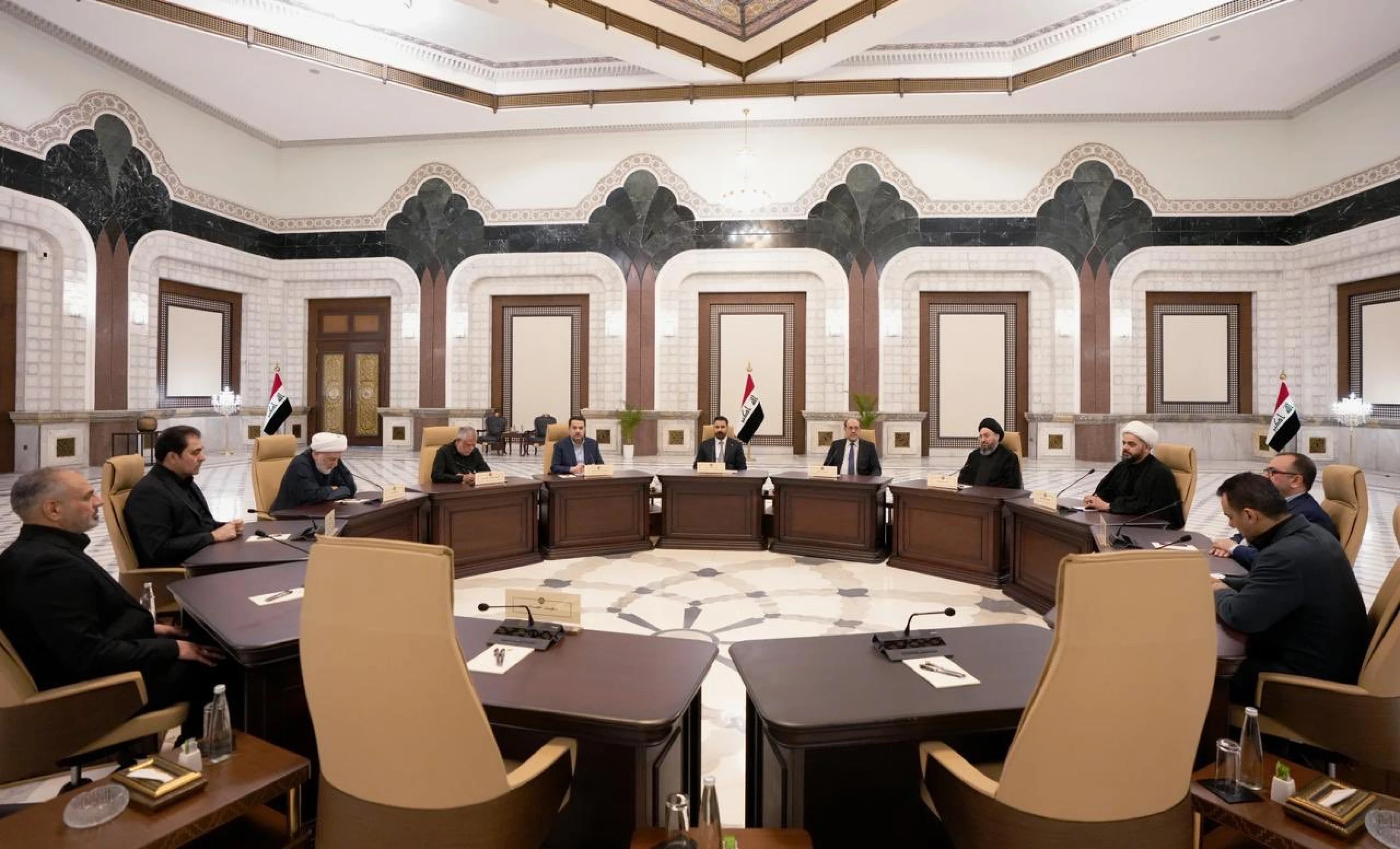
The Coordination Framework’s lack of influence was particularly demonstrated during the August 5 meeting of the State Administration Coalition, which brought together the country’s senior political leaders, including the 10 leaders of the Coordination Framework.
The attendees endorsed Zaidi’s approach, reaffirming their support for restricting weapons to the state and for completing the process by September 30. They also agreed that armed activity outside the framework of the state would be dealt with under the Counter-Terrorism Law after the deadline.
Rather than leaving the Coordination Framework on the sidelines while Zaidi and the armed factions confronted each other, Qaani redistributed the roles. The factions of the Islamic Resistance in Iraq would step back from any direct engagement with the government over the weapons issue, while the Coordination Framework would take the lead in negotiating the scope, terms, and limits of the government’s plan to bring the factions and their weapons under state control, commanders familiar with the talks told The New Region.
Qaani’s move strengthened the Coordination Framework by aligning the factions of the Islamic Resistance in Iraq behind it, effectively uniting both sides’ positions.
The new alignment was soon reflected in the public positions of Coordination Framework leaders. Badr Organization was among the first to publicly reject the use of force against the armed factions, calling for their commanders to be treated as partners in decision-making.
“We emphasize that the monopoly on weapons must be achieved peacefully and in full agreement with our brothers, the commanders of the resistance, who possess the concern and wisdom for Iraq and its future that qualifies them to be partners in the decision-making process, not subjects of it,” Mohammed Naji Mohammed, head of Badr’s political bureau, wrote on X on August 13.
Badr reinforced that position in a statement issued Tuesday, with Amiri calling on all sides to de-escalate, avoid inflammatory positions and put the national interest first, while warning against hasty, ill-considered or provocative actions and miscalculations.
In a separate statement on Tuesday, Mohammed Shia’ al-Sudani, Iraq’s former prime minister and key Coordination Framework leader, acknowledged that ending the US-led coalition’s mission is “a step towards restoring Iraq's full sovereignty,” but stressed that “this responsibility cannot be fulfilled without establishing the principle that weapons and the decision to use them are exclusively in the hands of the state and its constitutional institutions,” urging refrainment from using the language of threats and escalation.
The Coordination Framework’s emerging role has also begun to take organized shape. During a meeting Tuesday with Joshua Harris, the charge d’affaires of the US Embassy in Iraq, former Prime Minister Nouri al-Maliki, a key Coordination Framework leader, said the Framework had formed a committee, in coordination with the government, to determine the appropriate mechanisms for implementing the process of restricting weapons to the state, a statement distributed by his media office revealed.
Maliki said the committee would begin its work soon without providing further details. Commanders told The New Region that the committee is headed by Amiri and includes Zaidi and Falih al-Fayyadh, head of the Popular Mobilization Commission (PMC), which is the official government agency in charge of bringing all PMF factions under state control.
The Islamic Resistance factions in Iraq have also formed a committee comprising Akram al-Kaabi, commander of Harakat Hezbollah al-Nujaba, Abu Hussein al-Hamidawi, commander of Kataib Hezbollah, and Abu Ala al-Walai, commander of Kataib Sayyid al-Shuhada, commanders said.
The latest developments signal the start of a new political battle between Zaidi and his Shiite political backers.
“The Coordination Framework needed a boost. Having the armed factions behind it strengthens its position vis-a-vis the government,” a senior Iraqi security official familiar with the latest developments told The New Region.
“This new positioning has brought the Coordination Framework back into the equation, strengthened its negotiating position with the government, and distanced the armed factions from direct confrontation with the government.”
“This is a win-win situation for all parties. The leaders of the Coordination Framework were practically paralyzed. This new situation has given them a free hand and removed the option of armed confrontation from the table for now,” the official added.
 Facebook
 LinkedIn
 Telegram
 X
X