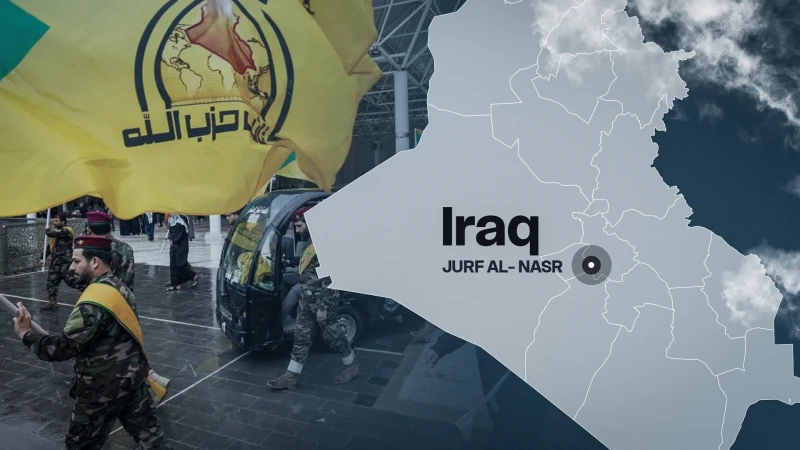
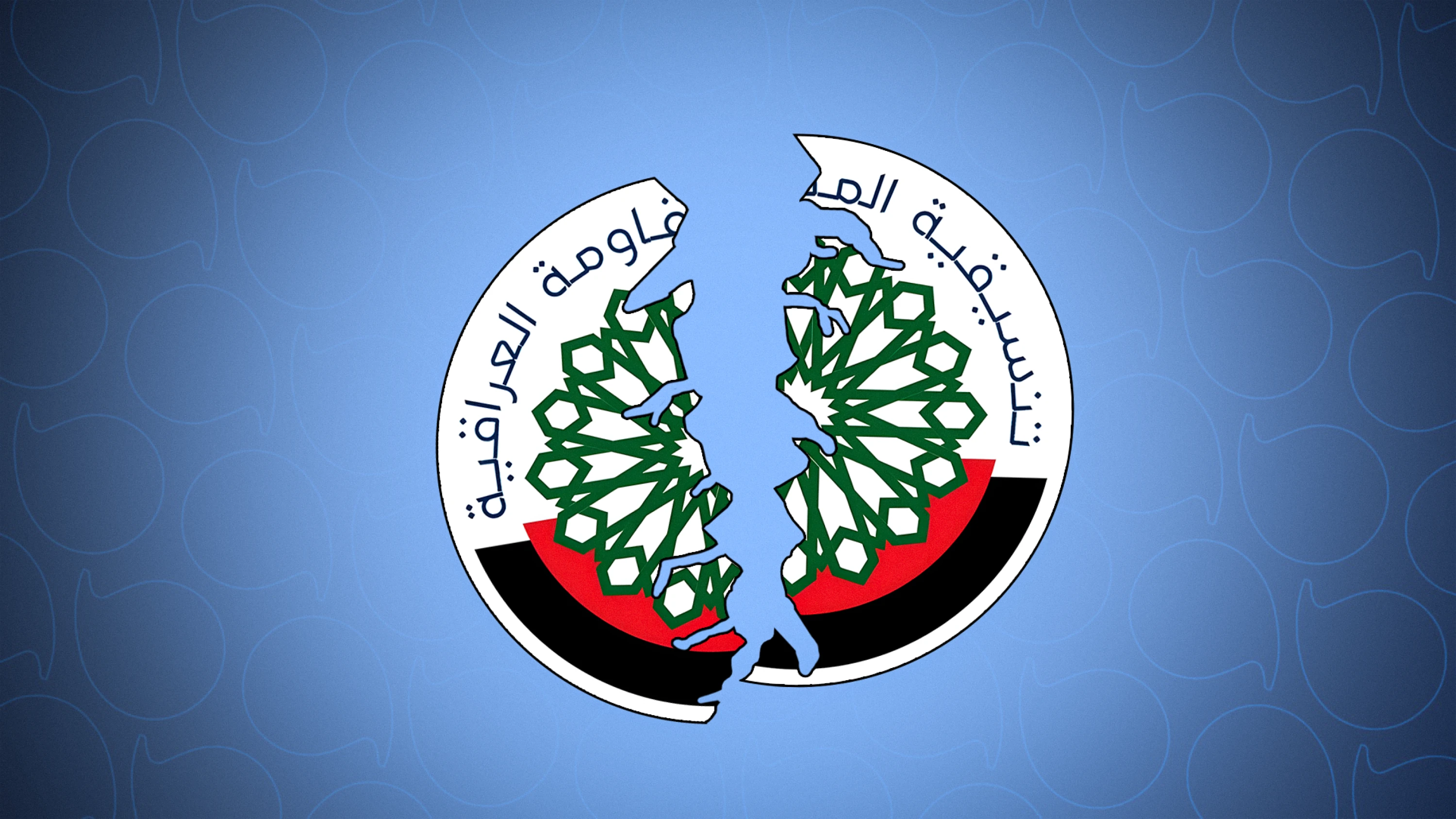
BAGHDAD, Iraq - The Coordination Committee of the Iraqi Resistance, the umbrella organization covering the key Iranian-backed Shiite armed factions in Iraq, has collapsed, bringing to an end the most powerful military and political alliance that played a pivotal role in shaping the decisions of Iraqi governments and Shiite political parties over the past six years, commanders of Iranian-backed armed factions told The New Region.
Two of the seven factions that were part of the Coordination Committee withdrew and announced their readiness to hand over their weapons in preparation for a complete transition to political activity. A third faction also withdrew, but without making a public announcement, the commanders said.
The Coordination Committee was formed in the aftermath of the January 2020 US airstrike near Baghdad International Airport which assassinated Iranian General Qassem Soleimani, commander of Iran’s elite Quds Force, and Abu Mahdi al-Muhandis, the founder of most Iranian-backed armed groups in Iraq and chief of the Popular Mobilization Commission (PMC).
The umbrella brought together the country’s seven main Shiite armed factions linked to Iran: Kataib Hezbollah (KH), Asaib Ahl al-Haq (AAH), Harakat Hezbollah al-Nujaba (HHN), Kataib Sayyid al-Shuhada, Ansar Allah al-Awfiya, Kataib al-Imam Ali, and an alliance of smaller splinter groups.
The committee coordinated military operations, unified political positions and managed the public messaging of the seven factions during some of the most consequential security crises Iraq and the wider region have witnessed in recent years.
Social Media platforms affiliated with Iraqi Shiite armed factions, including those of the Coordination Committee, show that its last statement was issued in early April, thanking the Iraqi people “for their supportive stances towards the Axis of Resistance.”
“You are as we have always known you, supporters of truth, steadfast in a time when government decision-makers and most political leaders are currying favor with the Zionist-American forces of arrogance, the enemies of Islam and humanity,” the statement reads.
“The resistance coordination committee was dissolved due to a lack of unified positions,” one of the commanders of the Iran-backed armed factions told The New Region.
“A smaller, alternative operations room was formed, comprising only three factions, in addition to some small groups that had splintered from other factions.”
The first spark
The collapse of the coordination committee was preceded by months of growing internal disputes over how to respond to increasing US pressure on Baghdad to curb the influence of Iran-backed Shiite armed factions and ultimately disarm them.
Since President Donald Trump took office in January 2025, US pressure on Iraqi officials has intensified, demanding the disarmament and dismantling of Iran-backed groups while threatening sweeping financial and economic sanctions.
A combination of Iran’s declining influence in Iraq, resulting from Tehran becoming increasingly preoccupied with consolidating its domestic front and confronting mounting regional challenges, the growing sense among Iraqi Shiite leaders that the US threats were serious, and their determination to preserve the gains they had secured since 2003, has shaped their response.
In late December, three of the seven factions - Asaib Ahl al-Haq led by Qais al-Khazali, Kataib al-Imam Ali led by Shibl al-Zaidi, and Ansar Allah al-Awfiya led by Haider al-Gharawi- announced their readiness to join the government’s program to restrict weapons to the state and complete their transition to political activity, particularly after their candidates achieved significant gains in the November 2025 parliamentary elections.
The December announcement was the spark that ignited the dispute within the Coordination Committee and brought it into the open.
Before those discussions could gain momentum, Abu Hussein al-Hamidawi, the commander of Kataib Hezbollah, issued a statement in the name of the Coordination Committee declaring that the factions categorically rejected any discussion of disarmament and would never surrender their weapons as long as US forces remained in Iraq.
“We affirm that the resistance’s weapons are sacred, especially in a country under occupation. They are the guarantee and safeguard for defending the land and holy sites… and we categorically reject any discussion of these weapons by external parties,” the Coordination Committee said in a statement published on January 4.
“Indeed, dialogue regarding these weapons, even with the government, can only take place after achieving full sovereignty for the country and liberating it from all forms of occupation and its threats.”
Within less than 24 hours, Asaib Ahl al-Haq publicly distanced itself from the statement without delivering any further details.
The exchange marked the first public disagreement within the alliance since its formation in 2020 and exposed divisions that had until then remained behind closed doors.
“Abu Hussein al-Hamidawi’s stances were impulsive, and the statement he issued was not coordinated with the other members of the coordination committee,” a commander of the resistance coordination committee told The New Region.
“That statement, and several others that followed, were issued by Hamidawi unilaterally in the name of the coordination committee, sparking a dispute between the two sides (AAH and KH), and causing resentment.”
Government formation
As negotiations to form Iraq’s new government gathered momentum, divisions within the Coordination Committee steadily deepened.
For AAH, the decision to support the government's plan to bring weapons under state control was the culmination of a political project that began years earlier.
Since entering parliament in 2014, the group had strived to build the political influence necessary to play a pivotal role in governing Iraq. This ambition culminated in the November 2025 parliamentary elections when the Sadiqoun Bloc, AAH's political wing, emerged as one of the top Shiite winners, securing 27 seats.
The result strengthened AAH’s claim to a greater share of executive power. Having already secured the position of deputy speaker of parliament, the group sought the post of deputy prime minister, in addition to other ministerial portfolios, as part of its long-term strategy to consolidate its political influence.
The government formation process, however, quickly became a demonstration of Washington’s growing influence in Iraq. In late January 2026, the Coordination Framework nominated former Prime Minister Nouri al-Maliki to form the new government.
Shortly afterward, President Donald Trump declared that the United States would not deal with a government led by Maliki, exposing divisions within the Shiite forces over whether to confront or accommodate US pressure.
Although several leaders of pro-Iran Shiite factions maintain they had enough parliamentary support to resist pressure from the Trump administration and move forward with Maliki's nomination, their efforts were ultimately thwarted when Khazali sided with Maliki's rivals and rallied support for granting Prime Minister Mohammed Shia' al-Sudani a second term.
However, these efforts also failed under increasing US pressure, leading the ruling Shiite coalition to choose Ali al-Zaidi as a compromise candidate.
Soon after taking office, Zaidi moved to implement one of his key pledges by calling for all weapons to be placed under state control by September 30. Amid mounting US pressure, Zaidi’s government quickly became associated with a new political equation that tied participation in power to accepting the state's monopoly over weapons.
"We are not concerned with disarmament or restricting weapons to the state. This talk is directed at those seeking positions," another commander said.
"If you want a position, put down your weapon and come"
Khazali was among the first faction leaders to publicly respond to Zaidi’s call. He was later followed by Shibl al-Zaidi and Haider al-Gharawi. For KH and its allies, Khazali’s position marked a decisive break. They accused him of sacrificing the alliance in pursuit of his political ambitions.
“Khazali let us down twice. Once when he pursued his political ambitions and allied with our opponents to secure Sudani’s nomination for a second term, and again when he rushed to announce his acceptance of the decision to restrict weapons to the state,” another commander of the committee told The New Region.
“Both times, Khazali put his own interests above all else.”
A crossroads
The dispute within the Coordination Committee reached a critical juncture following the resumption of the US-Israeli war against Iran and the assassination of Iranian Supreme Leader Ali Khamenei in late February. In response, many Iraqi Shiite armed factions launched coordinated drone and missile attacks against US interests in the Kurdistan Region and elsewhere in the region.
In May, the US State Department said Iraqi armed factions had carried out about 600 attacks against US facilities in Iraq and across the region during the wartime.
Four commanders from the factions told The New Region that AAH’s participation in those operations was “limited and cautious” and fell well short of the group’s military capabilities.
“They [AAH] told us their situation no longer allowed them to carry out military operations as before. They now have lawmakers and government positions. They have become the government,” one of the commanders told The New Region.
“This war was a turning point, but their participation was very limited.”
By then, the Coordination Committee had effectively ceased to function as a unified alliance, the commanders said, with its members no longer attempting to reach consensus on key decisions.
Without prior coordination with the other members, KH, HHN and Kataib Sayyid al-Shuhada announced in late June the dissolution of the Coordination Committee of the Iraqi Resistance. In its place, they established a new body under the name “Islamic Resistance in Iraq,” limited to the three factions and a small number of defectors from other groups, commanders told The New Region.
“For us, not today, not tomorrow, not even a year from now, unless Iraq’s sovereignty is fully restored on land, in the air, and at sea, there will be no discussion of disarmament or weapons control,” one of the commanders of the new group told The New Region.
“Any fighter from my group carrying a weapon in the street, arrest him. I won’t object. Arrest any corrupt official and I won’t object, but don’t ask me to surrender my weapon unless every form of occupation in Iraq has ended”.
 Facebook
 LinkedIn
 Telegram
 X
X