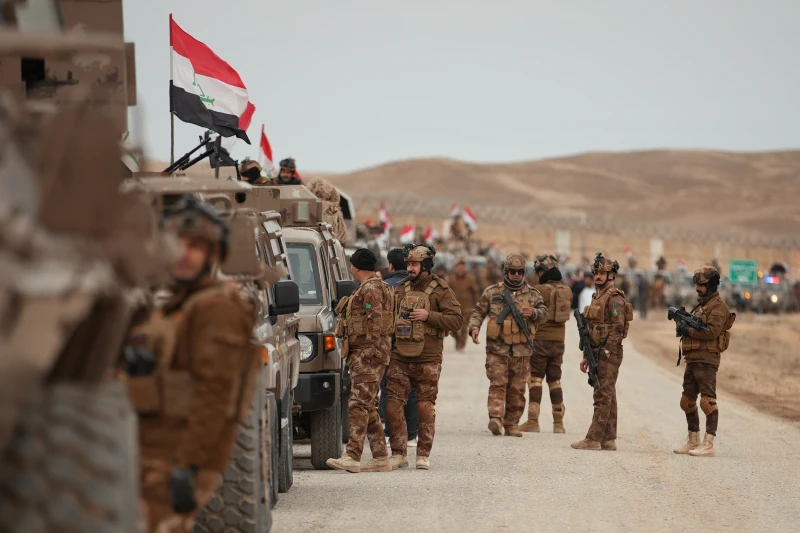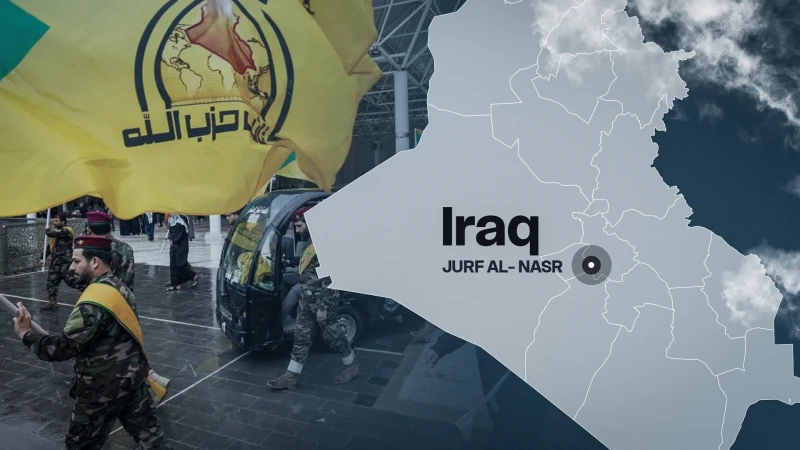
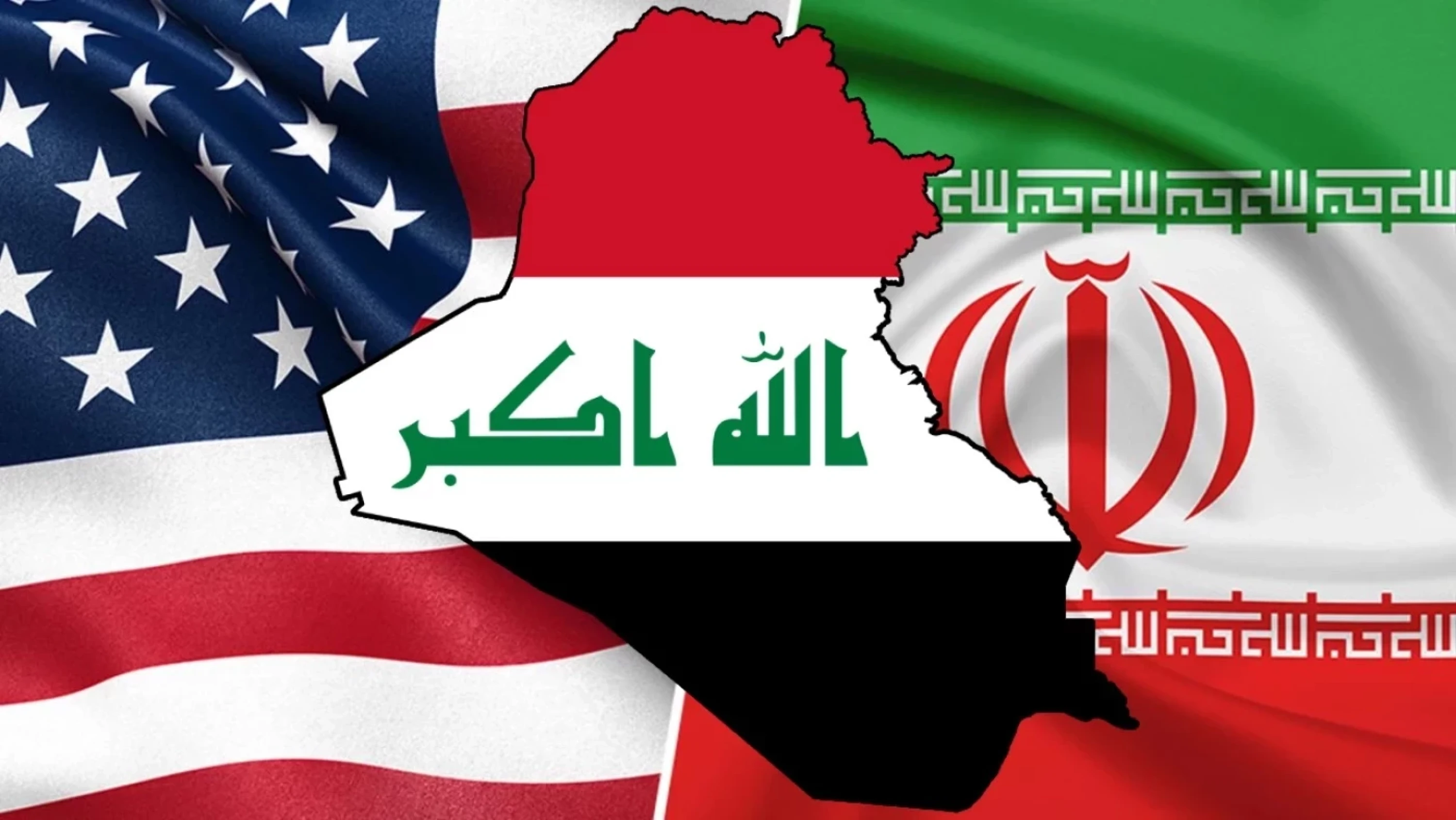
ERBIL, Kurdistan Region of Iraq – With a September 30 deadline approaching for Iranian-backed Iraqi factions to hand over their weapons, high-profile voices in the political sphere mulling delays and a redefinition of the process are raising concerns among Iraqi lawmakers that Baghdad could face US financial pressure or sanctions should the disarmament process not be carried out in full.
Before August, Baghdad had threatened to use the anti-terrorism law against factions refusing to hand over their weapons. But Iraqi officials have increasingly spoken of postponing the process following high-level visits by Iranian officials and amid stalled US-Iran talks to end the war that began February 28.
As long as tensions between Tehran and Washington continue, it remains uncertain whether Iran will allow its allied factions in Iraq to surrender their weapons.
Nouri al-Maliki, leader of the State of Law Coalition and Iraq’s former prime minister, told Al Sharqiya on September 2 that the deadline would not be a decisive date for the handover of weapons by armed factions. He suggested that the process would instead focus on regulating armed factions and containing their weapons rather than disarming them.
Qasim al-Araji, security adviser to Iraqi Prime Minister Ali al-Zaidi, told Al-Iraqiya News in late August that September 30 marks the deadline for US-led coalition forces to leave Iraq, “not the deadline for the handover of weapons.” He said the date would instead mark the beginning of a gradual process to bring all weapons under state control.
Iraq’s ruling State Administration Coalition also did not mention the disarmament process during its latest meeting Saturday. Instead, it stressed the need to protect Iraq from the repercussions of US sanctions amid the country’s difficult financial situation, saying Iraq cannot afford to take risks, according to state media.
A member of Iraq’s ruling Shiite Coordination Framework told Al-Mada newspaper Sunday on the condition of anonymity that Iraq could face US sanctions similar to those recently imposed on Iran if the issue of armed factions and disarmament is not resolved.
Jamal Kocher, a member of the Iraqi parliament’s finance committee, told The New Region that Iraq’s continued inability to impose state authority over all weapons and armed factions could “expose Iraq to increasing US pressure and sanctions externally, while contributing to the erosion of the Iraqi economy internally.”
“The government and political forces should not take this possibility lightly,” he said.
“The United States will not view the issue merely as an internal Iraqi political dispute. It may link it to the protection of its interests, the international financial system, regional security, and preventing Iraqi territory and institutions from being used to finance or support armed groups whose leadership does not abide by state decisions,” he added.
“Therefore, I say this clearly: Iraq cannot seek to be a fully sovereign state while at the same time allowing multiple centers of decision-making and weapons to exist. This equation cannot continue indefinitely, and the cost of delaying a solution will rise over time,” Kocher added.
The US State Department did not respond to a request for comment on whether Washington would impose sanctions if armed groups fail to comply with the September deadline.
The US has previously used financial measures against Iraqi officials and Iran-linked networks.
On May 7, 2026, the US Treasury Department sanctioned Oil Ministry Undersecretary Ali Ma’arij al-Bahadli, accusing him of using his official position to divert oil revenues and fund Iran-backed proxy groups. Baghdad later arrested him on June 28 as part of its anti-corruption campaign.
“Applying financial pressure to achieve its objectives would be consistent with longstanding US government practice, which is effective only because the dollar remains the world's reserve currency, and is particularly important in the oil trade,” Joey Hood, the former US Acting Assistant Secretary of State for Near Eastern Affairs, told The New Region.
“Aside from that, it is only common sense that a government would seek to shield its currency from potentially being used by those who seek to harm its people. If the Iran-backed militias in Iraq draw upon the dollars earned through the sale of Iraq's oil in order to launch rockets against US interests and or kidnap American citizens, then the US government has an obligation to try to cut off their access to those dollars,” Hood said.
“The more the militias become entwined in the Iraqi economy, the more difficult this becomes, but this only means that US-Iraqi cooperation on fighting corruption is all the more important,” he added.
Hamdi Malik, an associate fellow with The Washington Institute, told The New Region that amid US threats to restrict dollar flows and impose sanctions, Iraq’s ruling Shiite Coordination Framework had “managed to reassure the United States, via Prime Minister al-Zaidi, that it would bring the militias’ weapons under state control, at least to some extent.”
“It is now increasingly clear that this was only a manoeuvre to calm the US and buy time,” he noted.
He explained that Iraq risks facing US sanctions and restrictions on dollar flow, “not only because of its failure to disarm the militias," but also because of “the pivotal role Iraqi institutions play in providing Iran with an economic lifeline at a time when it needs it most.”
He said the likelihood and severity of such measures would depend “largely on the behaviour of the militias” in the event of another large-scale conflict between Iran and the US, as well as the extent to which “Iraq is able to cut this economic lifeline.”
The US National Defense Authorization Act for Fiscal Year 2026 (NDAA), signed by President Donald Trump on December 18, 2025, places a conditional freeze on a portion of US military assistance to Iraq based on the Iraqi government’s efforts to reduce the operational capacity of Iran-aligned “militia groups not integrated into the Iraqi security forces through a publicly verifiable disarmament, demobilization, and reintegration process.”
In April, the US paused training for the Iraqi Security Forces and shipments of US dollars to Iraq to pressure the Iraqi government to “reduce the ability of Iran and its militias to attack US interests”, according to a Pentagon Lead Inspector General report to Congress issued August 25. The United States resumed dollar shipments in late June, but training remained suspended, the report said.
The report also said the Treasury Department sanctioned seven senior militia commanders in April over attacks on US forces.
Victoria Taylor, former US Deputy Assistant Secretary of State for Iraq and Iran and director of the Iraq Initiative in the Atlantic Council’s Middle East program, told The New Region that the “inclusion of this demand [in the NDAA] should be viewed as a signal that Congress wants to see progress on militia disarmament and that waning patience with the Iraqi government.”
“Congress understands that militia disarmament will not be complete by September 30, but there is no interest in continuing US military assistance to Iraq while the Iraqi government pays salaries to groups that are attacking the US and our allies,” she concluded.
Iraqi lawmaker Jamal Kocher also told The New Region he rejects punishment as a path to reform in Iraq.
“The United States can exert pressure, but the historic and national responsibility lies with Iraqis themselves. The state must resolve this issue politically, constitutionally, and legally, through serious national dialogue—not through civil war or external dictates,” he said.
“I believe the message that must reach everyone is clear: either Iraq succeeds in building a state that monopolizes sovereign decision-making and the use of force in accordance with the constitution and the law, or it will pay the price for the continued existence of multiple centers of power. That price could be economically, politically, and internationally extremely high,” he concluded.
A Western diplomat, speaking on condition of anonymity, told The New Region that the Coalition forces “were invited by the Iraqi government and supported Iraqi armed forces to defeat ISIS. To see them now being the only ones forced to leave when others that may never have been invited in the first place, stay on, is absurd - and may not be in the best interest of Iraq.”
“We all supported - and still support - the declared will of the Iraqi government to gain full control of all arms under a clear deadline,” the source said, but noted that recent statements appear “to water down this commitment.”
“If the outcome maintains the status quo behind a smoke screen of empty compromises, without reigning in these groups, it will only perpetuate problems that the Iraqi Government itself claimed to address,” the source added.
 Facebook
 LinkedIn
 Telegram
 X
X