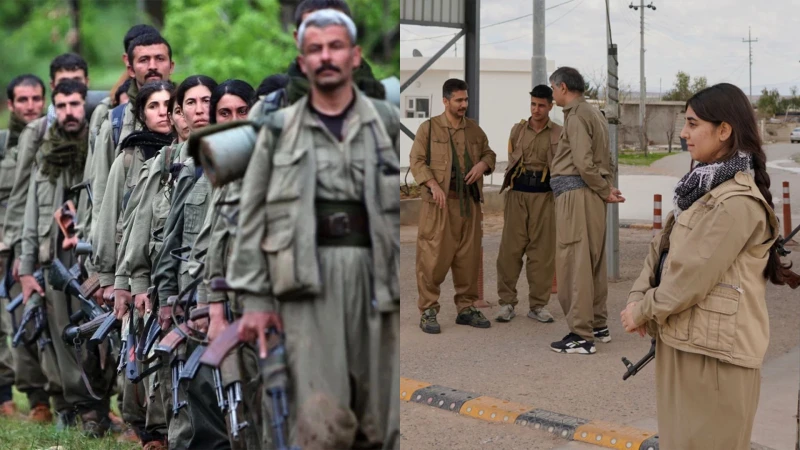

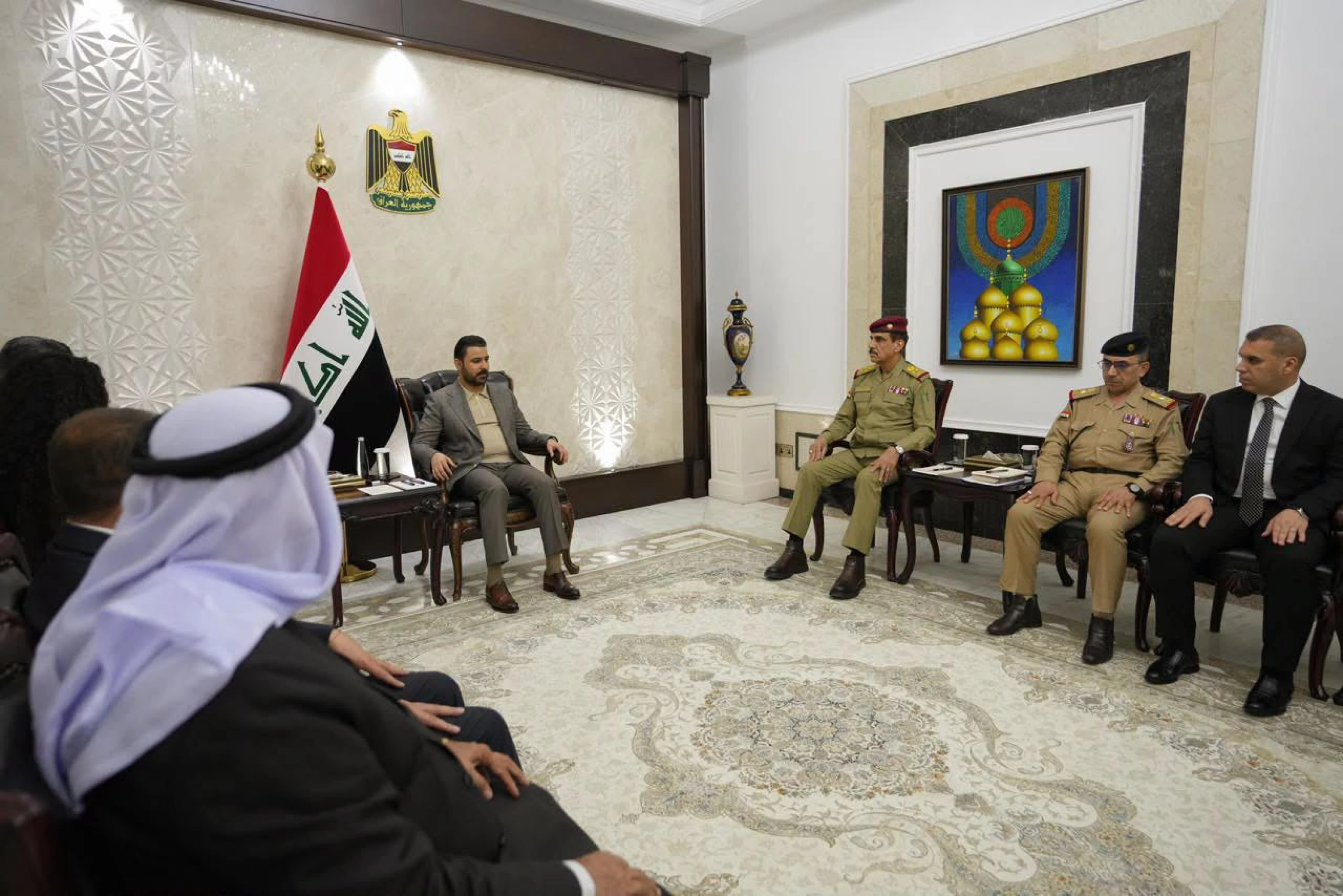
ERBIL, Kurdistan Region of Iraq – Iraqi Prime Minister Ali al-Zaidi on Friday said the all-Yazidi Sinjar Resistance Units (YBS) will begin handing over their weapons to the state, while eligible members will be integrated into Iraqi security institutions and Sinjar district brought under full federal authority.
Zaidi said that “Sinjar resistance factions will begin handing over their weapons to the state and that Mount Sinjar will be under the full authority of the federal government and its security and administrative institutions.”
The remarks came during a meeting with the Yazidi Cause Alliance, its head Murad Ismael, a Yazidi-Iraqi lawmaker and activist, and members of the YBS leadership.
The armed group is affiliated with the Kurdistan Workers’ Party (PKK) and has remained active in Nineveh’s Sinjar district after playing an important role in fighting the Islamic State (ISIS) in the Yazidi-populated areas during the group’s reign of terror.
“The meeting addressed the overall situation in Sinjar District and issues related to its stability, reconstruction, and the future of its people,” the statement read.
Ismael, in a statement, welcomed the “historic agreement” to integrate the YBS into Iraq’s official security forces and thanked Zaidi for the move.
“This significant step is the beginning of moving in the right direction, stemming from the Prime Minister's vision of monopolizing weapons, preserving sovereignty, and ensuring that no Iraqi group suffers marginalization or exclusion,” he said.
The Iraqi government under Zaidi has led a renewed campaign to restrict weapons to the state and has set an end-of-September deadline for armed groups to hand over their weapons.
Zaidi said the decision to hand over weapons comes “within the framework of building a state of institutions, safeguarding the unity of national decision-making, and ending the existence of multiple centers of security decision-making.”
Although several groups have expressed willingness to comply, influential Iran-backed Iraqi armed factions such as Kataib Hezbollah, Kataib Sayyid al-Shuhada and Harakat Hezbollah al-Nujaba, all designated by the US, have rejected calls for disarmament.
Zaidi also stressed that Baghdad “will safeguard the rights” of members of the YBS and its women’s-only group and “honor their sacrifices, by regularizing their status and integrating those who are eligible into Iraqi security institutions in accordance with legal and official frameworks.”
Baghdad and Erbil signed the Sinjar Agreement in October 2020, with UN support, to stabilize the district by introducing a new administration and security structure aimed at facilitating the return of displaced Yazidis.
The Friday meeting also addressed services in the district, “its needs for infrastructure and reconstruction projects, compensation for those affected, and the creation of appropriate conditions for the return of displaced persons to their areas.”
Zaidi also directed the formation of a high-level committee to prepare a comprehensive study of security and service conditions in Sinjar, identify the needs of its residents, and develop solutions. The committee will also follow up on the integration of YBS personnel into state security and service institutions and “the regularization of their legal status.”
The 2020 Erbil-Baghdad agreement called for the removal of PKK elements and other armed factions from the district and the transfer of security control to the federal army and police. However, several years after its signing, the Iraqi government has yet to fully implement the agreement.
Ankara has also conducted numerous airstrikes in Sinjar, often targeting YBS bases under the pretext of countering terrorist elements.
The Iraqi army and the YBS have previously engaged in clashes over control of Sinjar and surrounding areas.
Iraq’s Popular Mobilization Forces (PMF) is preparing to absorb hundreds of PKK fighters who will not be covered by Turkey’s ongoing peace process, Iraqi officials told The New Region earlier in September, adding that some 230 senior PKK commanders and around 2,000 fighters are expected to remain outside Turkey’s disarmament process.
Relations between the PKK and the PMF have been close since August 2014, when the two groups fought ISIS. The PKK oversaw the formation and training of what is known as the 80th Regiment, or YBS, while the PMF provided logistical support and funding.
Since then, ties between the PKK and the PMF have developed significantly, with the two sides maintaining intelligence and operational cooperation in northern Iraq and eastern Syria, officials said, adding that fighters from several YBS units are officially registered on the PMF payroll.
 Facebook
 LinkedIn
 Telegram
 X
X